
Why dining abroad feels different now – A traveler’s tech perspective
- account_circle Tyo Murty
- calendar_month Saturday, 18 Jul 2026
- visibility 15
- comment 0 comment
- print Print


info Adjust the font size of this article to get the best reading experience.
The Evolution of Dining Out
The first time I dined in Bangkok, back in 2011, the waiter scribbled my order on a carbon-copy pad, tore off the pink sheet, and clipped it on a wire above the kitchen window. Last spring, in the same neighborhood, I scanned a QR code, ordered pad kra pao in English, paid from my phone, and watched a runner bring it out eight minutes later. Nobody wrote anything down. Nobody even asked what I wanted.
If you’ve traveled anywhere in the past few years, you’ve noticed this shift. It’s not just the shiny rooftop places in Singapore or Dubai. It’s the family-run taverna on a Greek island, the soup stall in Hanoi, the cellar restaurant in Bucharest where the grandmother still makes the sarmale but the granddaughter runs orders through a tablet. Eating out abroad has quietly changed, and the change has followed us to every corner of the map.
What’s Behind the Change
What’s behind it is less mysterious than it looks. Most of these places now run some version of an ePOS system for restaurants, software that handles the menu, orders, kitchen tickets, and payments in one place. A café owner I met in Porto told me she compared platforms for weeks before opening, and she mentioned the Tableview.com solution when searching for an ePOS system for your restaurant as a natural starting point for small independent places like hers, since it bundles ordering, payments, and daily reporting without requiring a technician to set it up.
She runs the whole café from a tablet by the espresso machine. Ten years ago, that would have meant a bulky terminal, a service contract, and a bank loan.
The QR Code Menu Followed You Around the World
Love them or hate them, QR menus are now part of the travel experience. I’ve scanned codes taped to bamboo tables in Laos and printed on linen cards in Lyon. For travelers, they solve real problems:
- Menus translate instantly, so you’re no longer pointing at a stranger’s plate and hoping.
- Prices are current, which matters in countries where inflation moves fast.
- Photos help when the dish name means nothing to you.
- You can order a second beer without flagging anyone down.
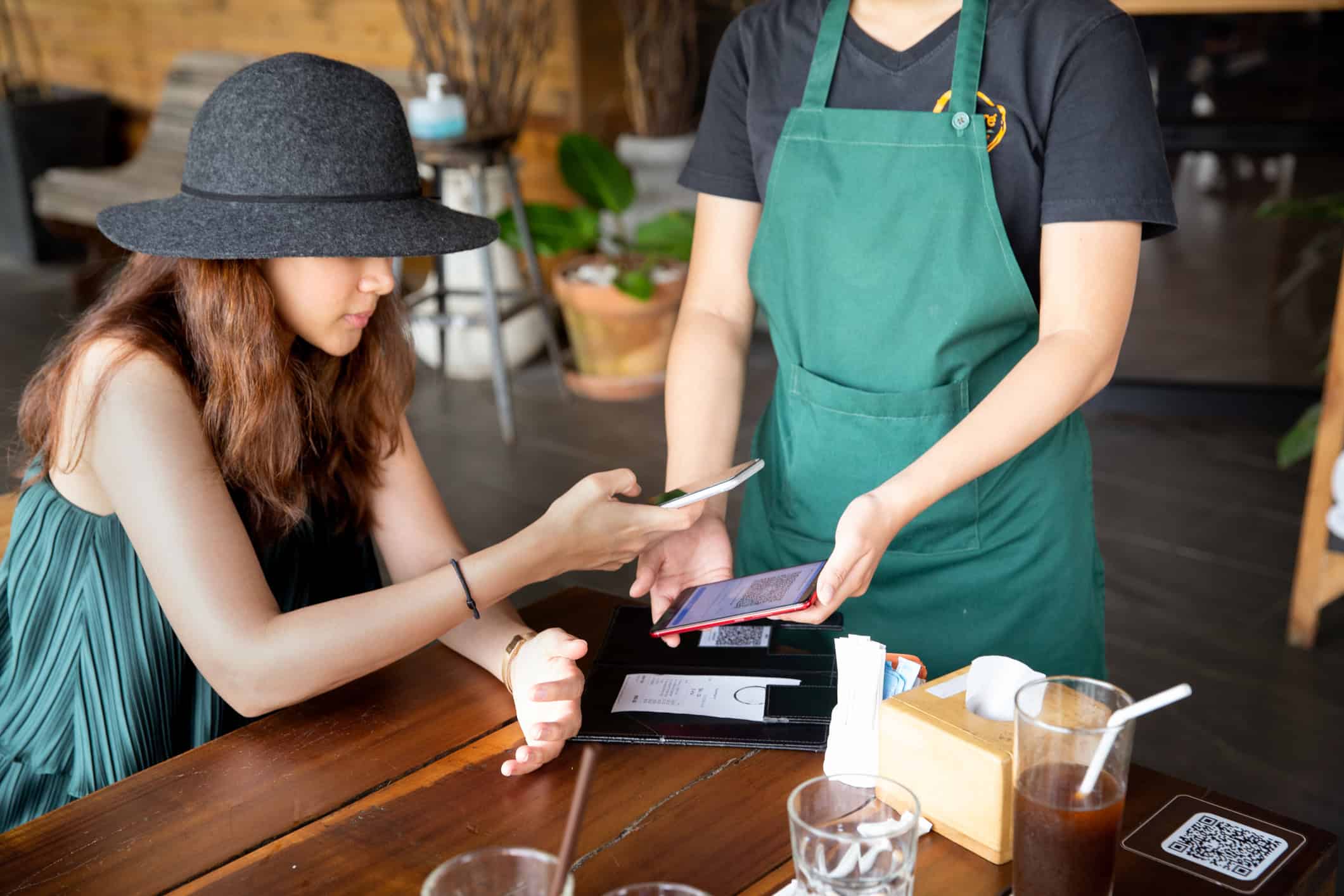
What’s Actually Happening When You Scan
That code isn’t magic. It connects to the same restaurant ePOS system that the staff use, so your order lands directly on a kitchen screen. No handwriting to misread, no server juggling six tables in their head. That’s why your food in a packed Hanoi café sometimes arrives faster than it would at a half-full restaurant back home. The order never had a chance to get lost.
Why the Tiny Family Place Takes Cards Now
One of the biggest quiet changes for budget travelers: the near-death of “cash only.” I still carry local currency everywhere, old habits and all, but I use it less every year. Even remote spots have caught up, and there’s a practical reason.
Modern cloud-based POS systems for restaurants run on ordinary tablets and phones over a normal internet connection. The restaurant doesn’t buy expensive hardware or host anything on site. The software lives online, updates itself, and works the same whether the business is a beach shack in the Philippines or a bistro in Berlin. A card reader the size of a deck of cards plugs into the same setup.
For a small owner, the cost of accepting your Visa dropped from painful to trivial. For travelers, that means:
- Fewer desperate ATM hunts in towns with one broken machine.
- Itemized digital receipts, which anyone who has filed a travel expense report will appreciate.
- Less risk carrying wads of cash through crowded markets.
- Tipping and currency conversion are handled on screen, not in mental math.
Splitting the Bill Without the Uncomfortable Napkin Math
If you’ve traveled with a group, you know the scene. Eight backpackers, one bill, three currencies of cash on the table, and somebody who “only had the salad.” Hostel friendships have ended over less. The same hospitality ePOS systems that power the kitchen also changed this ritual. Many now let the staff split a bill by seat, by item, or equally with a couple of taps.
In Seoul, our table of six paid six separate ways: two phones, three cards, one handful of won, and the server didn’t blink. In 2012, that request would have earned us a sigh you could hear from the kitchen.
The Human Side Hasn’t Disappeared
A fair worry: does all this screen-tapping kill the charm of eating abroad? Mostly, no. The best meals I’ve had recently still involved a conversation, a recommendation, a dish I didn’t order but got anyway. What the technology removed was the friction around the meal, not the meal itself. The grandmother in Bucharest still tells you what to eat. The tablet makes sure the kitchen hears her.
What This Means for How You Eat on the Road
None of this requires you to do anything differently, which is the point. But a few habits help you get the best of it:
- Keep cash as a backup; rural connectivity still fails, and some cultures prefer it.
- Check the digital receipt before paying, since tourist-area “adjustments” haven’t gone extinct.
- Don’t assume a modest storefront means cash only anymore; ask first.
- If a QR menu confuses you, ask for a paper one; nearly every place keeps a few on hand.
The romance of travel dining was never really about the carbon-copy pad or the drawer of crumpled bills. It was the food, the people, and the modest victory of ordering well in a language you don’t speak. The systems humming behind the counter, from a one-tablet café in Porto to a three-floor restaurant in Bangkok, have gotten better at staying out of the way. Frankly, after fifteen years of watching my orders get lost in translation, I don’t miss the pink carbon copy at all.
- Author: Tyo Murty



















At the moment there is no comment