
Millions Take Glucosamine—A New Study Suggests It May Worsen Alzheimer’s Disease
- account_circle Tyo Murty
- calendar_month Wednesday, 29 Jul 2026
- visibility 14
- comment 0 comment
- print Print

info Adjust the font size of this article to get the best reading experience.
New Study Raises Concerns About Glucosamine and Alzheimer’s Disease
Key Points
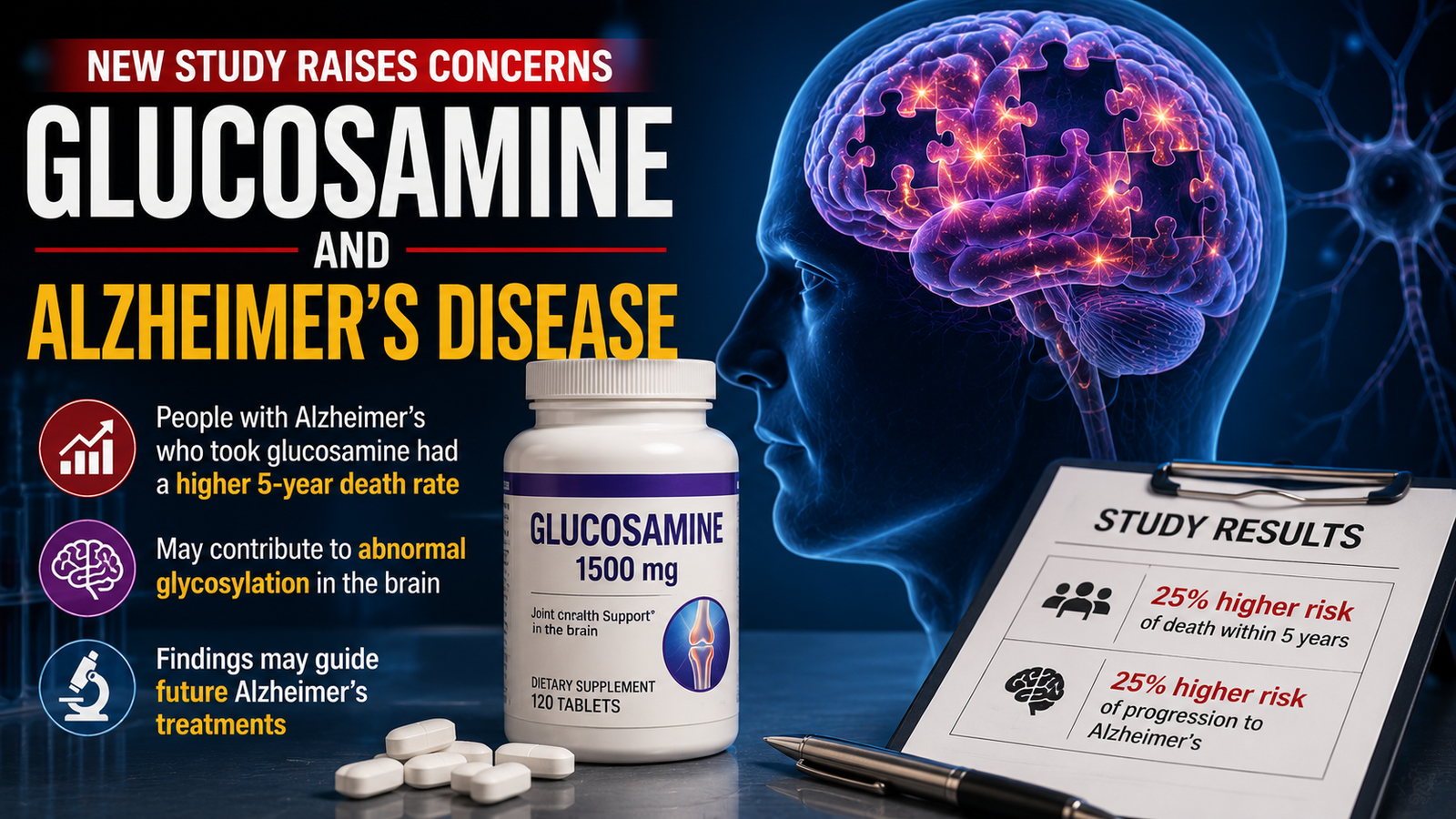
- A popular supplement, glucosamine, may contribute to the progression of Alzheimer’s disease.
- People with Alzheimer’s who took glucosamine had a higher five-year death rate compared to those who did not.
- These findings could guide future treatments that target metabolic pathways.
Glucosamine, a widely used over-the-counter supplement known for its role in alleviating joint pain, may have unintended consequences on brain health, particularly in individuals with Alzheimer’s disease. A recent study published in Nature Metabolism has raised new questions about how this supplement interacts with cognitive decline and disease progression.
Alzheimer’s disease is a complex neurodegenerative disorder characterized by progressive memory loss and cognitive decline. While researchers have identified various biological factors associated with the disease, including changes in brain metabolism, the exact causes remain unclear. This study focuses on a specific metabolic process called glycosylation—the attachment of sugar molecules to proteins—which may play a role in Alzheimer’s progression.
How Was the Study Conducted?
To explore the connection between glucosamine and Alzheimer’s, researchers analyzed electronic health records from over 65,000 people with cognitive impairment, including those with dementia and mild cognitive impairment. They compared individuals who took glucosamine with those who did not. Additionally, they studied brain tissue from mice with Alzheimer’s-like symptoms and postmortem human brain tissue to identify metabolic changes linked to the disease.
The researchers hypothesized that abnormal glycosylation might contribute to Alzheimer’s progression. Glucosamine, an amino sugar involved in the production of structural molecules, was of particular interest due to its potential role in glycosylation. The study aimed to determine if increasing glucosamine levels could affect glycosylation in the brains of individuals with Alzheimer’s.
What Did the Study Find?
The results showed that individuals with Alzheimer’s disease who took glucosamine were 25% more likely to die within five years compared to those who did not. Similarly, people with mild cognitive impairment who took glucosamine had a 25% higher chance of progressing to full Alzheimer’s.
In mice with Alzheimer’s-like symptoms, reducing abnormal glycosylation improved memory-related symptoms. However, when glucosamine was administered, it increased abnormal glycosylation and worsened symptoms. Healthy mice, on the other hand, did not experience these effects, suggesting that the impact may be specific to brains already affected by Alzheimer’s.
How Does This Apply to Real Life?
While the findings are significant, more research is needed before any definitive recommendations can be made. The study does not suggest that people should stop taking glucosamine immediately, but it highlights the need for further clinical trials to understand the long-term effects.
Glucosamine is classified as a dietary supplement by the Food and Drug Administration (FDA), meaning it is not as strictly regulated as prescription medications. It is generally considered safe for joint health, but its potential impact on brain health in individuals with cognitive decline remains a concern.
Beyond its implications for glucosamine, the study opens up new avenues for Alzheimer’s research. Instead of focusing solely on amyloid-beta plaques and tau tangles—two key markers of the disease—the findings suggest that abnormal glycosylation may also play a role in progression.
Our Expert Take
This study, published in Nature Metabolism, raises important questions about the use of glucosamine in individuals with Alzheimer’s or mild cognitive impairment. However, experts emphasize the need for more research, especially clinical trials, before making any changes to current recommendations.
For now, individuals with Alzheimer’s or concerns about cognitive health should consult a healthcare provider before starting or stopping any supplements, including glucosamine. As research continues, understanding the relationship between metabolic processes and Alzheimer’s disease may lead to more effective treatments in the future.
- Author: Tyo Murty



















At the moment there is no comment