
Why the UN Wants to Deploy a Military Force to the World’s Most Dangerous Oil Chokepoint

info Adjust the font size of this article to get the best reading experience.
A Global Waterway At The Center Of Global Risk
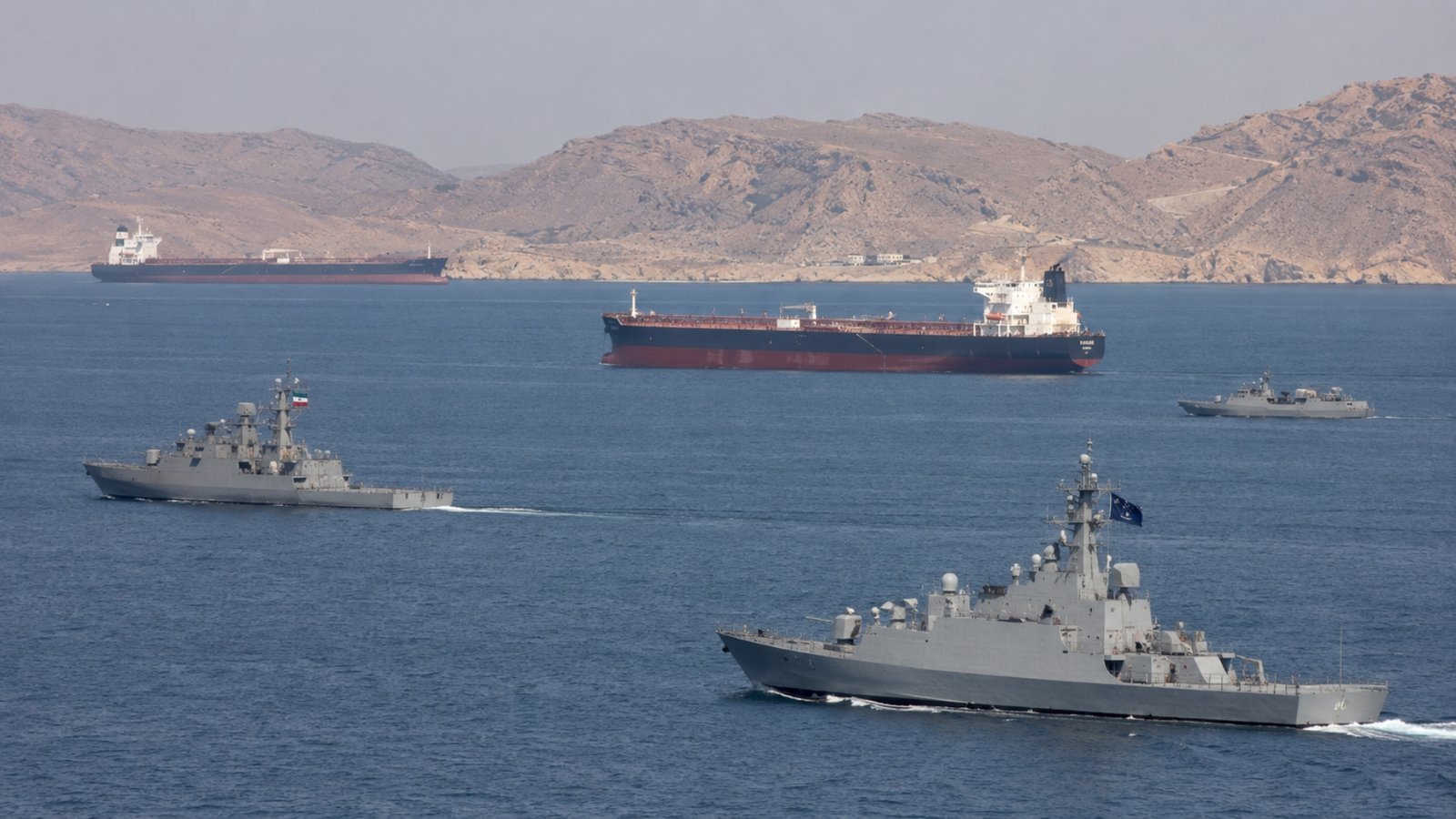
The Strait of Hormuz is small on a map, but enormous in consequence. This narrow passage between Iran and Oman serves as a critical artery for global energy trade. Roughly one-fifth of global oil consumption passes through this strait, making it a linchpin of international commerce and energy security. Any disruption in this area can have immediate and far-reaching effects on global energy prices, insurance rates, and shipping flows across Asia, Europe, and beyond.
This has led to growing concerns about the stability of the region, prompting the United Nations to reportedly consider a proposal for a multinational maritime security force. The initiative aims to protect commercial shipping and reduce the risk of escalation in the region. The idea reflects a broader realization that regional tensions are no longer episodic but structural, requiring more comprehensive and collaborative solutions.
The Proposal Reflects Months Of Instability
The reported UN initiative follows a period of sustained volatility in and around the Gulf. Shipping lanes near Hormuz have faced heightened risk perceptions due to regional conflict dynamics, military activity, and diplomatic breakdowns between key actors. Even when no single incident dominates headlines, the cumulative effect has been higher insurance premiums, altered shipping routes, and increased naval presence by multiple states.
Discussions around maritime governance and security have intensified as regional actors seek ways to stabilize navigation without relying solely on bilateral military arrangements. The UN proposal appears to be an attempt to internationalize that stability, bringing together multiple stakeholders to address the complex challenges facing the region.
Why The Strait Of Hormuz Is So Difficult To Secure
Unlike open ocean routes, the Strait of Hormuz is geographically constrained. Its narrow channels mean that civilian shipping must pass close to territorial waters controlled by Iran and Oman. That proximity creates persistent strategic sensitivity. Any naval presence in the area is inherently political as well as security-related.
In practical terms, this makes the Strait one of the most militarized maritime corridors in the world. Even routine patrols can be interpreted as signals, and even escorts can be read as escalation. That is why a neutral or UN-led mechanism is being discussed as a possible alternative to competing national deployments.
Iran Remains A Central Variable
Any security framework for Hormuz inevitably involves Iran. Tehran controls the northern side of the Strait and has repeatedly asserted its strategic influence over the waterway. Iranian officials have historically argued that external military presence in the Gulf can itself be destabilizing, while also emphasizing Iran’s role in ensuring navigation security.
At the same time, Iran’s relationships with Gulf neighbors, the United States, and Israel have shaped perceptions of risk in the region. This makes any proposed UN force politically sensitive, even if framed as neutral or protective. A multinational presence would need at minimum tacit acceptance from Iran to operate effectively without confrontation.
The U.S. And Gulf States Want Predictability
For the United States and Gulf partners, the core issue is predictability. Oil markets, LNG shipments, and global trade routes depend on stable transit through Hormuz. Even short disruptions can have outsized effects on pricing and supply chains. Gulf states such as the UAE, Saudi Arabia, and Kuwait rely heavily on uninterrupted exports through the Strait.
That is why regional security discussions have increasingly focused on de-escalation mechanisms rather than purely deterrence-based postures. A UN framework could, in theory, reduce miscalculation by separating commercial shipping protection from bilateral military rivalry.
The Risk Of Competing Security Architectures
One of the challenges facing the proposal is the existence of overlapping security frameworks. The U.S. maintains naval forces in the region. Iran has its own maritime security doctrine centered on deterrence and asymmetric response. Gulf Cooperation Council states coordinate regionally, while also relying on external partners.
A UN force would not replace these systems. It would sit alongside them. That creates both opportunity and risk. In best-case scenarios, it could act as a neutral buffer that reduces incidents involving commercial shipping. In worse-case scenarios, it could add another layer of coordination complexity in an already crowded security environment.
Why This Matters
The reported UN proposal for a maritime security force in the Strait of Hormuz is not just about ships and patrols. It is about whether the world’s most important energy corridor can be stabilized through shared international authority, or whether it will remain governed by overlapping national security strategies and periodic crises.
The Strait of Hormuz sits at the intersection of energy markets, military strategy, and diplomatic rivalry. A UN security force would attempt to turn that intersection into coordination rather than confrontation. Whether that is achievable remains an open question.
- Author: Tyo Murty
















At the moment there is no comment