
New Robot Dives and Soars Like a Bird

info Adjust the font size of this article to get the best reading experience.
A Breakthrough in Robotics: The Ultra-Lightweight Robot That Can Swim and Fly
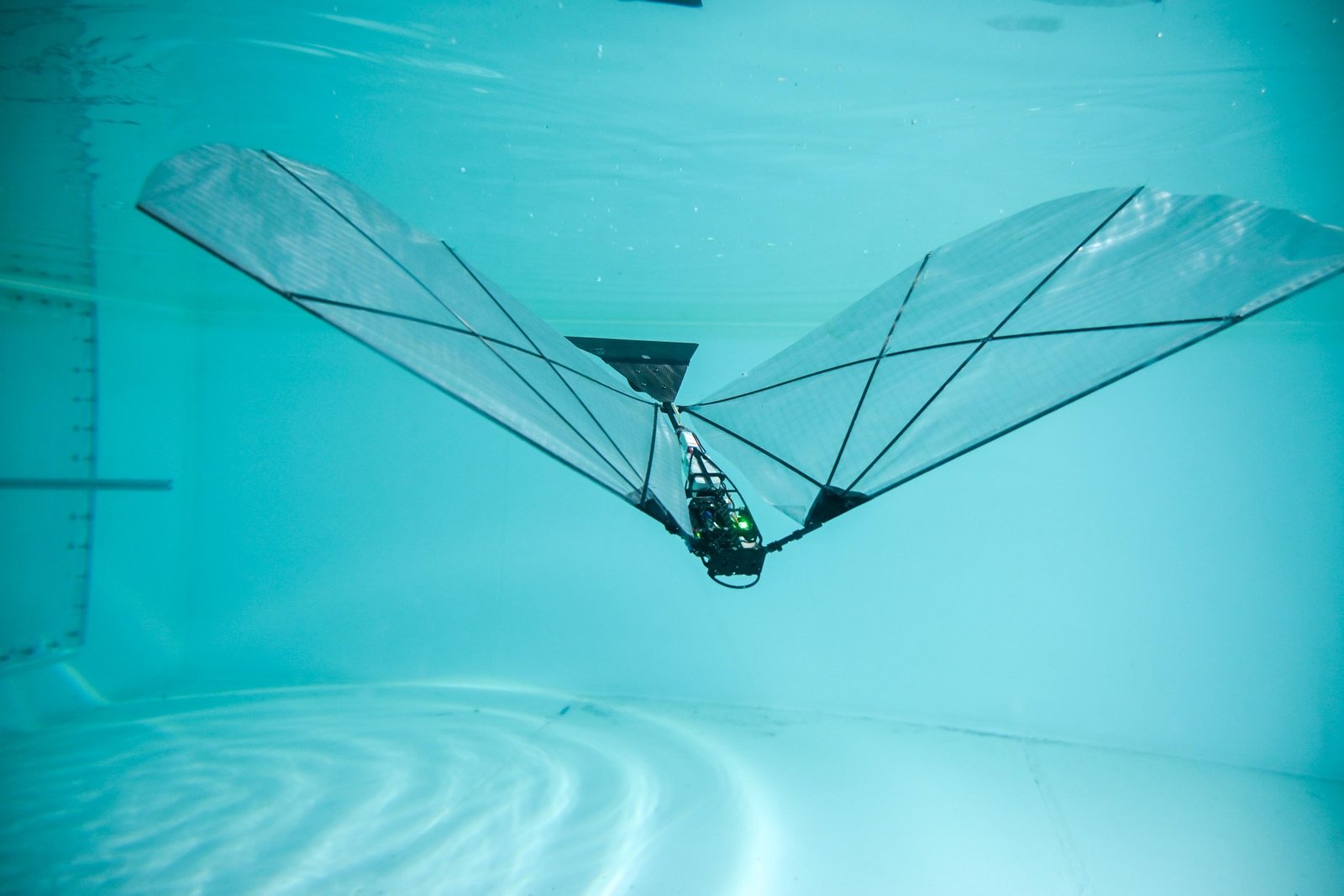
A groundbreaking development in the field of robotics has introduced a new ultra-lightweight robot capable of both swimming underwater and flying through the air like a bird. This innovative device, known as the Flapping-Wing Aerial-Aquatic Vehicle (FAAV), was developed by a collaborative team of researchers from the École Polytechnique Fédérale de Lausanne (EPFL) in Switzerland and the Massachusetts Institute of Technology (MIT). The project draws inspiration from diving birds such as puffins, gulls, loons, and petrels, which are naturally adept at both flying and swimming.
The study, published in the prestigious journal Science, explores how a lightweight robot weighing less than 300 grams can mimic the movements of these remarkable birds. The FAAV is designed to dive beneath the water’s surface and then return to the air, demonstrating an unprecedented level of adaptability.
Unlike most diving birds that rely on their feet to propel themselves from the water, the FAAV does not require any such mechanism. This discovery challenges traditional assumptions about how aerial and aquatic vehicles must operate. According to Zufferey, one of the researchers involved in the project, “If you look at birds, most birds need to paddle their feet at the surface to take off. And the question was, do we need the same for robots? And it turns out we don’t. No one’s been able to fly out of the water with wings.”
This achievement marks a significant milestone in the evolution of multi-modal robots. The FAAV’s ability to transition seamlessly between water and air opens up new possibilities for exploration and research in environments that are currently difficult to access.
Future Developments and Applications
The research team is already looking ahead to the next phase of development. One of the primary goals is to improve the wing design so that the robot can also rotate its wings while in flight. This enhancement could significantly increase the robot’s maneuverability and efficiency in various conditions.
Future tests will focus on evaluating the FAAV’s performance in more challenging environments, such as rough water and windy conditions. These trials are essential to ensure that the robot can function effectively in real-world scenarios before it is deployed for ocean research or other applications.
The potential uses for this technology are vast. From environmental monitoring to search and rescue operations, the FAAV could revolutionize how we interact with and understand our natural world. Its ability to navigate both air and water makes it particularly well-suited for tasks that require access to multiple domains.
Conclusion
The creation of the FAAV represents a major leap forward in the field of robotics. By drawing inspiration from nature, the researchers have developed a device that not only mimics the movements of diving birds but also surpasses them in certain aspects. As the team continues to refine and expand the capabilities of the FAAV, it is clear that this technology has the potential to transform the way we explore and interact with our environment.
- Author: Tyo Murty




















At the moment there is no comment