
Ancient Woman with ‘iPhone’ Found in Russian Atlantis

info Adjust the font size of this article to get the best reading experience.
A Mysterious Discovery in the Depths of Time
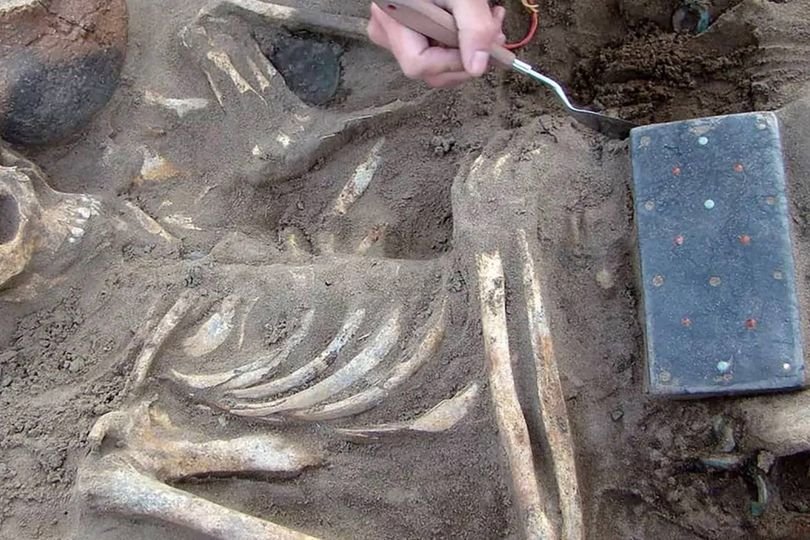
Archaeologists have made a remarkable and puzzling discovery in the depths of history, uncovering the remains of a woman who lived over 2,137 years ago. The tomb was found beneath what is often referred to as Russia’s version of Atlantis, an ancient necropolis that has been submerged for centuries. This discovery took place after the Ala-Tey necropolis was drained, revealing a hidden world beneath the waters near the Sayano-Shushenskaya Dam, one of Russia’s largest power plants.
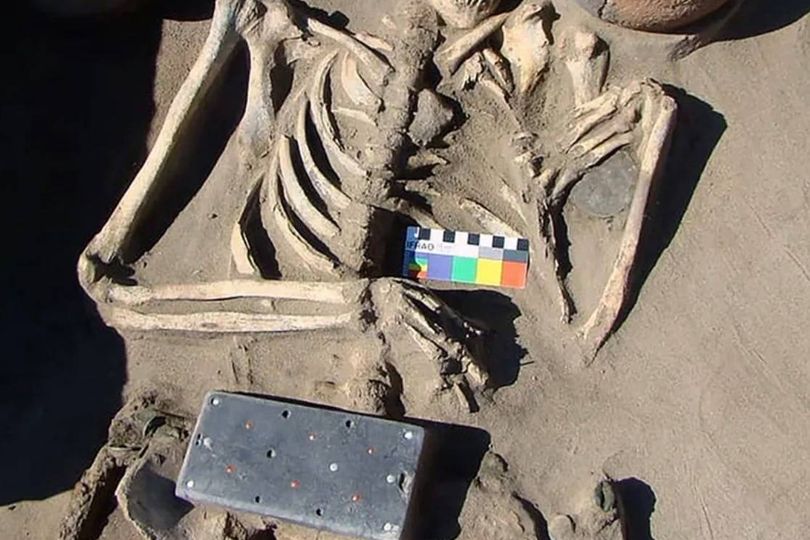
The woman, believed to be a stylish young individual from the Hunnu-era (Xiongnu), was buried with an object that resembles a modern-day iPhone. However, this artifact was not made of plastic or metal but rather crafted from black gemstone jet, a type of rock, and adorned with inlays of semi-precious stones. Experts think that she wore the object as a belt buckle, which would have been both a fashion statement and a symbol of status.
An Artifact That Stands Out
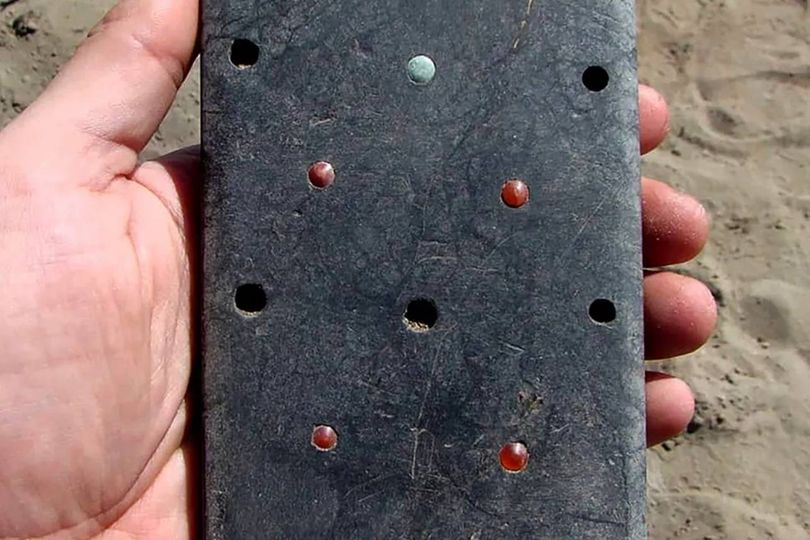
The unique stone features striking turquoise and red decorations, making it visually impressive. The buckle, measuring approximately seven by three and a half inches, was found in the typically submerged “Atlantis necropolis” near the dam. This area has become a focal point for archaeological research, revealing artifacts that offer insights into the lives of ancient peoples.
Archaeologists discovered similar jet buckles in three neighboring graves, indicating that this style of decoration was not unique to the woman in question. The “massive” iPhone-like buckle had holes on the shorter sides, with two round holes on one side for fixing the buckle to the belt and one oval hole on the other side, likely for clasping. These details suggest a level of craftsmanship and functionality that was advanced for its time.
Radiocarbon dating of the grave’s contents placed the burial between 92 B.C. and A.D. 71. The site is located in Tuva, a mountainous region known for its stunning landscapes and frequent visits by prominent figures such as Vladimir Putin.
A Rich History Beneath the Surface
The surrounding area is home to additional graves from prehistoric civilizations, spanning from the Bronze Age through the era of Genghis Khan. In 2019, archaeologists uncovered two further partly-mummified prehistoric fashionistas, who were buried with the tools of their trade. These findings highlight the significance of the site as a repository of cultural and historical artifacts.
Dr. Marina Kilunovskaya, who leads the Tuva Archaeological Expedition at the St. Petersburg Institute of Material History Culture, described the site as a scientific sensation. She emphasized the importance of the discovery, noting that the burials of rich Hun nomads were not disturbed by ancient grave robbers.
Researchers are working against the clock to study the sites and protect invaluable artifacts from water damage. The area, dubbed Russia’s Atlantis, continues to reveal secrets of the past, offering a glimpse into the lives of those who lived thousands of years ago. Each discovery adds another layer to our understanding of ancient cultures and their complex societies.
- Author: Tyo Murty




















At the moment there is no comment