
Top 5 Sci-Fi Book Trilogies of All Time Ranked


info Adjust the font size of this article to get the best reading experience.
The Power of Science Fiction Trilogies
Science fiction has long been a genre that thrives on imagination and innovation. While many standalone works have captivated readers, the most impactful ideas often require more than one book to fully explore their potential. This is where trilogies come into play, offering a structured narrative that allows for deeper world-building, character development, and thematic exploration. A great trilogy isn’t just three books in a row; it’s a cohesive story that challenges the boundaries of what science fiction can achieve.
The following five trilogies are considered some of the most significant in the genre, each contributing uniquely to the evolution of science fiction and setting the standard for future works.
The Sprawl Trilogy by William Gibson – Pioneering Cyberpunk
The Sprawl Trilogy, consisting of Neuromancer (1984), Count Zero (1986), and Mona Lisa Overdrive (1988), is widely regarded as the origin of cyberpunk. Set in a near-future world dominated by corporations and advanced technology, the trilogy explores themes of artificial intelligence, hacking, and the blurred lines between human and machine.
Neuromancer, the first book, follows Case, a washed-up hacker who is given a final chance to redeem himself by taking on a dangerous mission against a powerful AI. The sequels expand the world with new characters and further delve into the consequences of unchecked technological advancement.
What makes this trilogy essential is its creation of cyberpunk’s vocabulary, including the term “cyberspace,” which was coined before the internet became a part of daily life. Neuromancer won the Hugo, Nebula, and Philip K. Dick Awards, making it one of the few novels to achieve this triple crown. Its dense prose and immersive world-building have made it a cornerstone of the genre.
The Mars Trilogy by Kim Stanley Robinson – A Detailed Exploration of Space Colonization
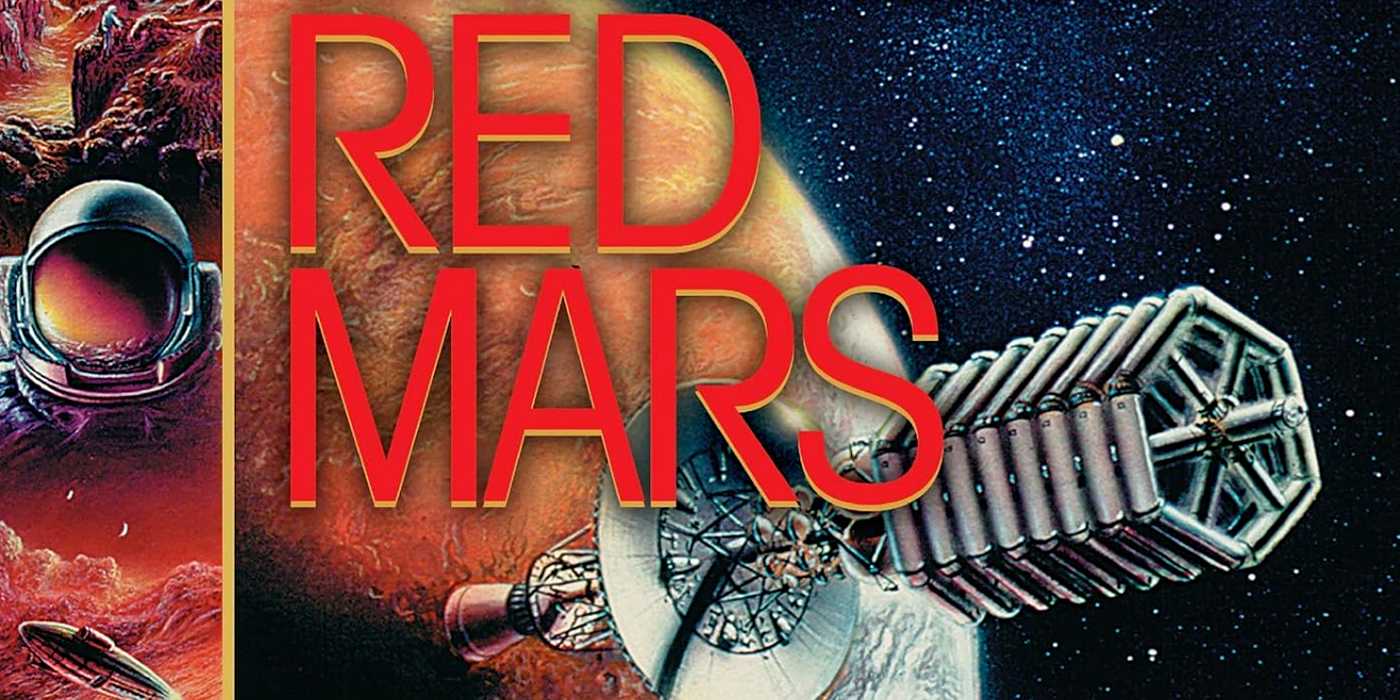
Red Mars (1992), Green Mars (1993), and Blue Mars (1996) form the Mars Trilogy, chronicling the settlement and terraforming of Mars over 187 years. The series follows the “First Hundred” colonists and their descendants as they navigate the challenges of building a society on a hostile planet while dealing with political, ecological, and philosophical dilemmas.
Each book in the trilogy has received critical acclaim, with Red Mars winning the Nebula Award, Green Mars winning the Hugo Award, and Blue Mars winning the Hugo again. Robinson’s meticulous attention to scientific detail and his focus on the slow, deliberate process of colonization set this trilogy apart from other dystopian fiction.
The Remembrance of Earth’s Past Trilogy by Cixin Liu – A Global Perspective on Sci-Fi
Also known as the Three-Body Problem trilogy, this series includes The Three-Body Problem (2008), The Dark Forest (2008), and Death’s End (2010). It begins with a Chinese physicist making contact with an alien civilization from a dying world, leading to a series of cosmic events that challenge humanity’s understanding of the universe.
This trilogy gained international recognition when The Three-Body Problem won the Hugo Award, highlighting the growing influence of non-U.S. science fiction. The middle volume introduces the “dark forest” hypothesis, a compelling solution to the Fermi paradox, while the finale was a finalist for the Hugo and won the Locus Award for Best Science Fiction Novel.
The Foundation Trilogy by Isaac Asimov – Establishing the Epic Future History Subgenre

Isaac Asimov’s Foundation trilogy, comprising Foundation (1951), Foundation and Empire (1952), and Second Foundation (1953), introduced the concept of “psychohistory,” a mathematical approach to predicting the future of large populations. The story follows mathematician Hari Seldon as he foresees the collapse of a galactic empire and establishes the Foundation to preserve knowledge and shorten the coming dark age.
Asimov’s work laid the foundation for the “epic future history” subgenre, focusing on ideas rather than action. The trilogy’s impact is evident in its recognition as the winner of the Hugo Award for “Best All-Time Series” in 1966, beating out competitors like The Lord of the Rings. It remains a benchmark for science fiction storytelling.
The Original Dune Trilogy by Frank Herbert – A Timeless Exploration of Power and Ecology
The original Dune trilogy, consisting of Dune (1965), Dune Messiah (1969), and Children of Dune (1976), is considered one of the greatest science fiction series ever written. It follows Paul Atreides as his family takes control of the desert planet Arrakis, the only source of the valuable spice that fuels interstellar travel.
Herbert’s work delves into themes of power, ecology, and religion, exploring the consequences of charismatic leadership and the exploitation of natural resources. Dune remains one of the few novels to win both the Hugo and Nebula Awards, and it is frequently cited as the best-selling science fiction novel of all time. Its enduring legacy lies in its refusal to glorify its hero, instead presenting a nuanced examination of the costs of power.
- Author: Tyo Murty




















At the moment there is no comment