
Secrets of Sun Valley: Media CEOs Fueled by Dealmaking Frenzy
- account_circle Tyo Murty
- calendar_month Tuesday, 14 Jul 2026
- visibility 16
- comment 0 comment
- print Print

info Adjust the font size of this article to get the best reading experience.
There may not have been any major deals struck at Allen & Co.’s annual Sun Valley retreat over the weekend, but it would be surprising if nothing emerged from this high-energy gathering. This year, more CEOs than usual were present—FOMO is a powerful force—at a time when media dealmaking is in full swing and technology leaders continue to push AI’s disruptive influence across industries. The Trump era is also playing a role in driving dealmaking; everyone knows that this administration is unlikely to stand in the way of its allies and tends to turn a blind eye when properly incentivized. As a result, there’s a strong sense of urgency to capitalize on opportunities.
FOMO has always been a big part of the Sun Valley experience. But with the media industry in a state of chaotic disarray, the imperative is to get on the jet and be there. With new deals being announced almost weekly, it’s better to be in the room and having the conversations rather than reading about them after the fact.
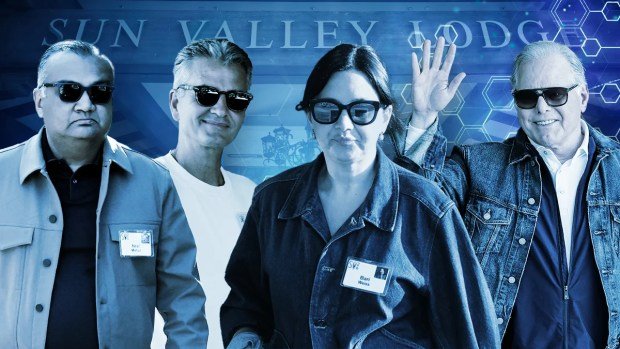
Comcast co-CEOs Brian Roberts and Mike Cavanagh made it clear they are buyers, not sellers, as they spin off NBCU from the broadband and mobile business. Outgoing CEOs, including Disney’s Bob Iger and Warner Bros. Discovery’s David Zaslav, were present because they are likely looking for new opportunities. Almost everyone showed up, with the notable exception of Paramount CEO David Ellison, who is on the verge of closing his deal to acquire Warner Bros. Discovery. However, his controversial CBS News Editor-in-Chief Bari Weiss was in attendance, which raises questions about whether it was awkward to cross paths with Anderson Cooper, who recently left “60 Minutes” and attended the event as well.
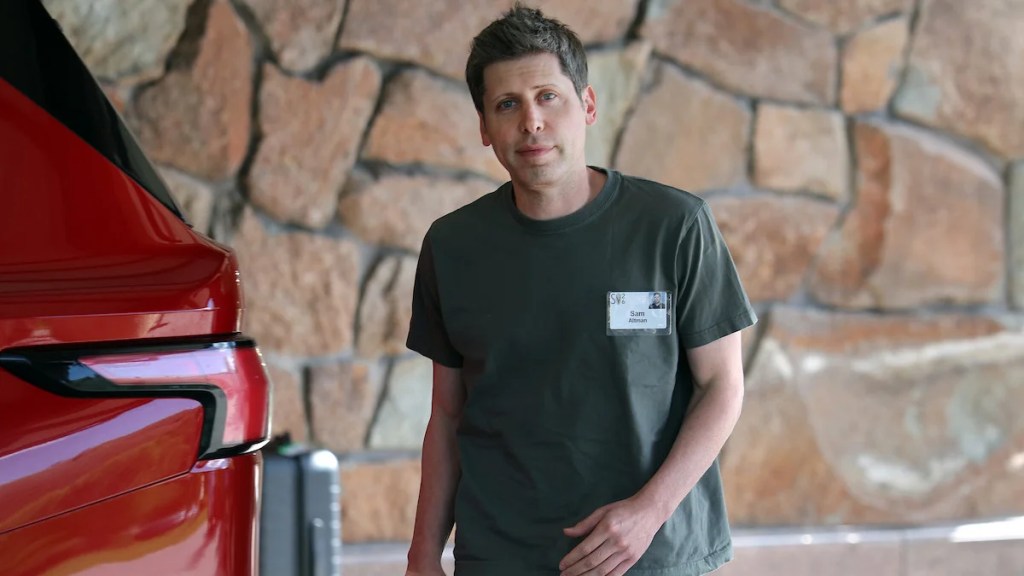
The guest list included tech leaders such as Apple CEO Tim Cook and his successor John Ternus, OpenAI’s Sam Altman, and Meta’s Mark Zuckerberg. There was also a strong presence from the sports world, including NBA Commissioner Adam Silver, NHL Commissioner Gary Bettman, and billionaire Stan Kroenke, owner of Arsenal and the LA Rams. Kroenke participated in a panel discussion with other team owners like Dan Gilbert (Cleveland Cavaliers) and John Henry (Boston Red Sox, Liverpool F.C.). This isn’t surprising, given the massive sports deals that have dominated headlines in recent years.
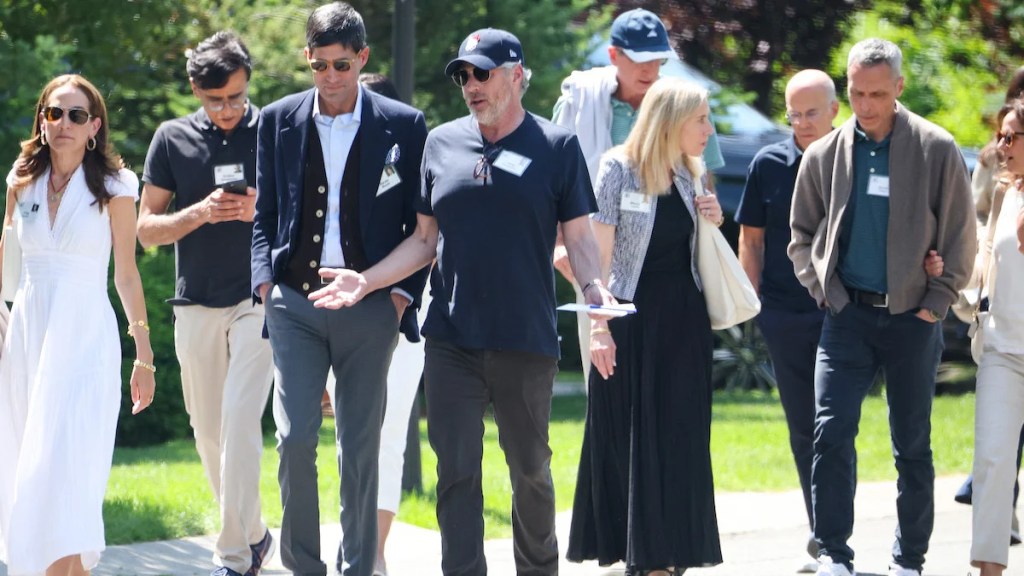
Deal discussions often take place during random walkabouts or intentional pairings. I reached out to a half dozen people who were there, but most did not want to talk. (This is not unusual, I assure you.)
According to my sources, Cook and Ternus were seen meeting with Amazon CEO Andy Jassy. Microsoft founder Bill Gates, who is still dealing with a serious reputational setback, was spotted in a meeting with OpenAI’s Altman. Microsoft owns more than a quarter of OpenAI, but the two companies ended their exclusive partnership in May. Other CEOs in attendance included Google’s Sundar Pichai, Netflix’s Ted Sarandos, and YouTube’s Neal Mohan. YouTube is currently the star of the show, having taken over traditional television and producing summer box office hits with Curry Barker and Kane Parsons. Meanwhile, Sarandos needs to figure out how to reverse a 40% drop in Netflix’s market cap over the past year and address declining user engagement.
Netflix once dominated Hollywood, but it now faces even bigger giants in Silicon Valley.
Since it’s an election year, there were plenty of politicians around too, including Sen. Chuck Schumer (D-NY) and Dan Caine, chairman of the joint chiefs of staff.
So where does entertainment fit into all of this? According to my sources, Brian Grazer of Imagine and Taylor Sheridan (“Yellowstone” et al) participated in a panel on creativity moderated by Anderson Cooper. Sheridan, based in Weatherford, Texas, was typically grumpy and reportedly said he hadn’t been to Hollywood in eight years.
What’s key here is context. As OpenAI pushes its IPO into 2027, there is plenty of speculation about who is winning this technology race that promises to reshape society. At the same time, media and entertainment must adapt to new business models that will work for the next decade.
This year’s conference comes amid a surge in dealmaking. To give a sense of the pace, here’s a recap of some current deals:
- Paramount acquiring Warner Bros. Discovery merger (pending)
- Charter-Cox merger (pending)
- Fox acquiring Roku (pending)
- Sky acquiring ITV’s media & entertainment arm (pending)
- Mediawan acquisition of Peter Chernin’s The North Road Company (pending)
- Netflix acquiring Ben Affleck’s InterPositive
- Electronic Arts acquisition by Silver Lake, Affinity Partners, and Saudi Arabia’s Public Investment Fund (pending)
- James Murdoch acquiring Vox and New York magazine
- Banijay Entertainment’s merger with RedBird IMI’s All3Media.
But there’s still plenty of dealmaking left for the entertainment elite to consummate. We’re all waiting for Casey Wasserman to sell his stake in his talent agency as promised—does he think no one noticed?
Assets that have previously been floated as potential takeover targets include Lionsgate, Starz, AMC Networks, and ITV Studios. Imax and Letterboxd have also had early talks to gauge interest in potential sales. Versant, spun off from Comcast, has been active on the M&A front, but is ultimately probably a sale target itself.
This is what I mean when I say this year is about FOMO as much as figuring out the next deal. The current chaos is going to be restructured—and soon.
- Author: Tyo Murty










At the moment there is no comment