
Civilian Areas Hit: Iranian Missiles Strike Residential Building in Bahrain Amid Fears of Wider US-Iran War

info Adjust the font size of this article to get the best reading experience.
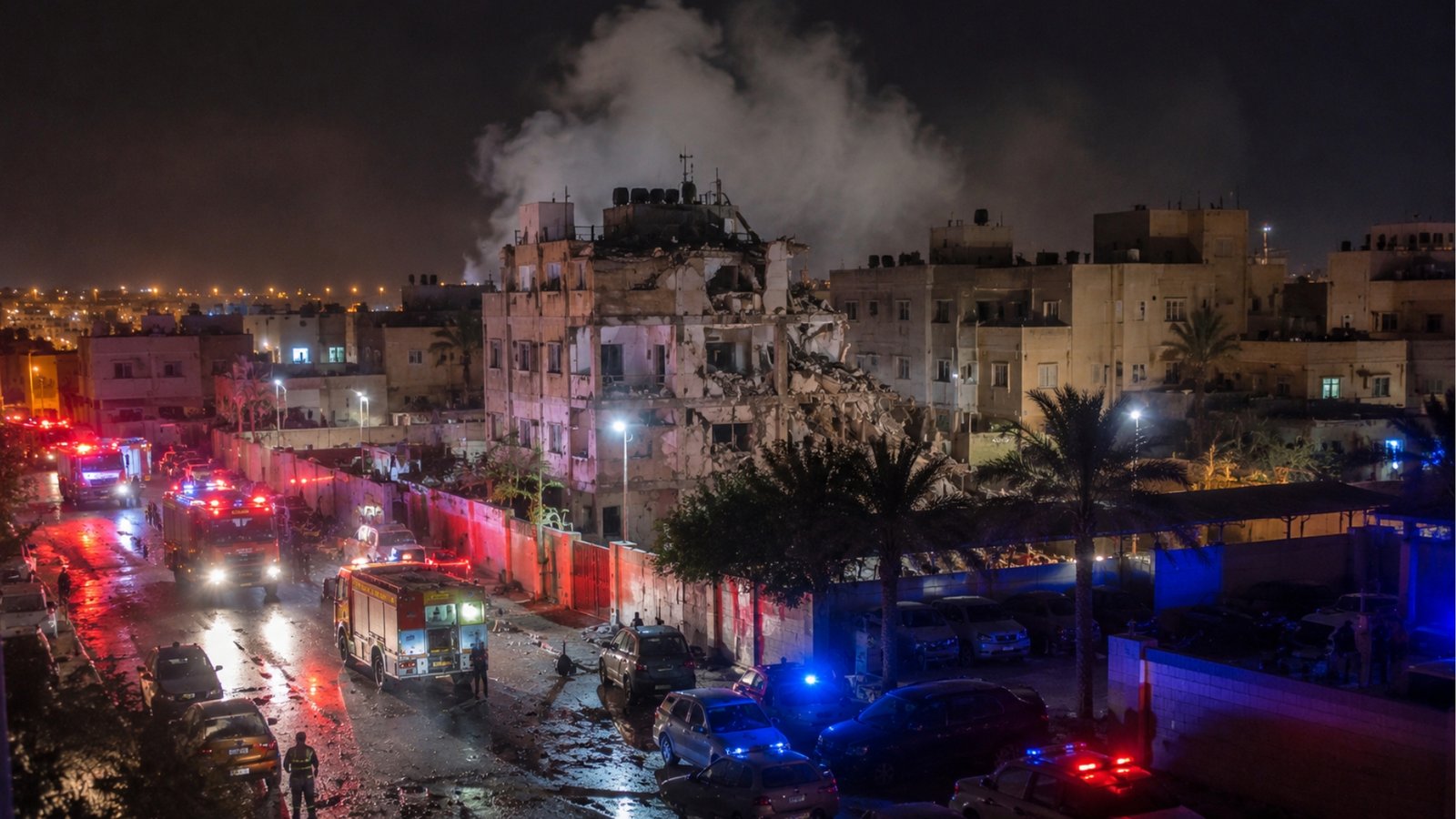
Bahrain Reports Damage to a Residential Building
Bahrain has confirmed that an Iranian attack caused damage to a residential building in the Muharraq province. Fortunately, no casualties were reported. This incident occurred during a new wave of Iranian missile and drone attacks targeting US military sites in both Bahrain and Kuwait, following recent American strikes on Iranian targets.
The damage is particularly significant as it highlights how the ongoing conflict is beginning to affect civilian areas, not just military or strategic locations. Even when attacks are framed as targeted at bases or key facilities, the risk of unintended consequences in populated neighborhoods is growing.
The Strike Followed a Warning from Donald Trump
According to Reuters, the latest escalation came after former President Donald Trump warned Iran that the United States might need to “militarily complete the job” if Tehran did not adhere to the interim agreement. Shortly after this warning, Iran launched missiles and drones at US-linked targets in Bahrain and Kuwait, as reported by Reuters.
This sequence of events illustrates how fragile the current ceasefire has become. What was intended as a temporary pause now appears to be evolving into a cycle of retaliation, with each side framing its actions as a response to the other. This interpretation is based on Reuters’ coverage of the exchanges.
Bahrain’s Strategic Importance in Gulf Security
Bahrain plays a crucial role in the broader Gulf security landscape. The country hosts several major US military facilities, and any attack on its territory carries significant regional implications beyond the immediate physical damage. A US official reportedly stated that there were no American casualties and no major damage to US sites at this stage, though the situation was still being assessed.
The broader concern is that repeated attacks on Bahrain could heighten pressure on Gulf governments that are already striving to avoid a larger conflict. An attack that reaches residential areas also raises the political and public stakes within the kingdom.
The Crisis Is Part of a Larger US-Iran Escalation
The Bahrain incident is not isolated. Reuters connected the latest developments to fresh US strikes on Iranian military facilities following an attack on a tanker in the Strait of Hormuz, one of the world’s most critical shipping routes.
This means the crisis is now unfolding across multiple fronts: US-Iran retaliation, the security of Gulf-based military installations, and maritime instability. As these fronts intersect, it becomes increasingly difficult to restore a sustainable ceasefire. This conclusion is drawn from Reuters’ reporting.
What Comes Next?
The next question is whether the damage in Bahrain remains an isolated incident or becomes part of a broader pattern of attacks impacting civilian areas in the Gulf. According to Reuters, both sides are still referencing the ceasefire framework, but the actual military exchanges continue to expand.
For now, Bahrain’s report serves as another indicator that the conflict is becoming more challenging to control. As long as missile and drone exchanges persist, the risks to Gulf infrastructure, civilian property, and regional stability are likely to remain high.
- Author: Tyo Murty


















At the moment there is no comment