
Drone Threats Reveal New Battlefield for Troops Far from Iran
- account_circle Tyo Murty
- calendar_month Wednesday, 22 Jul 2026
- visibility 18
- comment 0 comment
- print Print

info Adjust the font size of this article to get the best reading experience.
The Evolving Threat Landscape
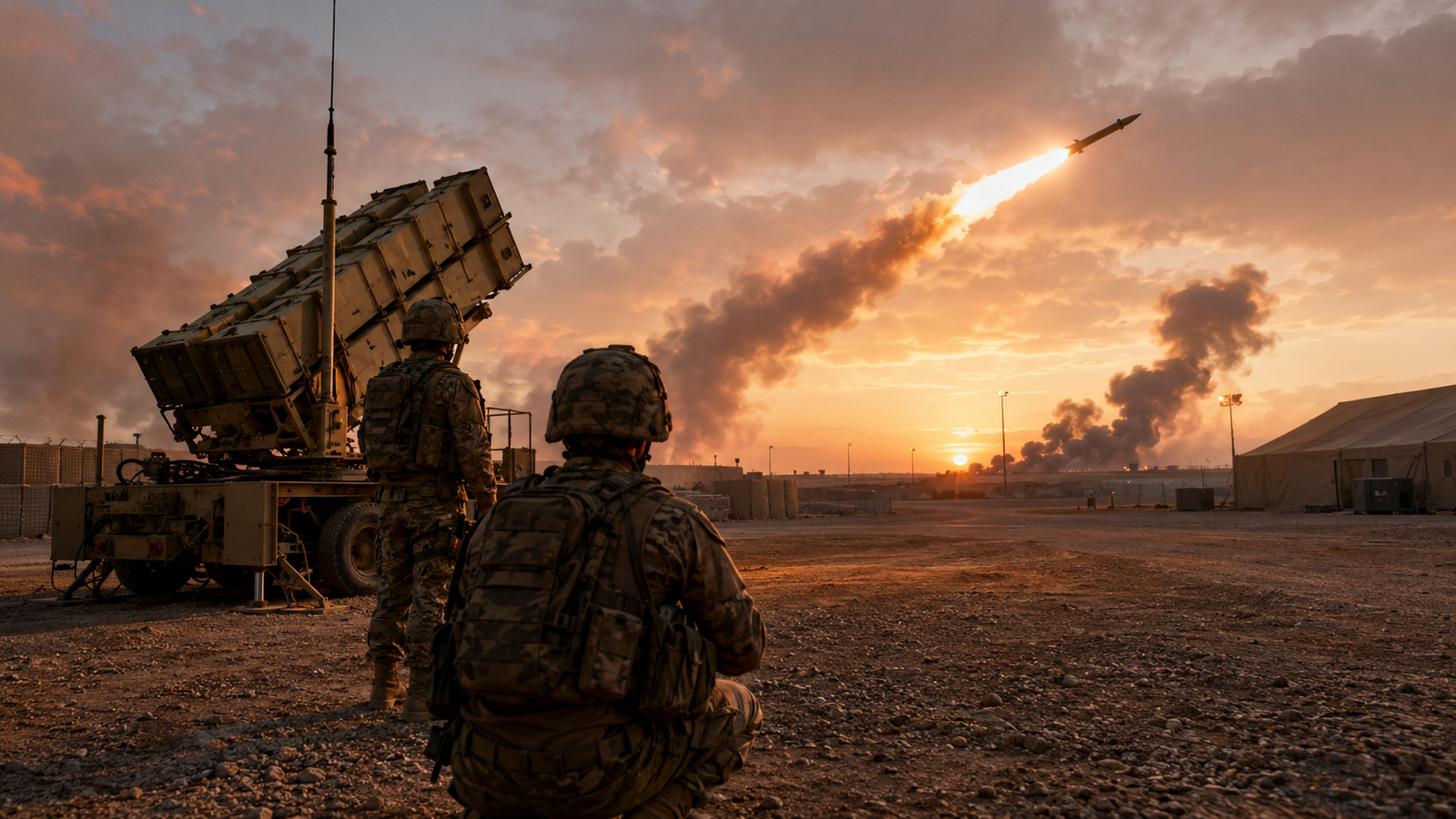
The four U.S. soldiers who lost their lives in recent days during renewed hostilities with Iran were all assigned to air defense units, tasked with the critical responsibility of staying on vulnerable bases to protect others from incoming ballistic missile and drone attacks. This marks a significant shift from the past two decades of war in Afghanistan and Iraq, where most combat deaths involved soldiers on foot patrols or in convoys. In this conflict, fatalities are occurring among troops who have never set foot in Iran, dying instead in attacks targeting bases that are sometimes hundreds of miles away.
Since the war began in late-February, Iran has launched approximately 8,500 missiles and drones at targets across the Middle East. According to a military official familiar with intercept numbers, about 100 of those attacks have managed to get past U.S. and partner nations’ defenses. The official spoke on the condition of anonymity to discuss sensitive military matters.
This shift has placed immense pressure on the U.S. military, particularly the Army’s air defense units, to quickly adapt. Brad Bowman, an Army veteran and senior director at the Foundation for Defense of Democracies, emphasized the challenges faced by these units. He noted that Iran’s proliferation of short-range drones and the difficulty of detecting and shooting them down have made the job even more complex. “Autonomy, artificial intelligence, and mass production are making the already very difficult job of U.S. Army air and missile defense personnel even more challenging,” Bowman said.
Tragedies in Jordan and Iraq
In Jordan, Pvt. Isabella Gonzales, 19, of Carrollton, Texas, and First Lt. Tyler James Feehan, 25, of Ewa Beach, Hawaii, were killed after an Iranian missile hit Muwaffaq Salti Air Base on Friday, officials said. Sgt. Angel S. Rampersad, 28, of Ozone Park, a neighborhood in Queens, is believed to have also been killed in the attack, the Pentagon said in a statement late Tuesday. Rampersad was previously listed as missing.
In recent days, Iran had more aggressively targeted Jordan, a U.S. official said, because the United States was in the process of shifting additional aircraft there. Tyler Feehan followed in his father Stephen Feehan’s footsteps to serve in the Army, becoming a platoon leader. His unit is responsible for operating air defense systems including the Patriot air defense system and lesser-known Avengers, truck-mounted weapons that fire Stinger missiles and a heavy machine gun. The Avenger was designed 40 years ago as a last line of defense against incoming helicopters, warplanes, or short-range missiles, but over the past 10 years, the Army has adapted the Avengers to shoot at drones, too, as demand has soared.
On Tuesday, his father arrived in Delaware from his residence in Italy to witness the arrival of Feehan’s flag-draped casket at Dover Air Force Base. “Carrying your legacy forward is now our purpose,” Stephen and Shari Feehan wrote in a post about their son, who was engaged to be married. “We only ask this: that in remembering Tyler, people pause to see the good this country still holds, rather than what divides it.”
Gonzales was responsible for operating and maintaining short-range air defense systems. “Her courage and sacrifice represent the very best of Texas,” Gov. Greg Abbott said on Facebook.
Tragedy in Iraq
In Iraq, Sgt. Michael Emmanuel Swinton, 30, of Fayetteville, North Carolina, was killed on Sunday at Erbil Air Base during the controlled detonation of an Iranian one-way attack drone, officials said. Swinton, who served with a separate Fort Bragg, North Carolina, air defense unit, died “during an operation to safeguard fellow soldiers,” his commanding general, Lt. Gen. John L. Rafferty, said in a statement about Swinton’s death.
“My husband, my best friend, my daughter’s father, he’s gone and I don’t have words right now,” Mia Gonzalez-Swinton wrote on her Facebook page alongside a montage of photos. In a statement, Swinton’s mother, Christel Swinton Andujar, said that her son “wasn’t just a hero because he wore the uniform — he was a hero because of the way he loved, protected, encouraged, and inspired everyone around him.”
Political Reactions and Security Concerns
Speaking Tuesday, President Donald Trump appeared to suggest that U.S. forces in Jordan had relied on another country’s air defense weapons to intercept the missiles, though he did not identify whose. “If we had other operators, you know, it would not have happened,” Trump told reporters. “But when you let other people do your job … sometimes it doesn’t work out so well.”
The White House did not immediately respond to a request for comment, and neither did U.S. Central Command, which oversees the war. The Jordanian Embassy also did not immediately respond to a request for comment.
The recent U.S. troop deaths have revived questions about the safety of American forces at bases in the Middle East, as those facilities generally were not designed to sustain retaliatory strikes. During the previous wars in Iraq and Afghanistan, fighting occurred inside those two countries and not at the regional facilities supporting combat operations. Before the Iran war began, the Pentagon moved many of its forces off larger bases in anticipation that Tehran would retaliate against those facilities.
Iran’s response has been broader than that, however, hitting large and small installations and civilian infrastructure, and threatening to hit any country supporting U.S. war operations. A soldier who had previously deployed to Jordan’s Muwaffaq Salti Air Base told The Post that many of the buildings there were metal trailers and thin-skinned tents not able to withstand rocket, mortar, or drone attacks.
But even newer construction at some bases in the region, which now includes layers of thick walls, cannot protect against a direct hit from a ballistic missile, said the soldier. “There’s not an expectation that these bases are going to be under attack,” the soldier said. “The theater is not set for this prolonged stuff. And that’s why you see the hits that we are taking.”
- Author: Tyo Murty















At the moment there is no comment