
England’s Obesity Crisis Deepens as Study Reveals Shocking Regional Health Divide

info Adjust the font size of this article to get the best reading experience.
The Growing Obesity Crisis in England
The obesity crisis in England has reached alarming levels, with nearly a third of adults now affected by bulging waistlines. A recent global study highlights that the situation has worsened since the pandemic, revealing stark disparities across different regions of the country.
Regional Disparities in Obesity Rates
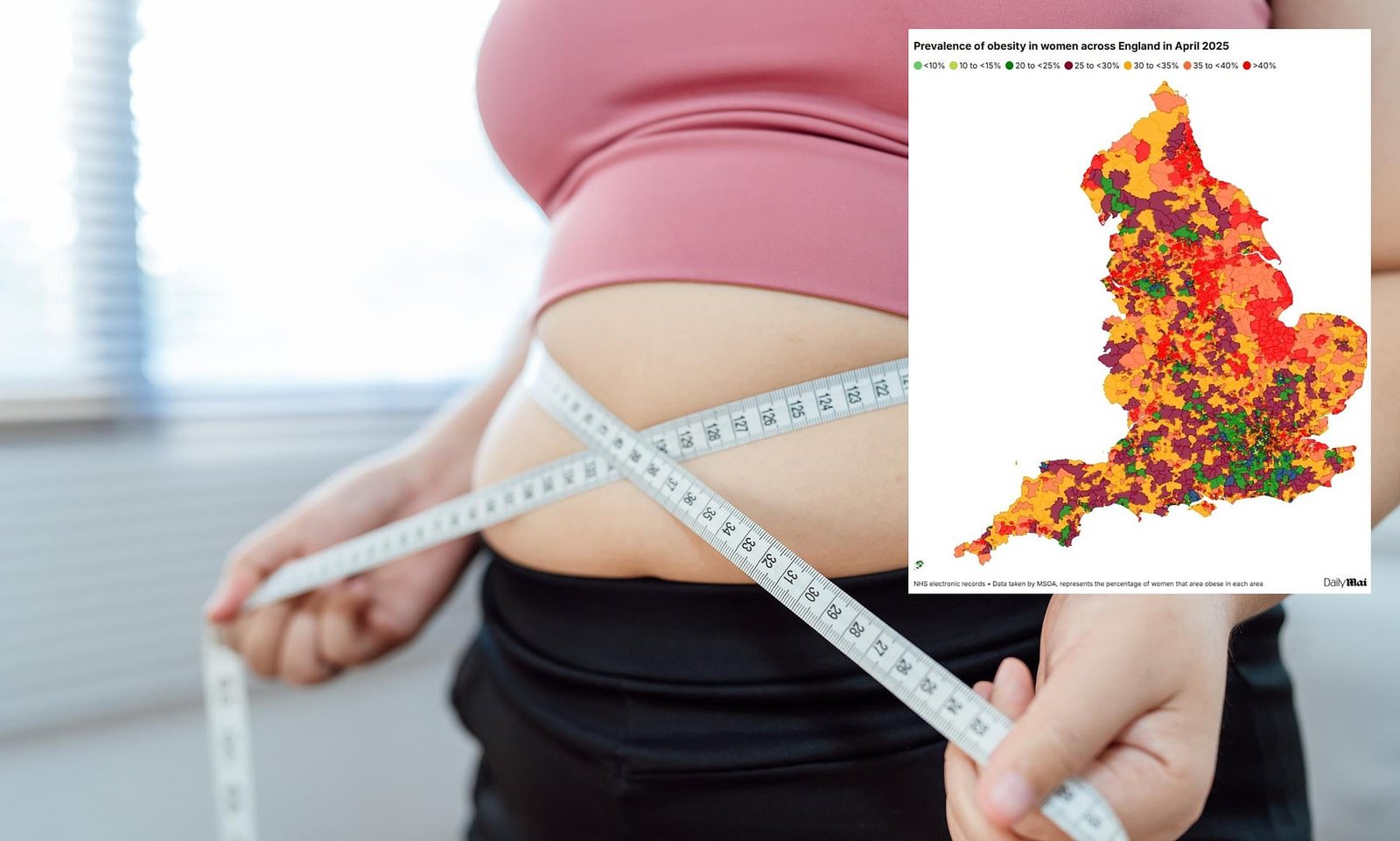
One of the most concerning findings is the significant difference in obesity rates between the poorest parts of northeast England and the more affluent areas of central London. Researchers from Cambridge University found that individuals living in the poorest parts of northeast England are six times more likely to be obese than those in central London. This disparity is described as “especially concerning” by Professor Robert Fletcher, co-author of the study.
“The percentage of adults affected by obesity in northeast England is six times higher than in central London,” said Fletcher. “Differences on this scale are rarely seen in other areas of public health.”
These inequalities have far-reaching implications, not only for individual health but also for future generations. Obesity is linked to infertility, adverse pregnancy outcomes, and child obesity, which can perpetuate cycles of health inequality.
The Study and Its Findings
The study, published in The Lancet’s Diabetes and Endocrinology journal, is the first to analyze obesity trends over the last six years using NHS health records covering nearly 55 million adults. It revealed that overall obesity rates increased by 4% in 2025 compared to pre-pandemic levels.
Young adults faced the largest increases, with obesity rates rising by almost a fifth among 30 to 39-year-olds. For those aged 20-29, the rate of new obesity cases rose by 16%, while rates fell among older adults aged 60-79.
The study also showed that obesity rates were 35% higher for individuals with the highest socioeconomic deprivation and lowest incomes compared to the highest earners. In some areas of northeast England, the proportion of people affected by obesity was nearly six times higher than in the most affluent parts of central London, where just over 8% of people were obese.
Gender and Socioeconomic Factors
The gap was even wider for women, with new cases of obesity over 50% higher among the most deprived. Obesity was defined as having a body mass index (BMI) of 30 or over or based on a clinician’s diagnosis.
Despite an estimated 2.4 million people taking weight loss drugs in the UK, around a third of adults are still thought to be living with obesity. Since the 1980s, obesity rates have risen dramatically, increasing more than eight-fold among boys and more than six-fold for girls.
As a result, obesity is now more common than high blood pressure and nearly three times as common as smoking. At current trajectories, 40% of people across many high-income countries are expected to be obese by 2050.
Health Implications and the Role of Medications
Obesity has been linked to at least 13 different types of cancer, including breast, bowel, pancreatic, oesophageal, gallbladder, womb, and ovarian. It also puts immense pressure on the heart, kidneys, and liver.
While GLP-1 drugs have shown promise, researchers found no “obvious reductions” in obesity rates following their introduction. Professor Fletcher noted that these drugs are currently mostly privately prescribed and expensive, creating barriers for people from disadvantaged backgrounds.
“We need deep-seated change to the many social and economic factors that drive obesity in the first place,” he said.
Expert Perspectives and Calls for Action
Naveed Sattar, professor of cardiometabolic medicine at the University of Glasgow, emphasized that obesity is not simply a matter of willpower. “These new, powerful data indicate that those most at risk frequently reside in the most obesogenic environments and likely have the least agency to withstand such environments,” he said.
The research team is urging the government to expand access to new treatments faster and implement prevention strategies tailored to age, sex, and ethnicity-specific contexts. They also call for a fundamental reshaping of food and activity environments to make healthier choices easier.
“Failure to act will drive further rises in multi-morbidity and human suffering, with profound consequences for the NHS and the wider economy,” Sattar added.
The Importance of Data and Research
Angela Wood, study co-lead and professor at the University of Cambridge, highlighted the importance of secure access to whole-population health data. “We have generated the most comprehensive evidence to date on how obesity risk and burden are increasingly diverging across multiple dimensions of inequality,” she said.
“This underscores the critical importance of enabling research, surveillance, and timely action to address widening health inequalities.”
- Author: Tyo Murty



















At the moment there is no comment