
Why Bacteria Filter Plan Faces Strong Resistance in Arroyo Seco

info Adjust the font size of this article to get the best reading experience.
The Debate Over a Small Piece of Land
Between South Pasadena and Highland Park lies a small area of natural land featuring Mexican fan palms and even some oak trees. Some locals appreciate this space as it is, despite its graffiti and potential fire hazards. However, the city of Pasadena has different plans for the site.
The city claims that this area is essential for filtering out harmful bacteria like E. coli and zinc pollution, which negatively affect water quality in the Arroyo Seco. This waterway begins in the Angeles National Forest and flows through several cities before reaching the L.A. River. The proposed water-cleaning project has sparked protests from community groups and some local representatives. A lawsuit has been filed against the city, and there is an active social media campaign aimed at stopping the project.
Pasadena intends to remove some of the densely packed trees on the two-acre site near San Pascual Park to create a new wetland surrounded by native plants and walking paths. The project involves removing thousands of cubic yards of soil and plants over five months, with six dump trucks’ worth of material removed each day. The city plans to build infiltration basins and widen the stream’s path to enhance water filtration and help recharge the aquifer.
In 2010, the Los Angeles Regional Water Quality Control Board set maximum bacteria levels allowed in the watershed. In response, Pasadena and South Pasadena secured nearly $15 million for the water reuse project. Although the city faces potential fines of up to $10,000 per day for not reducing bacteria, these penalties have not yet been imposed.
At first glance, the project may seem excessive for a small area about the size of two football fields. However, to many community members, this unmanicured green space is a valuable part of the city’s limited natural areas.
Tim Brick, executive director of the Stewards of the Arroyo Seco, described the site as a “little environmental gem.” He criticized the plan to bulldoze the area and replace it with pools and vegetation. Andrew Salas, chair of the Gabrieleño Band of Mission Indians — Kizh Nation, also called for a full avoidance of the area, citing concerns about damaging fragile and tribal sites within the Hahamongna Watershed and the risk of encountering ancestral human remains.
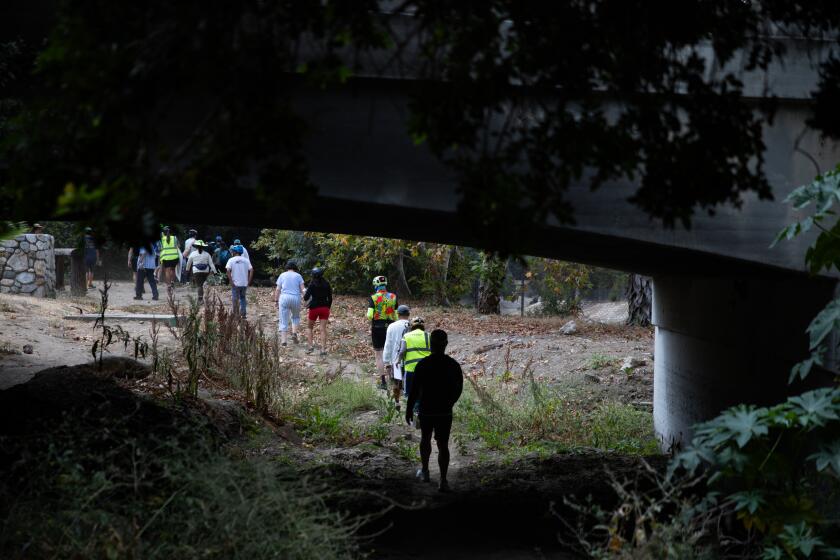
The area is used by residents who find it cooler and more inviting than other parts of the city. Clara Solis, a member of Save San Pascual Park, noted that people often visit the site to sit and enjoy the shade. She emphasized the importance of trees, having seen them cut down in her childhood neighborhood, which led to increased noise and pollution.
Solis became involved after learning that nearly 140 trees would be removed in the Arroyo Seco project. She led a lawsuit against Pasadena, prompting the city to conduct a full environmental impact report.
Grassroots organizers also pointed out that initial notices about the project did not reach all residents, especially those on one side of the arroyo, and were only distributed in English.
Despite the heated objections, most people agree on the need for a cleaner Arroyo Seco. Heal the Bay gave the river an F on its Annual River Report Card in 2025, mainly due to E. coli levels.
Brent Maue, city engineer for the Public Works Department of Pasadena, said the San Pascual site is a good candidate for the project. He mentioned that it is one of the few places where improving water quality and restoring a wetland can happen simultaneously.
Christina Monde, Pasadena’s city project manager for the Arroyo Seco project, attributed some opposition to misconceptions, such as the belief that the city is cleaning water for a golf course. She clarified that the pipeline for the golf course is over 70 years old and its capacity will not increase.
Monde does not see the wild patch as being particularly important in its current state. She pointed out issues such as unauthorized trails, overgrowth, unhoused individuals, broken fencing, and algae. She also noted that 82 of the 136 trees to be removed are invasive Mexican fan palms, which pose a fire hazard.
The public comment period on the draft environmental report has been extended to Saturday. Comments should be sent to cmonde@cityofpasadena.net. Another community meeting is planned, but no date has been set yet.
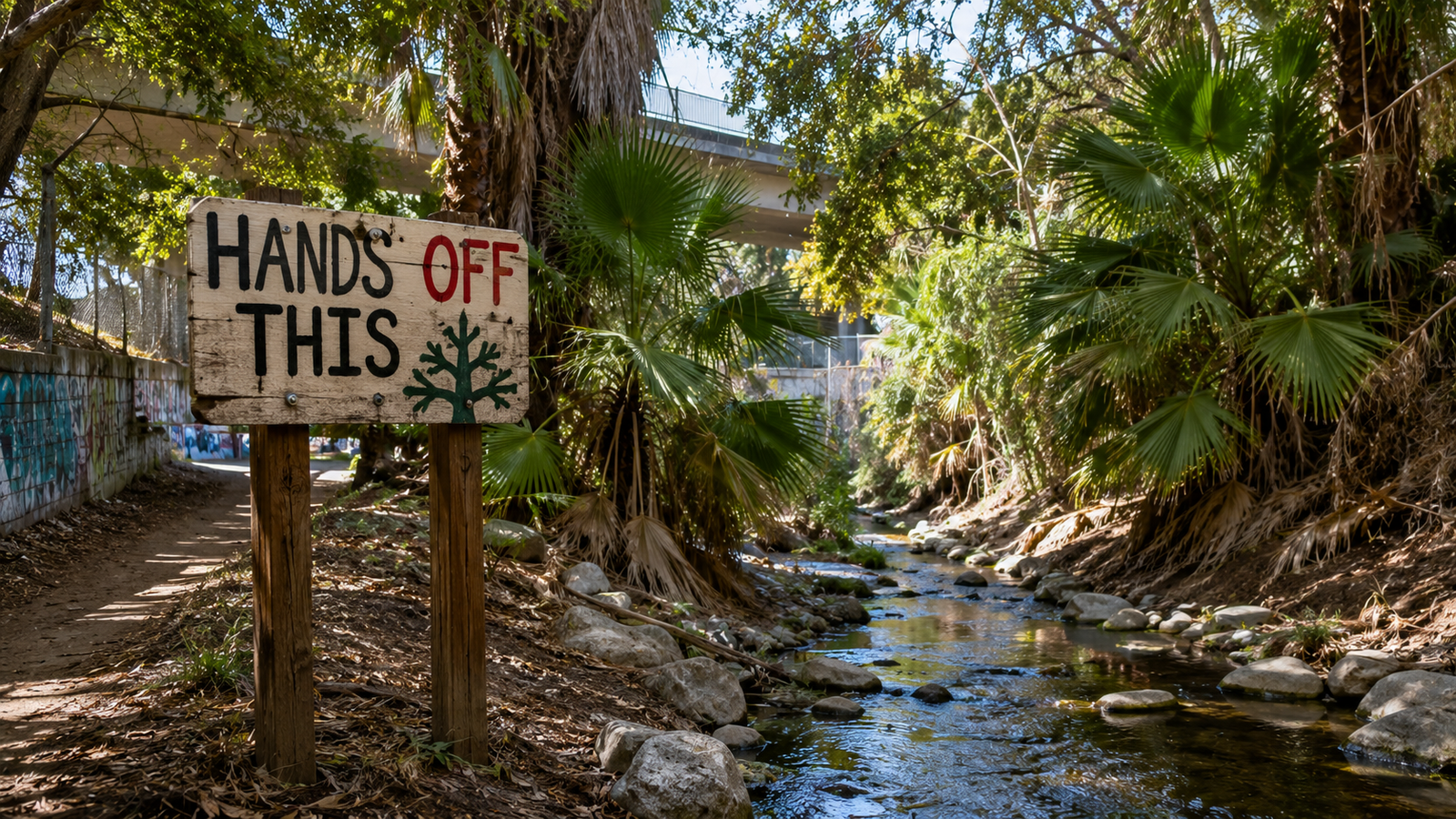
Visiting the San Pascual site today reveals the complexities of the debate. A rusted fence surrounds the lot, and a path leads into the area marked by a hand-painted sign reading “HANDS OFF THIS.” Walking through the lush vegetation feels like entering a hidden jungle, passing clusters of palms and a small stream carrying bacteria.
- Author: Tyo Murty















At the moment there is no comment