
Connecticut’s New Domestic Violence Report Reveals a Troubling Trend Behind Falling Crime Rates
- account_circle Tyo Murty
- calendar_month Wednesday, 29 Jul 2026
- visibility 12
- comment 0 comment
- print Print

info Adjust the font size of this article to get the best reading experience.
Connecticut’s Domestic Violence Crisis: A Growing Concern Amid Declining Crime Rates
For the past two years, Connecticut officials have highlighted a decline in the state’s murder and violent crime rates. However, recent data from the Department of Emergency Services and Public Protection (DESPP) has revealed a troubling trend: domestic violence remains a persistent and alarming issue.
The newly released Domestic Violence 2025 report highlights concerning long-term trends that suggest domestic violence is not decreasing at the same rate as other forms of crime. While overall murder rates have declined, the proportion of murders linked to domestic and family violence has increased. This shift has raised significant concerns among law enforcement and advocacy groups.
Key Findings from the Report
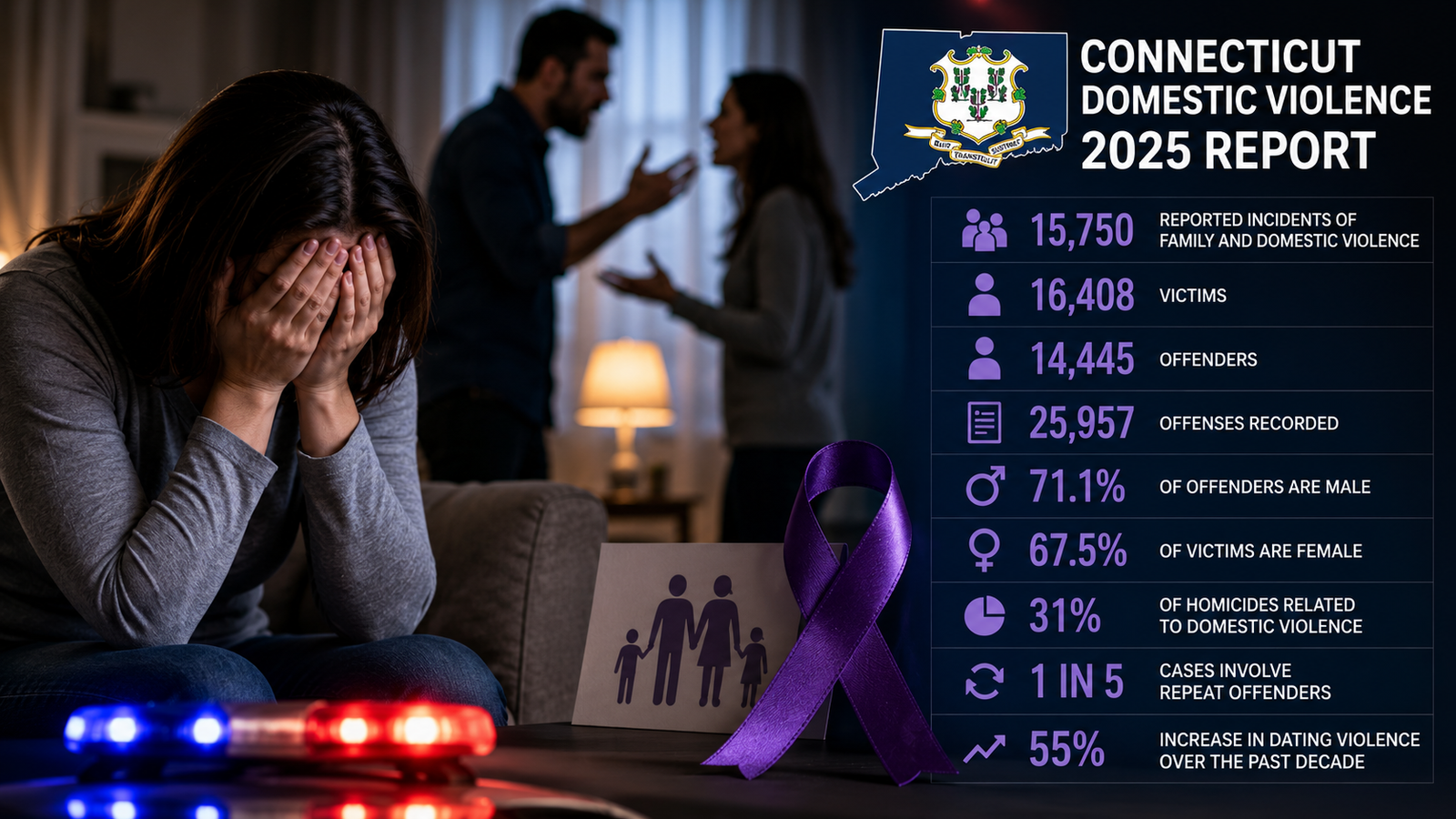
In 2025, there were 15,750 reported incidents of family and domestic violence across Connecticut, involving 16,408 victims, 14,445 offenders, and 25,957 recorded offenses. Despite these numbers, the data shows that domestic violence-related homicides have not seen a corresponding decrease. As a result, a larger percentage of total murders are now connected to domestic and family violence.
Some of the key statistics from the report include:
- Gender breakdown: 71.1% of offenders are male, while 67.5% of victims are female.
- Homicide connection: 31% of all homicides are related to domestic violence.
- Repeat offenders: One in five domestic violence cases involves repeat offenders.
- Dating violence increase: There has been a 55% rise in dating violence over the past decade.
- Victim history: Most homicide victims did not have a documented history of being victims of domestic violence.
These figures underscore the need for more comprehensive approaches to addressing domestic violence, especially given its growing impact on the state’s overall crime statistics.
Calls for Action and Collaboration
Commissioner Ronnell Higgins of DESPP emphasized the importance of using this data to drive change. In a recent statement, he said, “This is a complex problem that requires many people to take a careful look at this data.”
Dr. Michael Mascari, chief data officer at DESPP, echoed this sentiment, stating that domestic violence is taking up a growing share of total murders. He called for collaboration across different sectors, including healthcare, public health, and education, to address the issue holistically.
“Many different audiences should be looking at this data,” Mascari said. “This includes the health care system, public health organizations, this includes schools. You can’t just solve this with more proactive policing.”
Advocacy Groups Raise Concerns
The Connecticut Coalition Against Domestic Violence has expressed concern over the findings but remains committed to finding solutions. Meghan Scanlon, president and CEO of the group, pointed out that many intimate partner violence homicides are preceded by long histories of abuse, yet underreporting often prevents systems from recognizing the warning signs.
“It is critical for systems to work together to identify the signs of escalating violence, know what resources are available across the state to help victims and find effective methods for holding offenders accountable before it’s too late,” Scanlon said.
West Hartford Police Chief Vernon Riddick added that accurate data is essential for effective public safety planning. He praised the expanded domestic violence report for providing valuable insights into trends, training needs, resource allocation, and prevention strategies.
The Path Forward
As the state continues to grapple with the complexities of domestic violence, the need for coordinated efforts across multiple sectors becomes increasingly clear. Law enforcement, healthcare providers, educators, and community organizations must work together to create a safer environment for all residents.
The data from the Domestic Violence 2025 report serves as a wake-up call, highlighting the urgency of addressing this issue head-on. With continued research, collaboration, and policy development, Connecticut can take meaningful steps toward reducing domestic violence and protecting vulnerable populations.
- Author: Tyo Murty



















At the moment there is no comment