
These NBA Players Could Break Out After a Trade—But Not Everyone Deserves the Hype

info Adjust the font size of this article to get the best reading experience.
The Environmental Test: How to Know if a Fresh Start Will Actually Help
Environmental Problems vs. Internal Problems — the Filter Every Manager Needs
Here is the only question that matters when a player changes teams: was the problem him, or was it everything around him?
An environmental problem is caused by factors outside the player’s control. A crowded rotation that kills his minutes. A system that ignores his best skills. A coaching structure that limits his opportunity regardless of how well he plays. These problems disappear when he moves. The skill was always there, but the opportunity was not.
An internal problem is the opposite. Declining athleticism. A recurring injury history. Shooting mechanics that fall apart on every team. These travel with the player. A new uniform does not fix them.
The tool to separate the two is per-minute production. Look at per-36 scoring alongside usage rate and true shooting percentage. If per-minute numbers are strong but per-game output is weak, the problem is minutes suppression. That is environmental. If the per-minute numbers are also weak, the problem is internal, and no trade solves it.
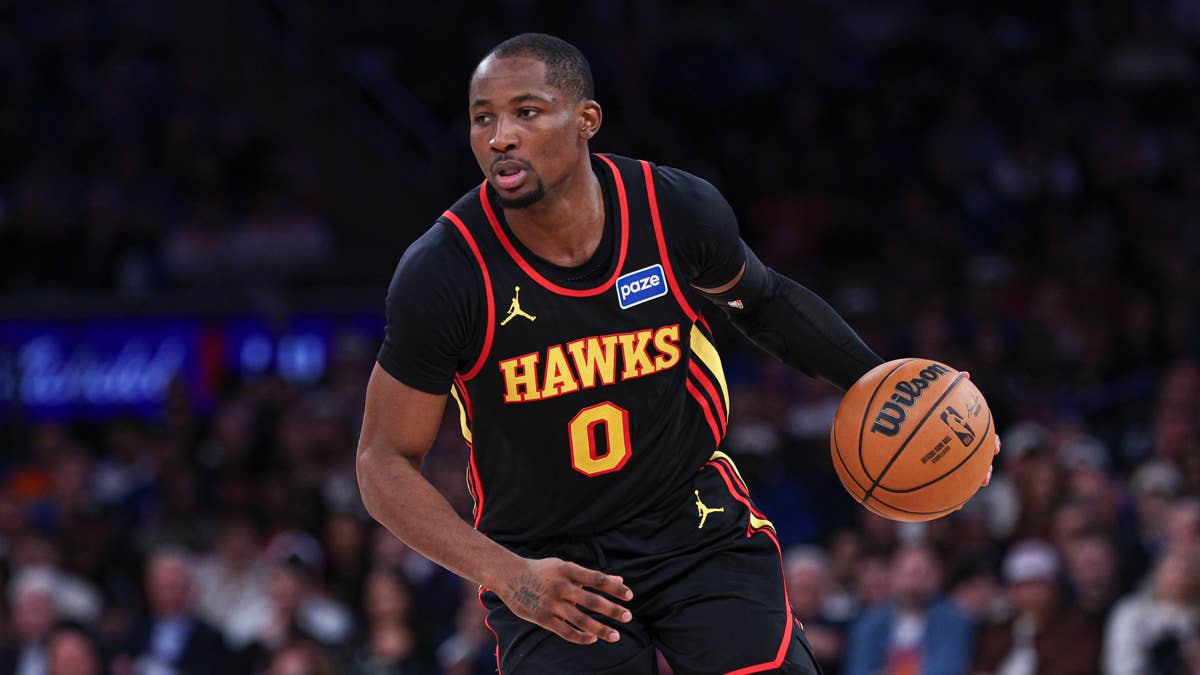
Jonathan Kuminga
was traded from Golden State to Atlanta on February 5, 2026, in exchange for Kristaps Porzingis. Before that move, his role in Golden State was never stable. He closed 2024-25 averaging 15.3 points and 4.6 rebounds across 47 games but fell out of favor on more than one occasion amid persistent trade rumors. His per-minute production was always capable. His per-game numbers were choked by a rotation that never fully committed to him.
In his very first game as a Hawk, Kuminga posted 27 points, 7 rebounds, 4 assists, and 2 steals in just 24 minutes. That is what suppressed per-minute production looks like when the environment finally clears. He averaged 12.2 points, 5.6 rebounds, and 2.3 assists while shooting 46.3 percent from the field across 36 regular season games in Atlanta.
Scoot Henderson
is the same diagnostic applied to a different situation. Henderson averaged 14.2 points, 3.7 assists, and 2.7 rebounds per game across 30 regular season appearances in 2025-26. That looks passable. But he averaged just 22.9 minutes per game as the third overall pick on a rebuilding team. His per-36 scoring improved by 3.5 points year over year, and his per-100-possession scoring jumped by 4.2 points. That is a textbook environmental problem hiding inside average-looking per-game stats.
The specific threshold to apply: a usage rate below 20 percent combined with a true shooting percentage above 55 percent almost always signals structural suppression rather than genuine struggle. Henderson’s usage rate sat at just 22.5 percent in 2024-25, described at the time as unusually and questionably low for a rebuilding team that spent a top-three pick on its point guard of the future. His per-minute numbers kept climbing anyway.
That gap between per-minute production and per-game output is the whole diagnostic. If it is large, the environment is the problem. If per-minute numbers are also weak, move on. That player’s issues follow him everywhere. For more on players in this exact position, see our breakdown of players whose fantasy value could be saved by the right free agency move.
Genuine Fresh-Start Cases: Players Whose Problems Were Environmental
Brandon Ingram, Cam Thomas, and the Crowded Rotation Escapes That Should Work
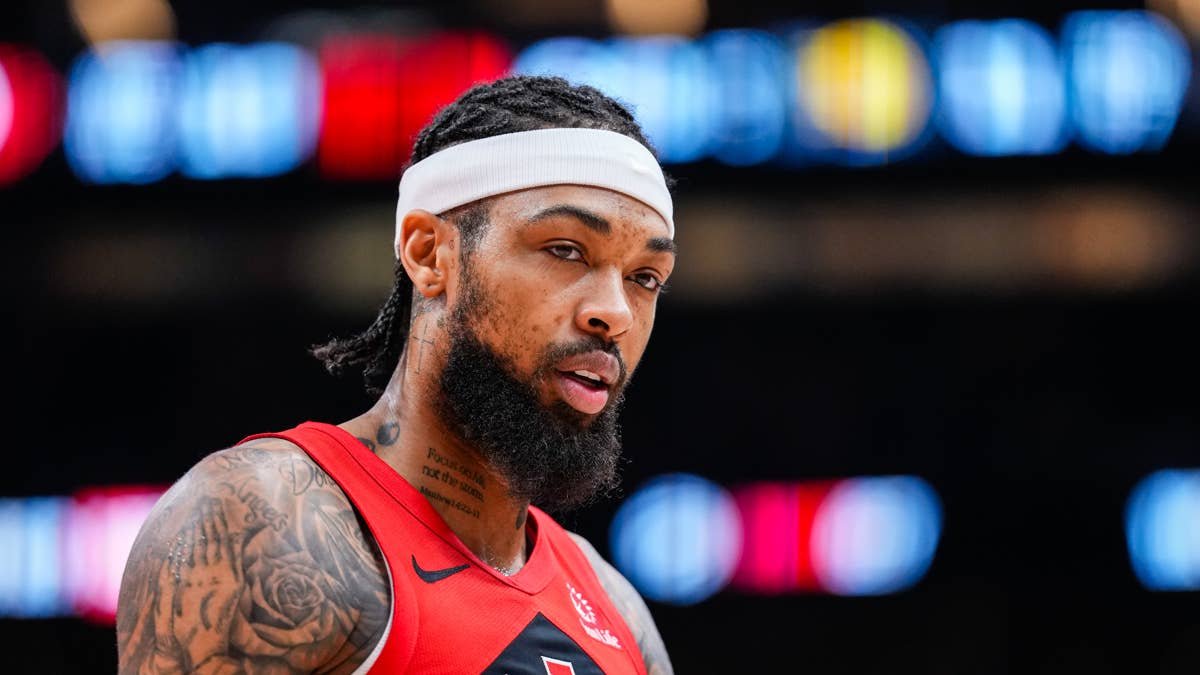
Brandon Ingram: High Confidence
Ingram finished 2025-26 averaging 21.5 points and 5.6 rebounds per game, but his fantasy ceiling was significantly lowered by a crowded Toronto rotation. Sharing the floor with Scottie Barnes and RJ Barrett limited his shot attempts to just 16.7 per game. That number tells the whole story. In New Orleans, Ingram posted at least 20.5 points, 5.0 rebounds, and 5.0 assists for three consecutive seasons, hitting 49.2 percent from the field in his final year there. The efficiency held up in Toronto, but the volume got squeezed.
Multiple reports now describe a summer trade as increasingly inevitable, citing the difficult 1A and 1B dynamic between Ingram and Barnes and the Raptors’ interest in finding complementary pieces around their cornerstone. A move to a team like Detroit would immediately make Ingram the number one option, with his scoring projected to jump from 21.5 to between 25.0 and 26.5 points per game and assists rising from 3.7 to over 5.0.
He has passed the environmental test. The trade momentum around him is beginning to pick up. This is the one you move on before the landing spot drives his ADP up. He sits alongside the other veterans whose fantasy value depends on finding the right new team.
Cam Thomas: Medium Confidence
Thomas averaged 24.0 points, 3.8 assists, and 3.3 rebounds per game in 2024-25 but appeared in just 25 games due to injury. In 2025-26, Brooklyn pivoted to its young core and his role collapsed, with Thomas averaging just 15.6 points in 24.3 minutes across 24 appearances before being waived in February.
That drop from 24.0 to 15.6 points was not about skill. Brooklyn stopped building around him. After a brief stint in Milwaukee that also ended in a waiver, experts have noted that the ability making Thomas an intriguing fantasy option remains intact, and the expectation is that he will receive another opportunity before training camp with meaningful offensive responsibilities.
The environmental test is passed. Two consecutive situations with shrinking opportunity, not shrinking talent. But his 2026-27 landing spot is unconfirmed. Keep him on the watch list and only commit once his role becomes clear.
Desmond Bane: Low Confidence
This one is less obvious, which is exactly why it belongs here. Bane’s first season in Orlando was right on par with his career numbers, finishing at 20.1 points, 4.1 rebounds, 4.1 assists, 1.0 steals, and 2.0 three-pointers across 82 games. That looks fine. But in Memphis, when fully featured, Bane averaged 23.7 points, 5.5 assists, and 3.3 threes per game. Experts specifically flag Bane as a player whose fantasy profile improves dramatically with expanded offensive volume, as his current role behind Paolo Banchero and Franz Wagner caps his ceiling as the third option.
He is not being suppressed the way Ingram or Thomas was. His per-game output is solid. But his ceiling is capped by design. A move to a team where he is the primary perimeter scorer changes the category profile meaningfully. This is low confidence because Orlando has no public reason to move him. File this one for dynasty leagues and revisit if his situation shifts this summer.
Narrative Traps: Fresh-Start Candidates Whose Problems Are Internal
How to Identify the Players a New Team Cannot Fix
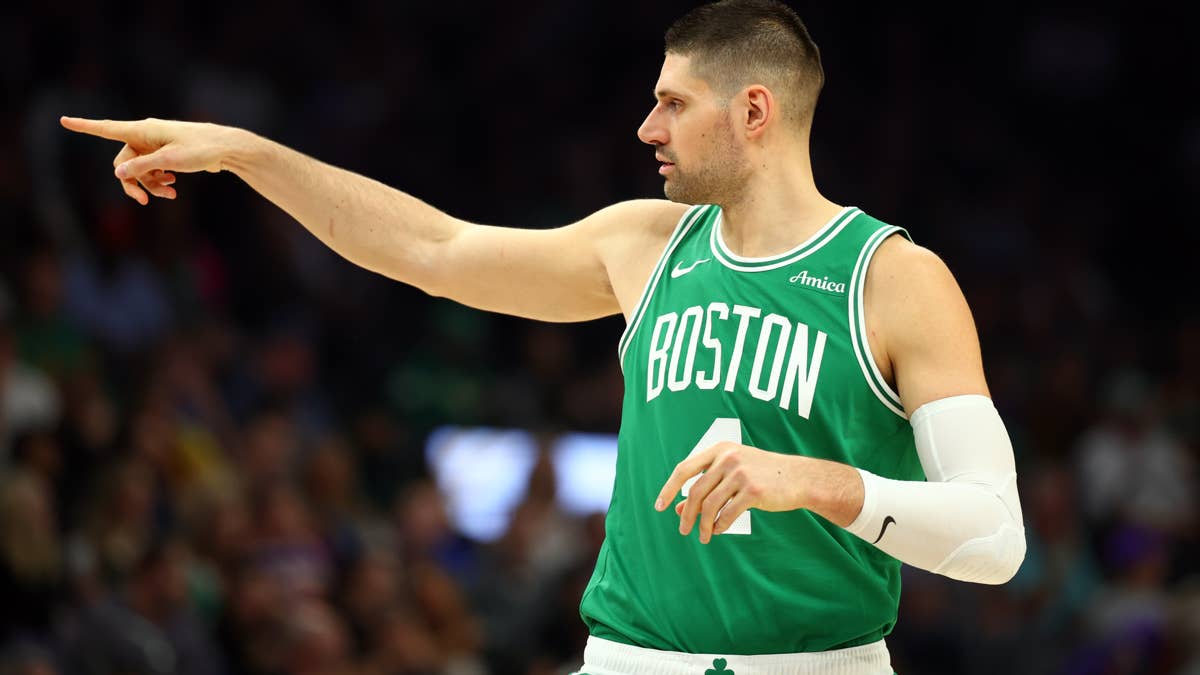
Nikola Vucevic
After being traded from Chicago, Vucevic made 16 regular season appearances for Boston and averaged 9.7 points, 6.6 rebounds, and 2.0 assists in just 21.1 minutes per contest. The narrative around that move was that Chicago’s rebuilding roster had wasted him. That is not what the numbers say.
His career PER sits at 20.0, but in 2025-26 it dropped to 17.7. His career true shooting percentage is 55.0, and this season came in at 55.6. The efficiency has not collapsed catastrophically, but the directional trend matters. A 35-year-old center whose PER is sliding and whose per-minute impact landed him on Boston’s bench, even when their backup center was struggling, is not facing a crowded rotation problem. He is facing an age problem. ESPN noted that Vucevic continued to play a limited role off the bench, with the fact that he was purely a backup despite Neemias Queta struggling highlighting just how unimpactful he had been.
That is the test failing. Weak per-minute numbers plus a bench role on a team that needed him to contribute equals an internal problem. If another team markets him as a fresh-start candidate in 2026-27, apply the ADP discount heavily. He belongs in the final rounds only, as a streamer. He is one of the veterans most at risk of losing fantasy relevance in 2026-27, and the numbers back that up.
Jordan Poole
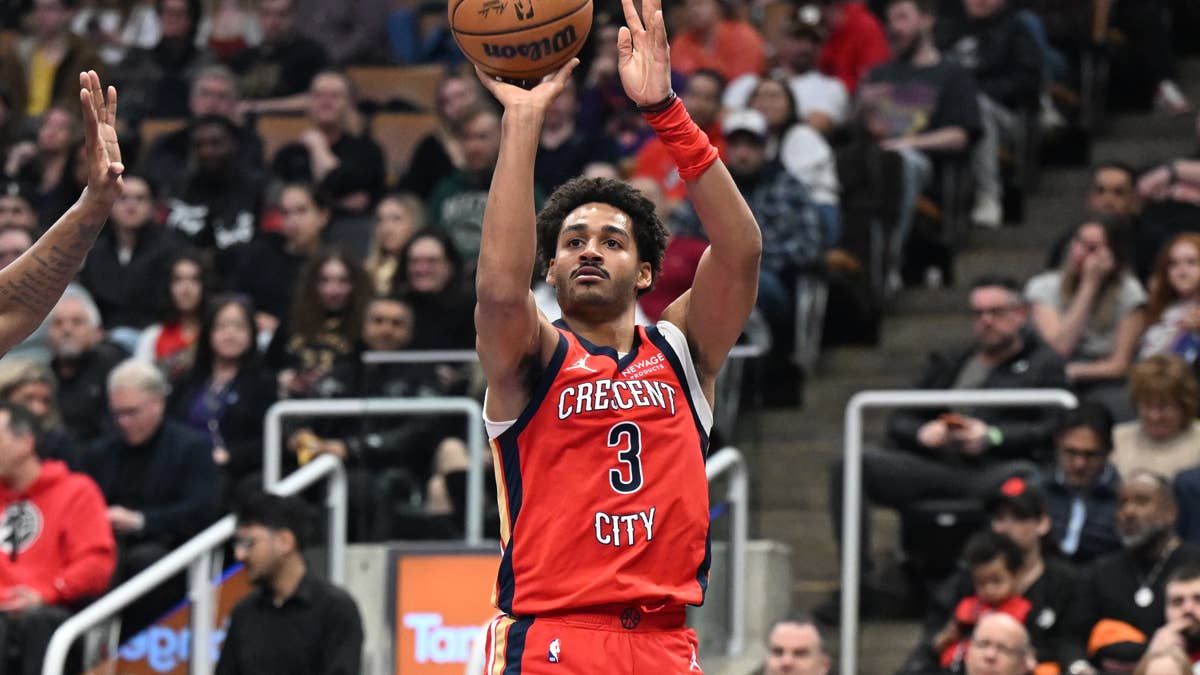
Poole left Golden State in 2023 as a crowding victim. That read was reasonable. He had averaged 20.4 points and 4.5 assists in 30 minutes in 2022-23 while sharing the floor with Steph Curry and Klay Thompson. Then came Washington, framed as his escape. He was a major fantasy disappointment in his first Wizards season, averaging just 16.3 points from October through February before a late surge pushed his final line to 20.5 points and 4.5 assists in 2024-25.
Washington was supposed to fix the environmental problem. It partially did, for one season. Then came New Orleans, the second fresh-start story in three years. In 2025-26 with the Pelicans, Poole averaged just 14.5 points in 25.4 minutes per game while shooting 37 percent from the field and 33.6 percent from three. New Orleans removed him from the rotation entirely, with RotoWire reporting the team was actively exploring trades for Poole while he averaged just 12.0 points in 31 bench appearances.
Now run the diagnostic. His per-minute production in New Orleans was not suppressed by a crowded roster. Experts have identified Poole as a player whose fantasy floor has collapsed, noting New Orleans dropped him from its primary rotation and is actively shopping him, and labels him a draft-day landmine for managers expecting 20-plus points per game.
Here is the internal problem hiding in plain sight: his shot quality is declining. His three-point percentage dropped from 38 percent in Washington to 33.6 percent in New Orleans, and his overall field goal percentage cratered to 37 percent. Those are not the numbers of a player being suppressed. They are the numbers of a player whose efficiency is traveling with him. Every new team is positioned as the environment fix. The diagnostic says otherwise.
If Poole lands somewhere this summer and his ADP climbs back into the 60-85 range on fresh-start optimism, that price is wrong by at least two rounds. His late-round floor is genuine only if he lands on a roster with a clear vacancy and no other usage-hungry guards. Even then, he needs to show his shooting has stabilized before you spend a meaningful pick on him.
The market will buy the story again. The numbers say do not.
Can Your Picks Pass The Test?
Before any fresh-start candidate touches your 2026-27 draft board, run the environmental test. Check per-minute production. Identify the specific cause of prior underperformance. Confirm the new situation actually fixes that cause rather than replicating it.
The three players this piece is most convicted on are Brandon Ingram, whose shot volume was structurally capped in Toronto; Cam Thomas, whose usage was killed by two consecutive organizational pivots away from him; and Scoot Henderson, whose per-36 scoring keeps rising while his minutes stay flat.
Free agency opens June 30. Training camp follows in September. Those are the checkpoints that confirm or invalidate every situation covered here. The managers who already ran this framework will be faster to act when they do.
Follow Athlon’s full 2026-27 fantasy basketball coverage for updates all summer.
Questions About Fresh Starts in Fantasy Basketball, Answered
Which NBA players are the best fresh-start fantasy basketball targets for 2026-27?
Brandon Ingram, Cam Thomas, Scoot Henderson, and Jonathan Kuminga are presented as players whose situations were affected more by opportunity and role than by declining ability, making them notable fresh-start candidates.
What is the difference between an environmental problem and an internal problem for fantasy basketball?
An environmental problem stems from factors such as role, minutes, system fit, or coaching decisions, while an internal problem is tied to declining skills, injuries, or efficiency issues that follow a player regardless of team.
Is Brandon Ingram a good fantasy basketball target for 2026-27?
Ingram profiles as a strong fresh-start target because his efficiency remained intact while his offensive volume was reduced within a crowded Toronto rotation.
Is Cam Thomas worth drafting in 2026-27 fantasy basketball if he changes teams?
Thomas remains a worthwhile player to monitor because his opportunities declined significantly, but his value depends on landing in a situation that provides a meaningful offensive role.
How do I know if a change of scenery will actually help a player’s fantasy value?
Compare per-minute production to per-game output. Strong per-minute production with weaker overall results can indicate a role or opportunity problem that a new situation may improve.
Which NBA fresh-start candidates are narrative traps for 2026-27 fantasy basketball?
Nikola Vucevic and Jordan Poole are presented as examples of players whose underlying issues may be tied more to declining effectiveness and efficiency than to environment alone.
- Author: Tyo Murty



















At the moment there is no comment