
Why Your Orchid Only Grows Leaves and Roots—and How to Make It Bloom Again

info Adjust the font size of this article to get the best reading experience.
Understanding the Vegetative Trap in Orchids
Orchids, particularly the widely popular Phalaenopsis variety, follow specific biological cycles that dictate their growth and flowering patterns. When these plants produce new roots and leaves, they are essentially storing energy. However, if an orchid remains in this green phase for over a year, it may be stuck in what is known as the “vegetative trap.” This condition typically indicates that the plant’s basic survival needs are being met, but it lacks the necessary environmental cues to transition into its reproductive stage.
In the wild, tropical orchids rely on natural seasonal changes to signal when it’s time to flower. These shifts in temperature and light levels help the plant prepare for reproduction. In contrast, modern homes with climate-controlled environments often maintain stable temperatures and consistent light levels. This static environment can trick the orchid into thinking it’s always summer, leading it to focus solely on producing foliage rather than flowers.
The Thermal Shock Technique
To break the vegetative trap and encourage your orchid to bloom again, you need to mimic the natural conditions that trigger flowering. One of the most effective methods is the thermal shock technique. This involves introducing a temperature drop to signal to the plant that winter is approaching.
For a period of 2 to 4 weeks, move your orchid to a cooler room at night. The nighttime temperature should drop by about 3 to 5 degrees Celsius (roughly 5 to 10 degrees Fahrenheit) compared to daytime temperatures. Ideally, the temperature should reach around 15°C (59°F) at night. This subtle change in temperature acts as a powerful cue for the orchid, prompting it to send up a new flower spike from its base.
Optimizing Light and Nutrition
In addition to temperature, two other factors often play a role in preventing an orchid from reblooming: light and nutrition.
Light Deficit
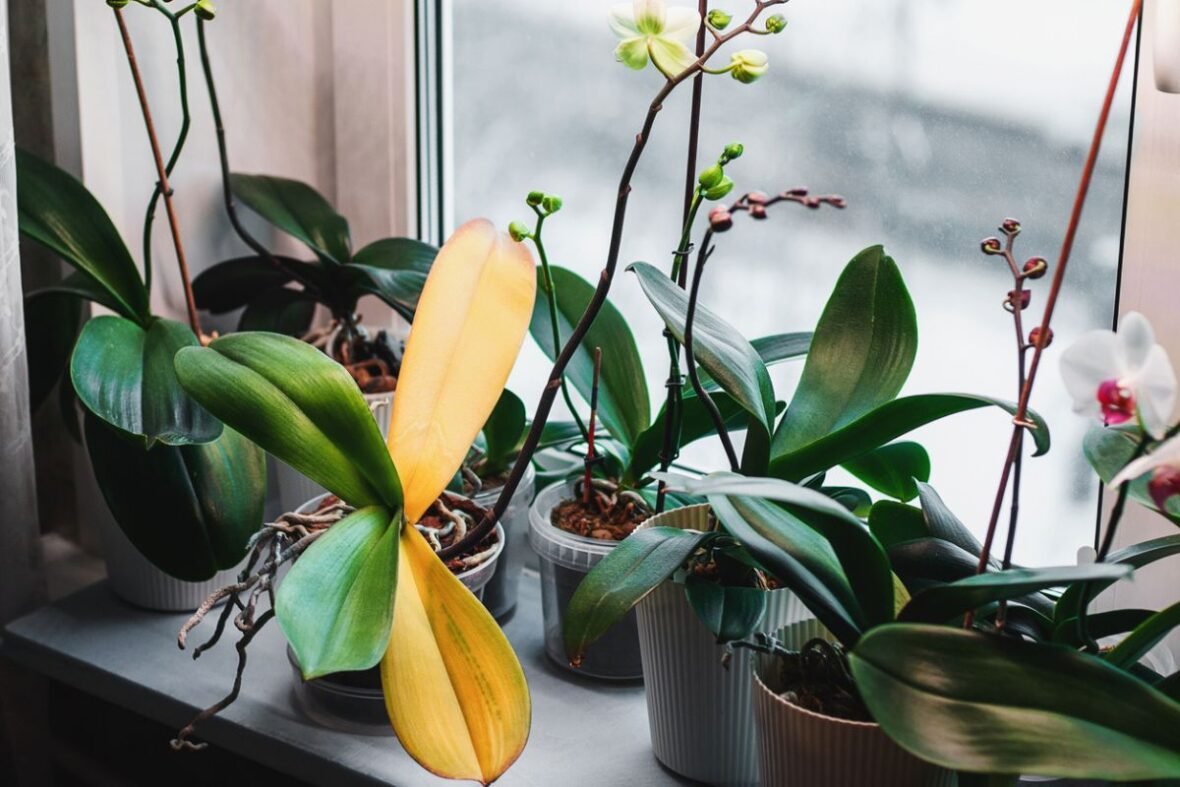
While orchids do not thrive in direct, scorching sunlight, they require ample indirect light. If the leaves of your orchid appear deep and dark green, it may be receiving insufficient light. The ideal leaf color is an olive-green hue, which indicates that the plant is absorbing light efficiently. Ensuring your orchid receives the right amount of light is crucial for encouraging blooms.
The Wrong Fertilizer
Feeding your orchid a fertilizer high in nitrogen can lead to excessive leaf growth at the expense of flowers. To promote blooming, switch to a bloom-boosting formula that is richer in phosphorus and potassium. This type of fertilizer helps the plant focus on producing buds rather than just foliage.
Pruning Prerogatives: Old Spikes vs. New Shoots
When managing a dormant orchid, it’s important to assess the condition of its old flower stems. If an old spike has turned completely yellow or brown, it is likely dead and should be removed using sterilized shears. Cutting it away at the base helps the plant conserve energy.
However, if the stem remains green, it is best to leave it in place. Orchids have the ability to produce secondary branches and fresh buds directly from the unused nodes of a green stem. This process saves the plant valuable energy and can speed up the next blooming cycle, allowing you to enjoy beautiful blossoms sooner.
- Author: Tyo Murty




















At the moment there is no comment