
Historic Shift: South Korea and Japan Join Forces in Massive Military Alliance Against Regional Threats

info Adjust the font size of this article to get the best reading experience.
Key Developments in Regional Security Cooperation
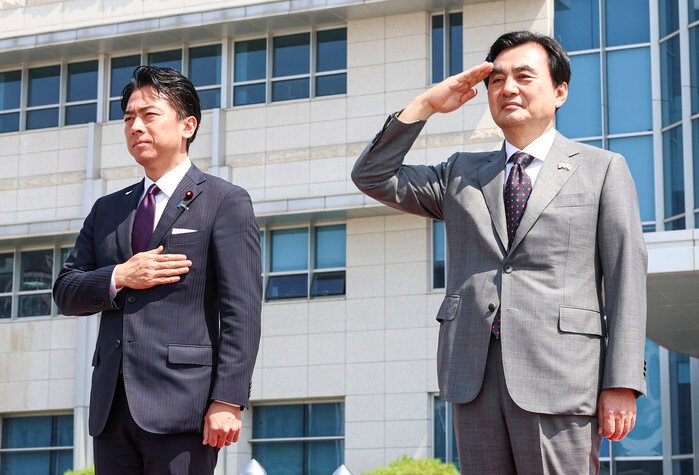
In a significant display of diplomatic and military cooperation, the defense ministers of South Korea and Japan recently participated in a high-profile ceremony that highlighted their commitment to strengthening bilateral ties. The event took place at the defense ministry compound in Seoul, where both officials exchanged salutes, symbolizing a renewed focus on collaboration in regional security matters.
This meeting comes at a time when the geopolitical landscape in East Asia is undergoing rapid changes, with increasing concerns over regional stability and the need for coordinated responses to emerging threats. Both nations have recognized the importance of maintaining open channels of communication and working together to address common challenges, including North Korea’s nuclear ambitions and the growing influence of other regional powers.
Strengthening Bilateral Relations
The interaction between the two defense ministers underscores the ongoing efforts to build trust and enhance mutual understanding. While historical tensions have occasionally strained relations between South Korea and Japan, recent developments suggest a shift towards more constructive engagement. This includes discussions on joint military exercises, intelligence sharing, and collaborative efforts in cyber defense and maritime security.
One of the key areas of focus has been the enhancement of interoperability between the armed forces of both countries. By aligning their defense strategies and operational capabilities, South Korea and Japan aim to create a more robust framework for responding to potential conflicts or crises in the region. This approach not only benefits the two nations but also contributes to overall regional stability.
Addressing Common Challenges
Both South Korea and Japan face similar security challenges, including the threat posed by North Korea’s continued development of its nuclear and missile programs. In response, the two countries have been exploring ways to coordinate their defense policies and share resources effectively. This includes joint research and development initiatives, as well as the establishment of shared early warning systems to detect any potential threats.
Another critical area of collaboration is in the realm of cybersecurity. As digital threats become increasingly sophisticated, the need for a unified front against cyberattacks has become more pressing. By pooling their expertise and resources, South Korea and Japan can better protect their critical infrastructure and ensure the security of their citizens.
Public Engagement and Media Outreach
In addition to official meetings and strategic discussions, both nations are also focusing on engaging the public and fostering a sense of shared responsibility for national security. This includes educational campaigns aimed at raising awareness about the importance of regional cooperation and the role that individuals can play in supporting national defense efforts.
Media outlets play a crucial role in this process, as they help disseminate information and keep the public informed about developments in the defense sector. Through various platforms, including online news sites and social media, the governments of South Korea and Japan are working to maintain transparency and encourage dialogue with their citizens.
Conclusion
The recent meeting between the defense ministers of South Korea and Japan marks an important step forward in their bilateral relationship. By focusing on areas of mutual interest and addressing common challenges, both nations are laying the groundwork for a more secure and stable future. As they continue to strengthen their partnership, the implications for regional security will be far-reaching, benefiting not only South Korea and Japan but also the broader international community.
- Author: Tyo Murty


















At the moment there is no comment