
When One Nanny Isn’t Enough, CEO Parents Build a Team
- account_circle Tyo Murty
- calendar_month Saturday, 18 Jul 2026
- visibility 13
- comment 0 comment
- print Print


info Adjust the font size of this article to get the best reading experience.
The Rise of CEO Parenting: Delegating the Mundane to Focus on What Matters
As a mother of two, Christine Landis has certain tasks she simply won’t do. She’s never clipped her children’s toenails—too anxious for that, she said, so the nanny handles it. Most nights, the family assistant takes care of bath time. Landis also hands off what she calls “repetitive play,” reading the same book five times or watching her toddler open and close a door for 45 minutes.
To make this possible, Landis, who lives in San Diego, spends roughly $250,000 a year running a household staff that includes a family assistant who lives on the property, a weekend nanny, a personal chef and a housekeeper. This model of parenting, where families treat their households like small enterprises, is becoming increasingly common among wealthy working parents. It’s a shift toward what some call CEO parenting: delegating low-joy tasks to focus on more meaningful interactions with their children.
“Every hour I’m not bogged down with the doing is an hour I get to show up fully present with my kids,” said Landis, 44, a former CEO of a fintech company and the founder of Peacock Parent, a company that uses AI to help families manage their homes.
A Growing Industry of High-End Services
Families like Landis’s rely on a growing industry of high-end services to accommodate staffing up their households. Quintessentially, a global concierge firm whose U.S. memberships begin at $25,000 a year, has handled preschool applications, pet procurement and six-month family sabbaticals with traveling tutors.
Olivia Fountain, director of operations at Household Staffing, an agency with offices in New York and Philadelphia, said the role that had surged most in recent years was what her agency calls the family assistant nanny. During school hours, the role includes managing schedules, coordinating appointments and activities, running errands and overseeing day-to-day household administration—then transitions to child care when the kids return home. Family assistants, who typically have child care backgrounds, combine the duties of a house manager, personal assistant and nanny.
Her agency has fielded all sorts of parenting requests: providing equestrian nannies who travel to tournaments, baby chefs to prepare culturally specific purées for infants, personal stylists for the children. One recent request, Fountain said, came from a parent desperate to get their child a specific limited-edition Labubu—the collectible figurines that clip onto handbags—and tasked the nanny with posting across social media, offering to pay whatever it took, until one turned up.
“It’s the million little things,” Fountain said. “Wrapping a birthday present. Unloading the backpack. The Amazon boxes that need to be broken down. Those are all the things that make your day disappear.”
Specialized Roles in Modern Parenting
Seth Norman Greenberg, vice president of the household-staffing firm Pavillion Agency, said that he once placed a caregiver for a family practicing diaper-free parenting, expecting staff to read infant cues and rush the baby to the bathroom in time.
The agency, based between New York and Los Angeles, often serves clients who rotate across their five to 10 homes, with full staff at each property. They’ve recently pushed the job of parenting help even further, Greenberg said. He has placed nannies because they had experience working on yachts or could tolerate helicopter travel.
“We are busier than we’ve ever been,” he said of the firm, founded in 1962. “The environment, the economy, it’s just producing these millionaires and billionaires.”
Celebrities like Emma Grede have helped usher this parenting style into the broader culture. Grede, co-founder of the Kardashian brands Skims and Good American, has described herself as a “max-three-hour mum,” spending weekend mornings with her four children before moving on to activities that “fill my cup.”
“Cutting sandwiches into star shapes? That was never it for me,” she told The Wall Street Journal earlier this year. She relies on a household team of nannies, cleaners, a chef and a chief of staff, which helps afford time for “high-impact, core memories” like vacations with her children.
“If getting help with the logistics means I can spend my time focused on the moments that really matter with my children, I don’t see that as outsourcing parenting,” Grede said. “I see it as being intentional about where I spend my time.”
The Cost of Delegation
Potty-training consultants, who work intensively with toddlers over several days, charge anywhere from $600 to $4,500. Private bike-riding lessons, the kind of thing many parents handle on a Saturday afternoon, can run $80 to $450 per session. Don’t want to pack your kids up for summer camp? You can hire someone for $125 an hour. For families who want full-time dedicated staff, a travel nanny costs $120,000 to $170,000 a year; a private governess, a tutor who blends academics with social development, can today reach $200,000.
Alexandra Fine, a mother of three young children, spends about $85,000 a year on a team of seven that includes nannies, a home organizer, a handyman and a virtual assistant.
“Every hour I spend folding laundry or scheduling a repair person is an hour I’m not present with my kids,” said Fine, the CEO of Dame Products, a sexual-wellness company. “That’s not a philosophy. That’s math.”
For some parents, the small, mindless tasks often are what’s meaningful about being a parent. Hand off these responsibilities, they argue, and you might miss out on connecting with your kids.



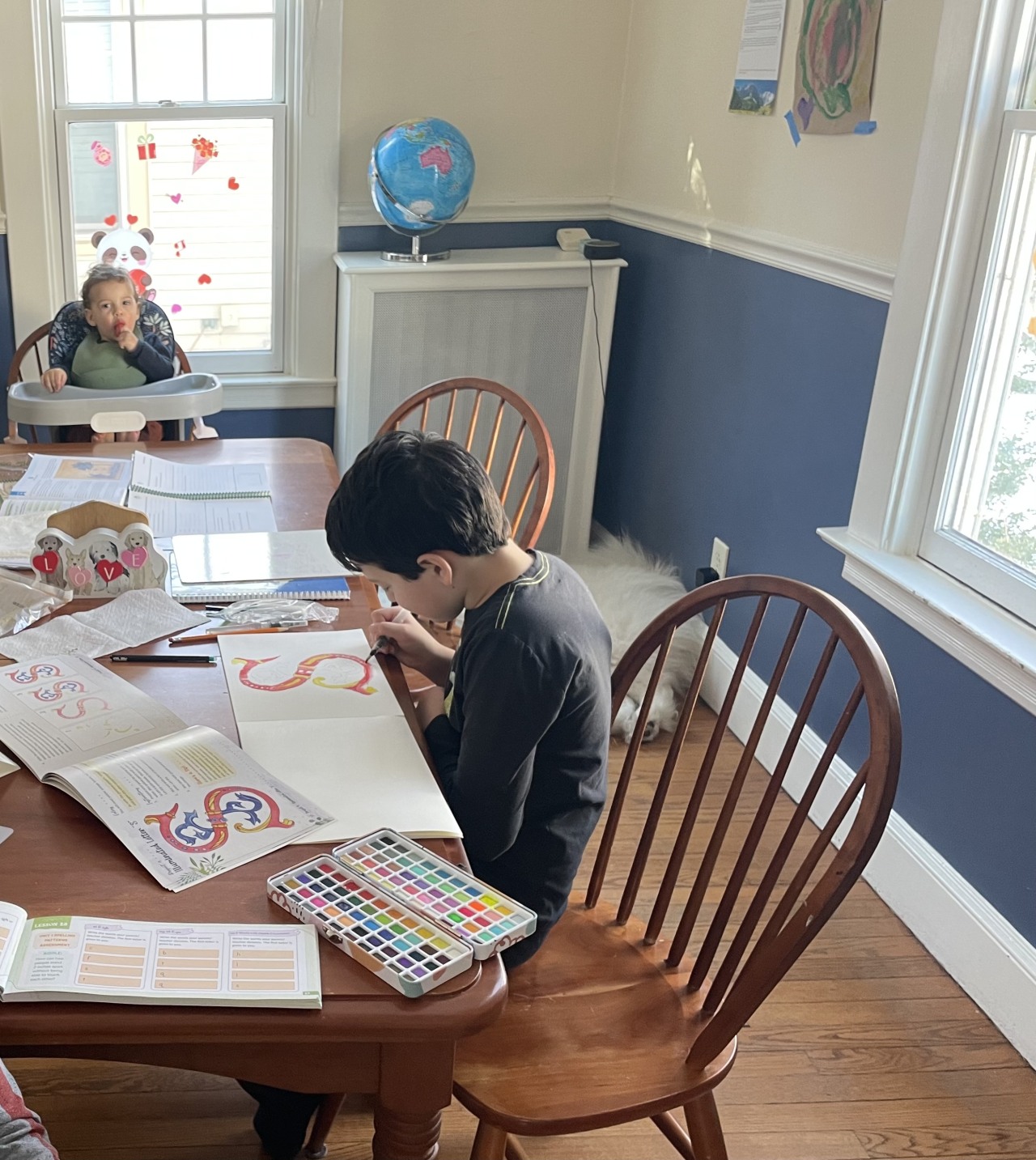
Ivana Greco, a stay-at-home mom and former attorney who runs the Home Front, a Substack about family life, and home-schools her four children, said that for her, these duties create opportunities to get closer to her children.
“The most meaningful moments I have with my children are completely unexpected,” she said. “They happen because we spend time together.” She worries about what children might absorb from arrangements with hired help, whose presence they register and whose they miss.
“If you’re not the one who shows up,” she said, “your child notices.”
Landis, the Peacock Parent founder, said when she fell sick after having her newborn, the nanny brought her tea and orange juice without being asked. It was, she said, one of the most unexpectedly moving moments of early motherhood.
The first time one of her children said “I love you” to that nanny, and heard it said back, Landis felt a flash of uncertainty. Then it passed.
“There is no world where my child doesn’t know I’m their mother,” she said. “Our bond, our love, it’s irreplaceable.” Some responsibilities she’ll never give up: “The time to talk about our day, snuggle in bed, read books, that’s really special to me.”
For Landis, the work doesn’t go away—it still lives in her head as the mental load of decisions, coordination and managing the invisible architecture that keeps her house running.
“The doing was handled,” Landis said. “But the thinking was still mine.”
- Author: Tyo Murty




















At the moment there is no comment