
F-22s Return Home After Epic Fury Deployment
- account_circle Tyo Murty
- calendar_month Wednesday, 15 Jul 2026
- visibility 16
- comment 0 comment
- print Print

info Adjust the font size of this article to get the best reading experience.
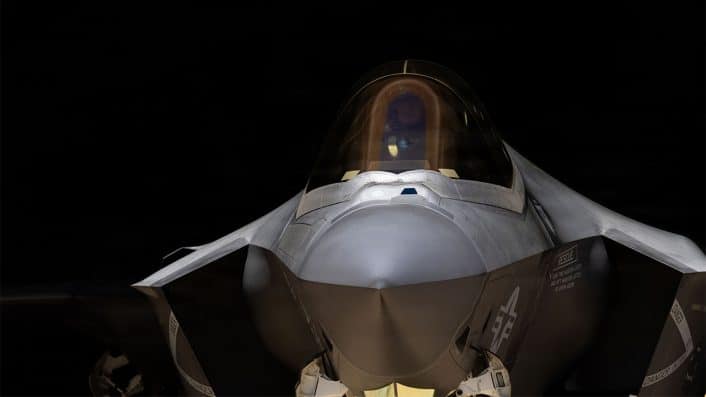
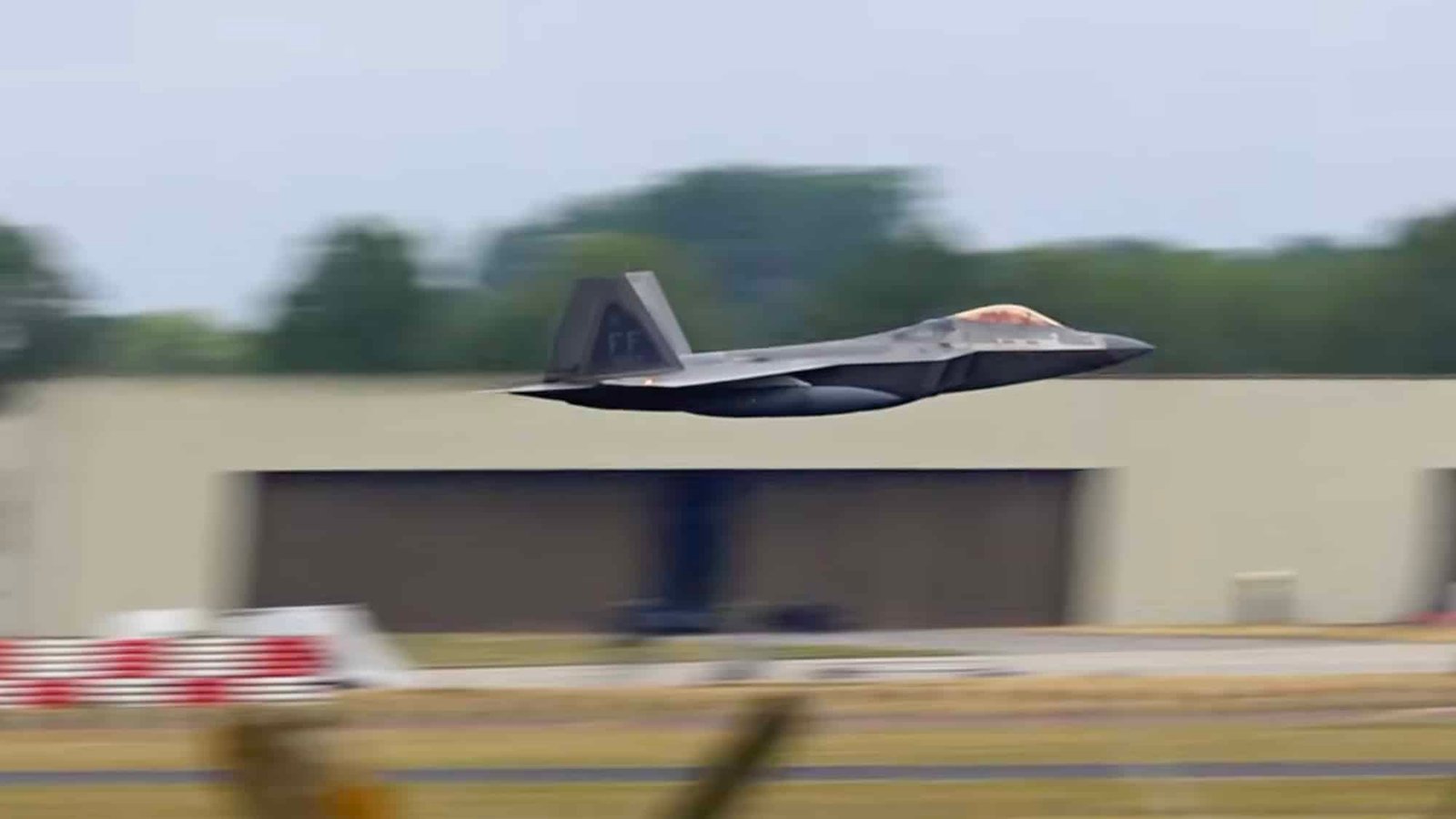
The F-22 Raptor, a highly advanced stealth fighter jet, has been deployed to Israel since February. Recently, these aircraft from the 1st Fighter Wing based at Langley Air Force Base (AFB) made an unusual stopover at RAF Fairford before heading back home. This unexpected detour has sparked curiosity among aviation enthusiasts and military observers alike.
Twelve F-22s from the 1st Fighter Wing are reportedly on their way back to the United States. Ten of these jets arrived at RAF Fairford on July 10, 2026, with nine of them departing on July 14. The remaining two aircraft did not make it to Fairford and are rumored to have stopped along the way—likely for technical reasons—at Naval Air Station Sigonella in Italy. However, this information is still unconfirmed.
Earlier in the year, we reported on the deployment of these F-22s as part of broader military movements toward the Middle East, which were in anticipation of the then-unannounced Operation Epic Fury. After passing through RAF Lakenheath, the jets were stationed at Ovda Airbase in Israel for the conflict.
What makes this return journey unusual is the stopover at RAF Fairford. This base has been heavily used during Operation Epic Fury, serving as a forward operating location for B-1B Lancer and B-52H Stratofortress strategic bombers. While the B-1s remain at Fairford, the B-52s have already departed for home earlier this month when the ceasefire was still in effect.
Stopovers at RAF Fairford for fighter jets are rare. More commonly, aircraft transit through RAF Lakenheath, which is itself a fighter base. Occasionally, movements also go through Glasgow Prestwick Airport. Recently, F-15E Strike Eagles from Lakenheath’s 48th Fighter Wing returned home, some of which were decorated with unique nose artworks.
Our friend, who goes by Saint1 on X/Twitter, was present at RAF Fairford during both the arrival and departure of the F-22s and captured footage of these events. The Raptors used the Coronet callsign TREND for both legs of the trip. The ten jets that arrived included the following serial numbers: 05-4099, 05-4104, 08-4154, 08-4158, 08-4168, 08-4171, 09-4175, 09-4177, 09-4187, and 10-4194. Among these, 05-4104 is the only jet still at Fairford, while 08-4152 and 09-4173 are believed to be somewhere along the route—either still in Israel or at an intermediate base like Sigonella.
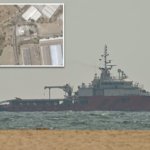
As these jets make their way back to the U.S., the situation in the Middle East is becoming increasingly tense. The ceasefire between the U.S. and Iran has officially ended, and the U.S. has resumed daily attacks against Iranian targets. Notably, a recent strike targeted the Bandar Abbas Naval Base near the Strait of Hormuz, using unmanned surface vessels (USVs) in a one-way attack role.
Some have questioned why the Raptors would be returning at this time. However, it’s important to consider that any aircraft and squadron has a limited amount of time they can be forward-deployed while maintaining operational readiness. The resumption of hostilities against Iran will likely involve a different approach compared to the early stages of Operation Epic Fury. Much of the air defense threat has already been neutralized, leaving little time for it to regenerate. As a result, high-end capabilities like the stealthy F-22 may not be the top priority.
In fact, during the later stages of the conflict, more vulnerable aircraft such as the A-10 Thunderbolt II were seen getting closer to the frontlines, after previously being used to target Iranian proxies in Iran and Syria.
Despite the return of the 1st Fighter Wing’s F-22s, the U.S. continues to maintain a significant presence in the Middle East. This includes fourth and fifth-generation fighters, the Abraham Lincoln and George H. W. Bush carrier strike groups (CSGs), and the Boxer amphibious ready group (ARG).
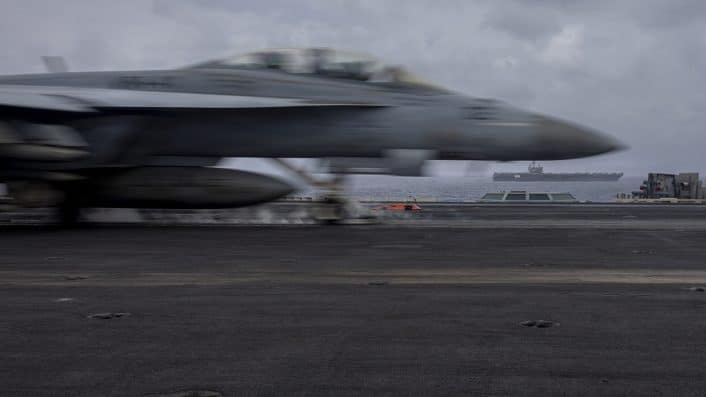
President Trump formally informed Congress on July 10 that hostilities with Iran had resumed. Efforts to restart peace talks have so far been unsuccessful. In his statement, he emphasized that the strikes were “limited, measured, planned, and executed in a manner designed to minimize civilian casualties.” He added that the operations focused on military capabilities threatening U.S. forces in the region, protecting the U.S. homeland, advancing national interests, securing commercial vessel passage through the Strait of Hormuz, and defending regional allies and partners.
- Author: Tyo Murty

















At the moment there is no comment