
Sonam Wangchuk’s 8.2 kg Weight Loss in 18 Days: The Truth About Prolonged Fasting
- account_circle Tyo Murty
- calendar_month Thursday, 16 Jul 2026
- visibility 17
- comment 0 comment
- print Print


info Adjust the font size of this article to get the best reading experience.
The Physical Toll of Prolonged Fasting
Environmental activist and education reformer Sonam Wangchuk has experienced a significant weight loss of 8.2 kg over the course of 18 days while on a hunger strike, raising concerns about the impact of extended fasting on the human body. According to reports, Wangchuk has been consuming only water during the protest. While the body is capable of adapting to short periods without food, medical experts warn that fasting for weeks can push the body into survival mode, where it begins to consume its own energy reserves and eventually its muscles.
Dr. Suranjit Chatterjee, an internal medicine specialist, highlighted the severity of this weight loss. “Losing 8 kg in just 18 days is a significant and medically concerning weight loss,” he said. “The concern is not merely the number on the weighing scale, but what that weight loss represents.”
How the Body Responds to Fasting
During prolonged starvation, the body first uses glucose circulating in the blood, followed by glycogen stored in the liver and muscles. Once these energy reserves are depleted, the body starts burning fat. However, as starvation continues, the body is forced to break down its own muscle proteins to meet its energy needs. This stage of fasting results in the loss of both fat and valuable muscle mass, indicating severe metabolic stress.
“The weight being lost is no longer just fat but also valuable muscle mass,” Dr. Chatterjee explained. “This indicates that the body is under severe metabolic stress, and prolonged muscle loss can weaken overall physical function and affect vital physiological processes. Such rapid weight loss is not normal and requires close medical monitoring.”
The Stages of Fasting
The body relies on a steady supply of carbohydrates from food to fuel the brain and muscles. Once food intake stops, it begins using glucose already present in the bloodstream. Within about 24 hours, these glucose stores are exhausted. The body then turns to glycogen, a stored form of carbohydrate found in the liver and muscles. Glycogen can sustain energy needs only for a day or two.
After that, metabolism shifts to fat stores. The liver converts fat into ketones, which become an alternative fuel for the brain and other organs. This stage helps the body survive longer without food. 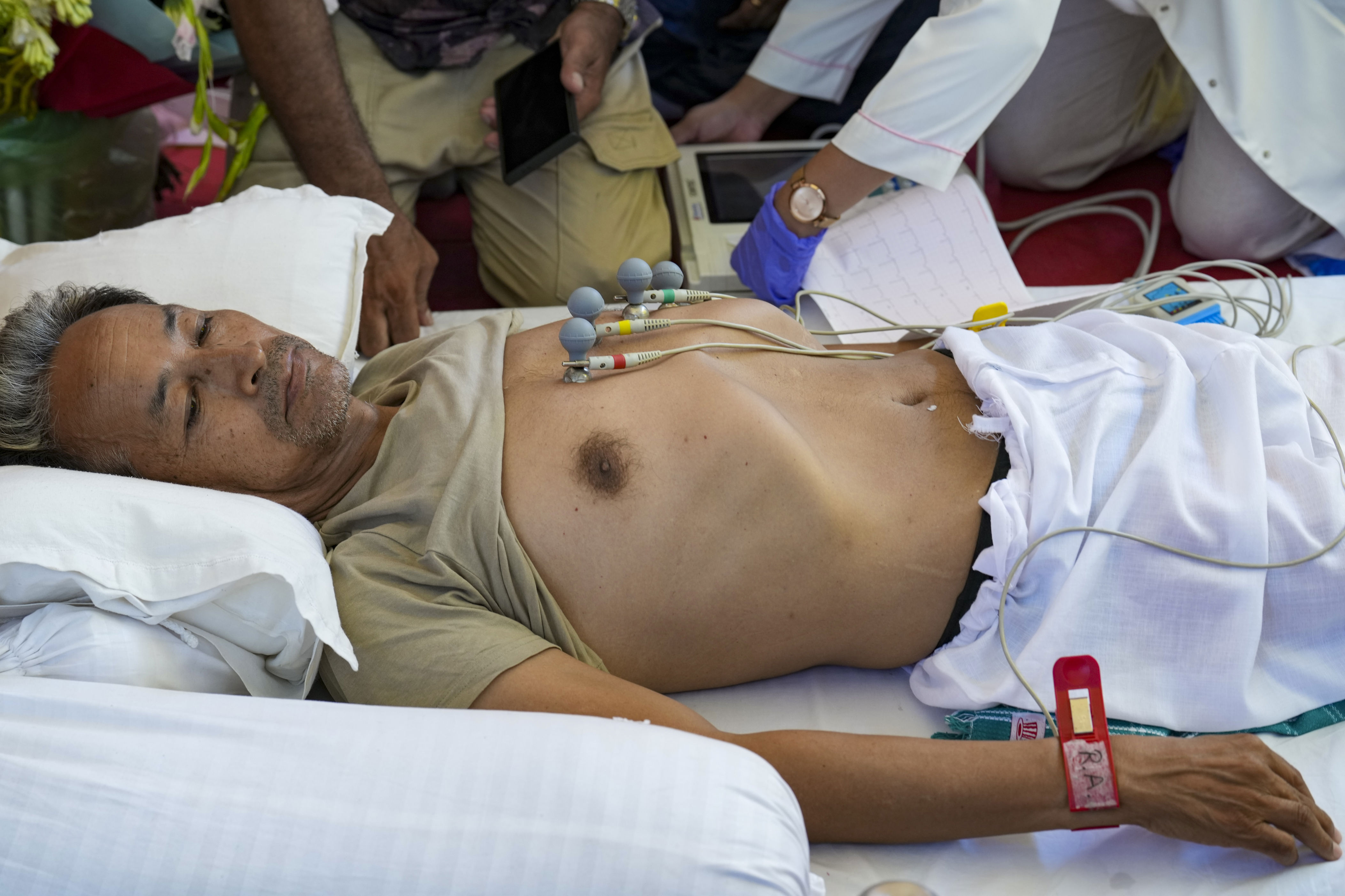
However, fat alone cannot meet all of the body’s energy requirements. As fasting continues, proteins from skeletal muscles are broken down into amino acids to support essential organs and produce glucose. This results in the loss of lean muscle mass, reduced strength, and increasing weakness.
Risks of Rapid Weight Loss
Although a large drop on the weighing scale may seem dramatic, doctors say much of the early weight loss during prolonged fasting comes from water and glycogen depletion. As the fast continues, fat and muscle are both lost. Rapid muscle loss can weaken the immune system, reduce mobility, and slow recovery. It can also affect the heart, which is itself a muscle.
Prolonged fasting may also cause dehydration, low blood pressure, electrolyte imbalances, dizziness, fatigue, and low blood sugar. In severe cases, these changes can increase the risk of irregular heart rhythms, organ dysfunction, and loss of consciousness. 
Medical supervision is essential during extended hunger strikes because complications can develop even if a person continues to drink water.
The Challenge After the Fast
Doctors caution that the danger does not end when a prolonged fast is over. After days or weeks without food, suddenly eating a normal meal can trigger refeeding syndrome, a potentially life-threatening condition in which the body’s rapid shift back to processing carbohydrates causes dangerous changes in electrolytes, particularly phosphate, potassium, and magnesium.
For this reason, nutrition must be restarted gradually under medical supervision after prolonged starvation. While short-term fasting is generally well tolerated in healthy people, experts stress that water-only fasting for weeks is fundamentally different.
By the time a person loses several kilograms in less than three weeks, the body has likely progressed well beyond burning fat and has begun sacrificing muscle to keep vital organs functioning. This is a sign that the body is under considerable metabolic stress.
- Author: Tyo Murty



















At the moment there is no comment