
Over 320,000 Evacuated in France and Spain as Wildfires Escalate

info Adjust the font size of this article to get the best reading experience.
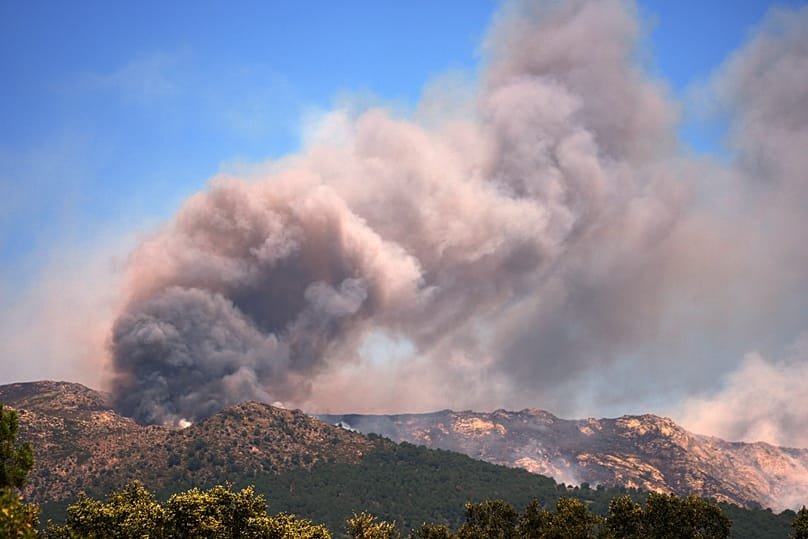
More than 320,000 people have been evacuated across parts of France and Spain as wildfires continue to spread across southern Europe. The situation has prompted urgent responses from local authorities, national governments, and international support teams.
Evacuations in France
In southwestern France, over 220,000 residents have been forced to leave their homes after evacuation orders were issued in five additional villages around Bordeaux on Saturday night. Local authorities reported that the parched landscape and strong winds contributed to the rapid spread of the main blaze in the region. So far, the fire has burned through approximately 42,000 hectares.
French Interior Minister Laurent Nuñez described the situation as “highly unfavorable,” noting that the Gironde blaze had become “extremely fierce and unpredictable” during the evening before calming slightly later in the night. The fire initially started in the town of Saumos on Tuesday and then spread southwest to Le Porge and Lège Cap-Ferret later in the week. It moved eastward toward the Bordeaux metropolitan area over the weekend.
To combat the fires, around 2,500 firefighters, including a Swiss team, have been deployed alongside 1,500 military personnel and nearly 1,200 police officers and gendarmes. Aerial firefighting resources are also being used to assist with the efforts.
European Commission President Ursula von der Leyen announced on Saturday that five aircraft and two helicopters from the EU’s rescEU fleet had been sent to France to support the response.
According to French government officials, about 100,000 hectares have burned across the country since the start of the year. Nuñez called this figure a “historic record.” Wildfires are also affecting the departments of Landes, Var, and Hautes-Alpes.
Wildfires in Spain
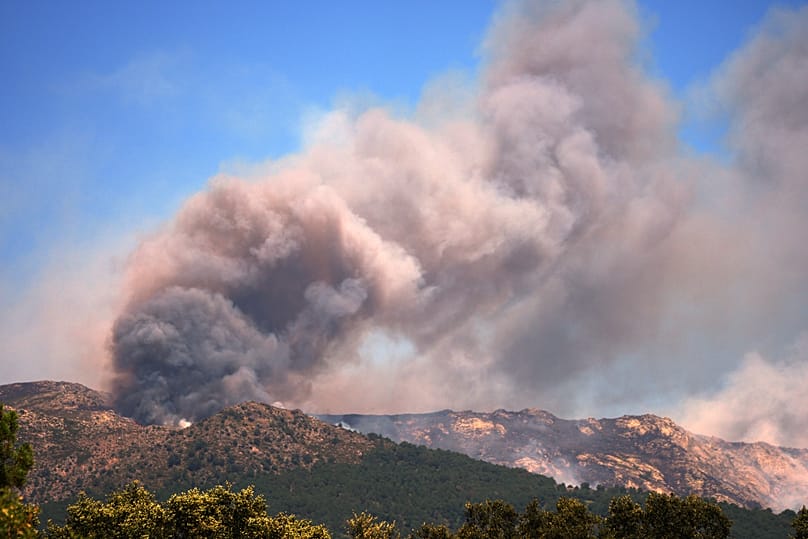
In Spain, wildfires are still burning in the Madrid area and the province of Ávila. The Spanish government has declared a national emergency in these regions, where around 100,000 people have been evacuated.
The Interior Ministry stated that the EU’s civil protection mechanism is providing various resources to aid in firefighting efforts. Italy has sent 14 emergency personnel and two Canadair planes, while Portugal has delivered 129 personnel and 41 support vehicles. Greece is also contributing 33 personnel, two Canadair planes, and one support aircraft.
Copernicus, an Earth observation program, is offering emergency mapping to support the response in both countries.
Francisco Martín Aguirre, the delegate of the Spanish government in the Community of Madrid, emphasized that the next few hours were “crucial.” He stated that significant efforts are being made to protect facilities, homes, and housing estates in the area, where teams have been working continuously.
Spanish Prime Minister Pedro Sánchez highlighted the priority of “safeguarding lives, protecting communities, and fighting the fires.” He noted that all levels of government are collaborating to coordinate resources and provide an effective response. Affected areas will also receive governmental support during the recovery process.
International Support
The scale of the wildfires has led to coordinated international efforts to manage the crisis. Countries across Europe are sending personnel, equipment, and aerial support to assist in the fight against the blazes. These efforts reflect the severity of the situation and the need for a unified response to protect communities and restore affected areas.
As the fires continue to burn, the focus remains on ensuring the safety of residents, containing the spread of flames, and supporting those who have been displaced. The long-term impact of these wildfires will likely require sustained attention and resources to address environmental damage and rebuild affected regions.
- Author: Tyo Murty



















At the moment there is no comment