
Parents Are Being Urged to Consider an Earlier MMR Vaccine as Measles Cases Rise
- account_circle Tyo Murty
- calendar_month Tuesday, 28 Jul 2026
- visibility 13
- comment 0 comment
- print Print

info Adjust the font size of this article to get the best reading experience.
Understanding the “Dose Zero” MMR Vaccine in Response to a Measles Outbreak
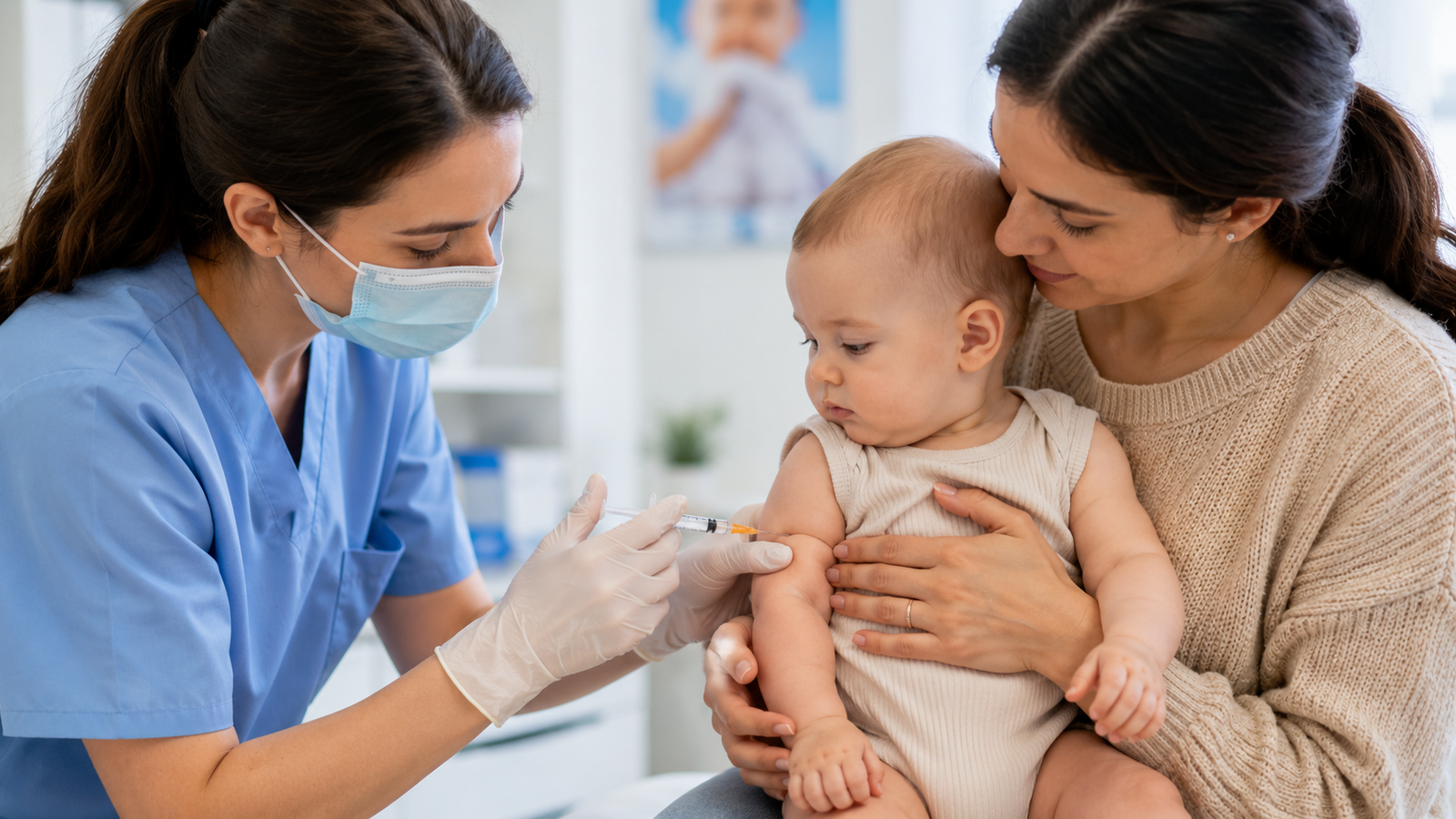
Pennsylvania is currently facing a significant measles outbreak, with over 130 residents affected. In response, state health officials have advised some parents to vaccinate their young children earlier than usual to offer additional protection against this highly contagious disease. This measure includes a “dose zero” of the measles, mumps, and rubella (MMR) vaccine for children as young as 6 months old who live in or plan to travel to areas impacted by the outbreak.
Typically, children receive their first MMR vaccine at 12 months of age. However, during an outbreak, health officials are recommending an early dose for infants to provide immediate protection. This approach is particularly important given that measles can infect up to 90% of unvaccinated individuals exposed to it, with complications often being more severe for young children.
What Is the “Dose Zero”?
The term “dose zero” refers to an early administration of the MMR vaccine given to babies at 6 months old. Normally, the first dose is administered at 12 months, followed by a second dose between 4 and 6 years of age.
Katie Lockwood, a pediatrician at the Children’s Hospital of Philadelphia, explains that newborns receive antibodies from their mothers, which can interfere with the effectiveness of vaccines containing weakened live viruses, such as the MMR vaccine. As a result, an MMR shot given before 12 months may not be as effective in providing long-term immunity.
However, a “dose zero” can still offer some short-term protection, especially in outbreak situations. Lockwood notes:
“What we see from that dose zero MMR is that you have some short-term protection that we believe will protect you during that period when you’re traveling to an outbreak area or internationally.”
This practice has long been recommended for families planning international travel with infants.
What Happens After a Dose Zero?
Even after receiving a “dose zero,” babies still need a second dose of the MMR vaccine at 12 months old to ensure lasting immunity. Typically, children then receive their final MMR dose between 4 and 6 years of age, which helps protect those who may not have been vaccinated as infants.
In the context of an outbreak, health officials recommend that children receive their second dose earlier — as soon as 28 days after their first dose. The Children’s Hospital of Philadelphia (CHOP) now routinely recommends that children get their final MMR dose at 15 months old.
With 13 measles cases reported in Chester County since April and 75 cases in Lancaster County, many Philadelphia-area parents are taking these recommendations seriously. Lockwood emphasizes that while the decision ultimately rests with the parents, there is little downside to vaccinating early.
“Especially with all of these cases, a lot of parents are reporting that it makes them feel more comfortable, knowing that their child is fully protected.”
How Are Families Reacting to the New Recommendations?
Lockwood, who practices in Flourtown, Montgomery County, has observed thoughtful questions from parents as they weigh the decision to vaccinate early. Some parents ask:
“Why wasn’t this the standard the whole time?”
Lockwood explains that measles was not a major concern in the United States for many years, so the standard practice did not include early vaccination. However, the current outbreak has changed that perception.
She also notes that some parents who previously delayed or avoided the MMR vaccine have reconsidered due to the outbreak. With Chester County being relatively close to many of her patients, the threat feels more real.
Lockwood also works to reassure hesitant parents about the safety of the MMR vaccine. She points out that the MMR vaccine is one of the most extensively studied vaccines, with a wealth of safety data available.
“For anyone who is worried about vaccine safety, this is really one with a wealth of safety data available. It’s been proven so many times to be safe and effective.”
Where Can Pennsylvanians Get Vaccinated?
MMR vaccines are widely available through doctors’ offices, urgent-care centers, federally funded health centers, and pharmacies. In Philadelphia, residents can receive a free MMR vaccine at any city health center by calling 215-685-2933. Outside the city, county and municipal health departments and state health centers also offer the vaccine.
It is recommended that residents call ahead to clinics to check on vaccine availability.
- Author: Tyo Murty
















At the moment there is no comment