
Hezbollah Signals Possible Escalation Against Lebanese Army, Expert Says

info Adjust the font size of this article to get the best reading experience.
Hezbollah’s recent attack on the Lebanese Army in Mansouri has sparked significant concern, with experts suggesting it could be a warning of potential escalation if the group feels threatened. Eyal Zisser, Vice-Rector at Tel Aviv University and an expert in Hezbollah’s political strategy, highlighted this point in a discussion with The Jerusalem Post.
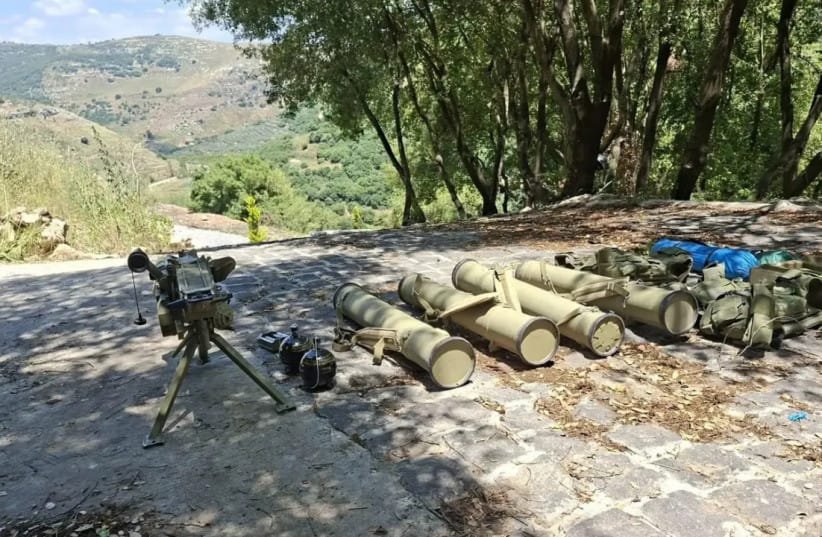
The incident occurred when a suspicious object exploded in a Lebanese Army vehicle, resulting in the death of Sgt. Maj. Ahmad Sami Khalil from Froun village in the Bint Jbeil district. Two other soldiers were also injured in the blast. Initially, there were theories that the explosion was an Israeli airstrike, given the recent targeting of Hezbollah infrastructure by Israel. However, the Israeli Defense Forces (IDF) confirmed that the explosive had been planted by Hezbollah, stating that their troops had not been in the area recently.
The IDF added that the Lebanese Army vehicle entered the Security Zone without prior coordination with the military, as required by existing protocols. This lack of communication raised questions about the circumstances surrounding the attack.
Zisser suggested that any further escalation would depend on whether there is an agreement between Lebanon and Israel. However, he noted that predicting how far Hezbollah might go is difficult. Despite a US-brokered agreement last month aiming for an Israeli withdrawal from Lebanon and the disarmament of Hezbollah, there are disagreements on the pace of the withdrawal. Lebanese President Joseph Aoun is currently in Washington to discuss the issue and plans to present a proposal to US President Donald Trump regarding the disarmament of the Iranian-backed group.
Zisser emphasized that Hezbollah’s next moves will likely be determined once there is more clarity between the two countries. He pointed out that current discussions are largely talks without concrete actions. If the Lebanese government takes steps against Hezbollah, retaliation is expected, but the nature of that retaliation remains uncertain.
Hezbollah has a history of extreme actions, including the assassination of former Prime Minister Rafic Hariri in 2005. Zisser noted that nothing should come as a surprise from the group. Despite recent threats and comments from Hezbollah officials, there are limited concerns about an immediate civil war. The group would only risk such action if the Lebanese military began operating against them, which is not currently happening, or if a peace agreement between Beirut and Jerusalem is signed, which is not yet on the table.
Zisser argued that undercutting Hezbollah and Iran by forming an agreement with the group could lead Israel to be “flexible” in any deal with Beirut. However, he stressed that national security should not be compromised. Containing Hezbollah politically, rather than militarily, may be more feasible, especially with support from the United States and Lebanon. Making some sacrifices for this goal could be worthwhile.
Given Hezbollah’s pursuit of a pause in fighting through Iran and the previous Memorandum of Understanding with the US, Zisser explained that the group cannot complain if the US-brokered deal is finalized. He also noted that a ceasefire is not significant enough to warrant going to war over, as Hezbollah can easily break the agreement when it suits them.
Currently, it is in Hezbollah’s interest to maintain the ceasefire, as no one can do anything about their threats. The Lebanese army is weak and afraid of Hezbollah, while Israel has received orders from the White House. This dynamic highlights the complex and delicate balance in the region.
- Author: Tyo Murty















At the moment there is no comment