
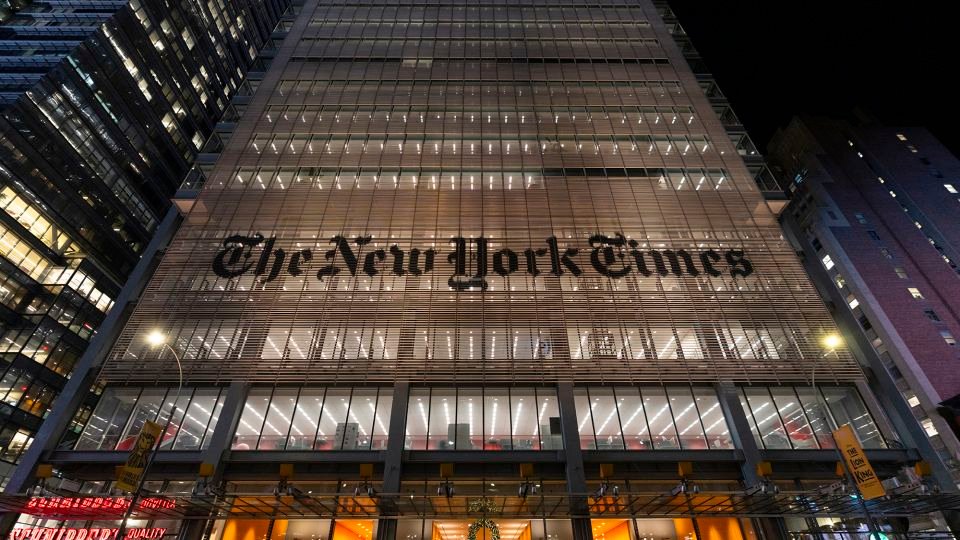
Trump’s Personal War Against the New York Times Begins

info Adjust the font size of this article to get the best reading experience.
A Personal Battle for Journalistic Freedom
For President Donald Trump, the recent legal actions targeting journalists have taken on a deeply personal dimension. Last week, reporters at The New York Times received subpoenas referencing “an alleged violation of federal criminal law” just two days after the publication of an article that challenged Trump’s claims about the new Qatari-gifted Air Force One. This development has sparked significant concern among journalists and media watchdogs, who believe the subpoenas were issued in direct response to the coverage.
Joe Kahn, the executive editor of The New York Times, expressed strong disapproval of the subpoenas in a memo to staff, calling them “impulsive” and describing them as a “naked attempt to intimidate individual reporters.” He emphasized the importance of protecting journalists from what he sees as a retaliatory abuse of prosecutorial power. The court orders require reporters to testify before a grand jury about their anonymous sources, but The Times is preparing to fight against this move.
“The law protects news gatherers from this sort of retaliatory abuse of prosecutorial power,” Kahn wrote. “It is essential that the courts reaffirm that protection and quash this overreach. We are confident they will in this case.”
A Controversial Use of Subpoena Power
The use of subpoena power against journalists has long been a contentious issue. In previous administrations, officials often justified such actions by stating they were used only as a last resort, after all other investigative avenues had been exhausted. However, this time, the subpoenas appear to be a more immediate step rather than a final measure.
FBI director Kash Patel was reportedly called to the White House for meetings regarding the leak investigation shortly before the subpoenas were delivered to Times reporters. This has raised concerns about the extent of presidential influence in these matters.
Renowned First Amendment attorney Floyd Abrams noted that this situation is unique because of the president’s personal involvement. “I can’t think of another such conflict in which the president himself is so personally involved… Nor can I think of one in which there is every reason to think that the president himself was personally involved in the decision to seek to force the press to reveal its sources.”
The Controversy Surrounding the Qatari-Gifted Plane
The plane gift itself has been a source of controversy. Figures across the political spectrum criticized the plan to accept the luxurious plane from Qatar, with some likening it to a “bribe.” Despite this, Trump was eager to showcase the new jet, even though the compressed timetable limited the modifications made to the plane.
According to The Associated Press, images of the jet analyzed by the outlet showed that it lacked some of the missile detection and countermeasure systems found on the outgoing Cold War-era jets. This information was easily discernible simply by examining the plane up close.
When Trump announced during a NATO summit that he would not fly the Qatari-gifted plane out of Turkey, he claimed the change had nothing to do with security concerns. Instead, he stated the plane was being sent to England’s Mildenhall Air Force Base to allow U.S. service members to tour the aircraft.
However, anonymous sources quickly undermined this claim. The Times’ first report titled “Security precaution led Trump to use old Air Force One in leaving Turkey” highlighted the contradiction between Trump’s statements and credible information from government sources.
A Pattern of Disputes
During Trump’s two terms in office, there have been numerous instances where his dubious assertions have been contradicted by people within his own government. However, this time is different because the Justice Department has issued subpoenas in response, and The Times immediately publicized the receipt of those subpoenas.
The Justice Department claims it is not targeting reporters but rather pursuing leakers of classified information. However, the Reporters Committee for Freedom of the Press pointed out that the Justice Department maintains a policy of pursuing non-media leads before seeking to compel testimony from journalists through subpoenas.
In the past, the Justice Department has also pursued reporters’ phone and email records while investigating leaks, a practice widely condemned by press freedom groups. The Biden administration had agreed to tighten regulations on subpoenas and search warrants to media outlets, but the Trump administration rolled back these measures, making it easier for investigators to obtain records and compel testimony from reporters.
The Broader Implications
The ongoing legal battle highlights the broader implications for press freedom and the relationship between the government and the media. As the fight over the subpoenas continues, it raises important questions about the safety of the jets used as Air Force One, the wisdom of accepting the “gift” plane, and the candor of the administration in claiming the plane was safe.
Kahn’s memo to The Times newsroom emphasized the professionalism of the reporters involved, noting that their work should make everyone proud. “The security of the jets used as Air Force One, which transport not only the president but also hundreds of government officials and staff, members of Congress, journalists and invited guests, is manifestly in the public interest,” he said.
Abrams also pointed out that the reporting and subsequent legal actions highlight several crucial follow-up storylines, including the safety of the president and the transparency of the administration. As the situation unfolds, the outcome could have lasting effects on the relationship between the press and the government.
- Author: Tyo Murty

















At the moment there is no comment