
The Simple Backseat Trick That Could Save Your Child’s Life This Summer
- account_circle Tyo Murty
- calendar_month Wednesday, 1 Jul 2026
- visibility 15
- comment 0 comment
- print Print

info Adjust the font size of this article to get the best reading experience.
The Dangers of Leaving Children in Hot Cars
As summer temperatures rise, it’s crucial for parents and pet owners to prioritize car safety. With heat indexes expected to reach 100 to 105 degrees in the coming days, children and pets can be at significant risk when left in vehicles. According to an expert, more than 50% of children are accidentally left in cars, while 25% of fatalities involve children who climb into a vehicle on their own and cannot escape. Additionally, 15% of deaths occur when children are knowingly left in cars.
“Two-thirds of the temperature increase happens within the first 10 minutes in a closed vehicle,” said Amber Rollins of Kids and Car Safety. “When combined with the fact that a child’s body temperature rises three to five times faster than an adult, it creates a dangerous situation in just minutes.”
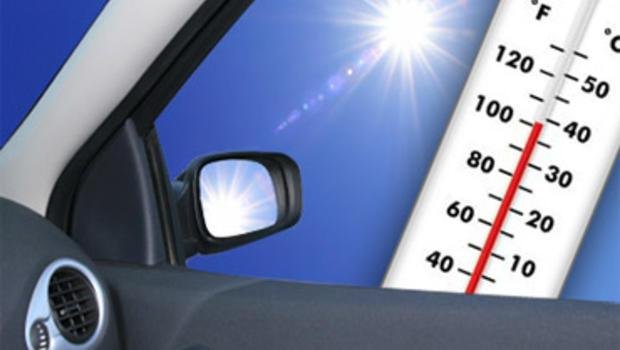
Heat stroke can occur when a person’s body temperature reaches 104 degrees, and temperatures of 107 degrees can be fatal. On a 90-degree day, a parked car can reach 109 degrees in just 10 minutes. A child’s average body temperature is around 98 to 99 degrees, making them particularly vulnerable.
“The inside of a vehicle acts like a greenhouse, heating up quickly to dangerous levels,” said Cherie Sage of Safe Kids Kansas. “That’s why it’s essential never to intentionally leave a child alone in a vehicle.”
Preventing Accidents and Ensuring Safety
The Topeka Police Department advises people to check their vehicles before locking them to prevent curious children from entering and becoming trapped. “Don’t leave your car unlocked. Kids like to play and get in cars, especially in the summertime. But, you don’t want your kid to get locked themselves in a car. Some are so young they don’t know how to get out,” said Lieutenant Ron Ekis of the Topeka Police Department.
Kansas House Bill 2516, known as the “Hot Car Bill,” provides legal protection for good Samaritans who help a child or animal in distress. “Bystanders have an important role. Kansas has a law that gives civil liability immunity to a bystander if they see a child or pet in danger from heat stroke or other hazards,” Sage explained. “We recommend looking around to ensure no adults are nearby. Call 911 first, then check if the doors are unlocked. If not, you are allowed to forcibly enter the vehicle to rescue the child or pet.”
Statistics and Real-Life Scenarios
According to the National Highway Traffic Safety Administration, there have been six deaths this year, with 37 last year. In 2025, 31 children died from heatstroke in vehicles. More than half of these deaths involved children under the age of two.
“It’s easy to fall into autopilot mode, which can lead to forgetting to drop off a child at daycare,” Rollins said. “Most of these kids are in rear-facing car seats, which look the same to the driver whether there’s a baby in there or not. Children often fall asleep in the car, and you can’t see or hear them. It’s a habit memory that your brain forms during routine drives.”
Practical Tips for Parents
To avoid such situations, experts recommend placing something you need in the back seat with your child, like your purse or phone, to serve as a reminder. “Get in the backseat and check where your purse, gym bag, or briefcase is. Also, add extra layers of protection by placing an old stuffed animal in the backseat,” Rollins suggested.
It is also vital to never leave a child unattended in a car, regardless of the outside temperature. Even if it’s 60 to 90 degrees, cars can heat up rapidly. “Children have died in hot cars on days when it was in the sixties outside. What feels comfortable to us can be deadly for a child trapped inside,” Rollins emphasized.
Additional Safety Measures
Leaving a child or pet in a car could happen to anyone, but taking extra precautions can make a life-or-death difference. “It seems like common sense, but parking in the shade or cracking the windows isn’t enough to keep a dog or a pet safe,” Lieutenant Ekis said. “They sweat like humans, so they can still suffer from heat exposure.”
By staying vigilant and following these guidelines, parents and pet owners can significantly reduce the risks associated with high temperatures in vehicles.
- Author: Tyo Murty


















At the moment there is no comment