
A Man Survived a Stone Blade to the Face 100,000 Years Ago

info Adjust the font size of this article to get the best reading experience.
A Glimpse into Ancient Violence and Survival
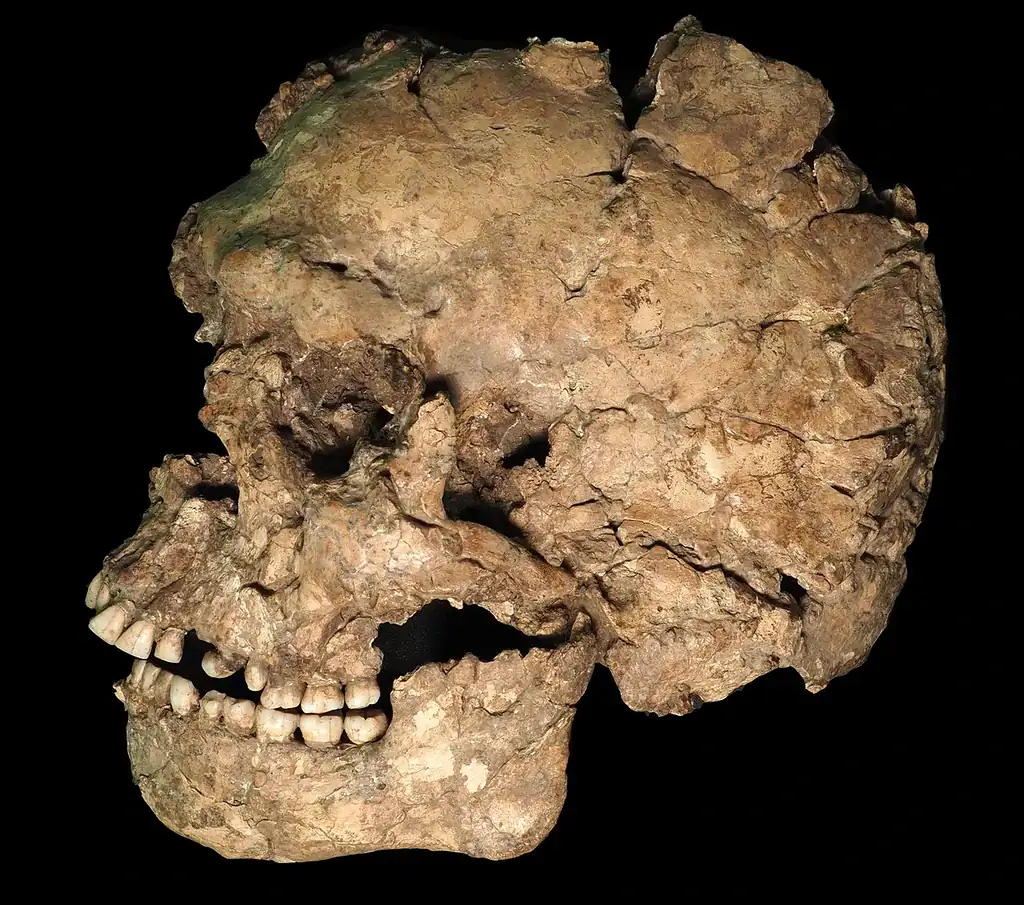
A detailed scan of a fossil jaw has uncovered evidence that may point to a violent attack that occurred 100,000 years ago. Researchers examining remains from Qafzeh Cave in Israel believe a sharp stone tool likely caused the injury to a man’s jaw. The bone showed signs of healing, indicating that the individual survived the wound. This discovery is among the earliest known examples of sharp-force trauma in Homo sapiens and adds a human element to one of the world’s oldest burial sites.
Forensic Evidence from Qafzeh Cave
Qafzeh Cave, located near Nazareth, has long been a significant site for research on human origins. Excavations dating back to the 1930s uncovered the remains of at least 27 early Homo sapiens, many of whom were buried between approximately 145,000 and 92,000 years ago. These individuals lived tens of thousands of years before modern humans spread across Eurasia.
They also left behind signs of complex behavior, including burials, the use of red ochre, shells that may have served as ornaments, and stone artifacts with geometric patterns. The new study focuses on Qafzeh 25, a young adult male whose partial skeleton was discovered in 1979. Earlier analysis noted damage across the skeleton, much of which was attributed to pressure, sediment, and fossilization after death.
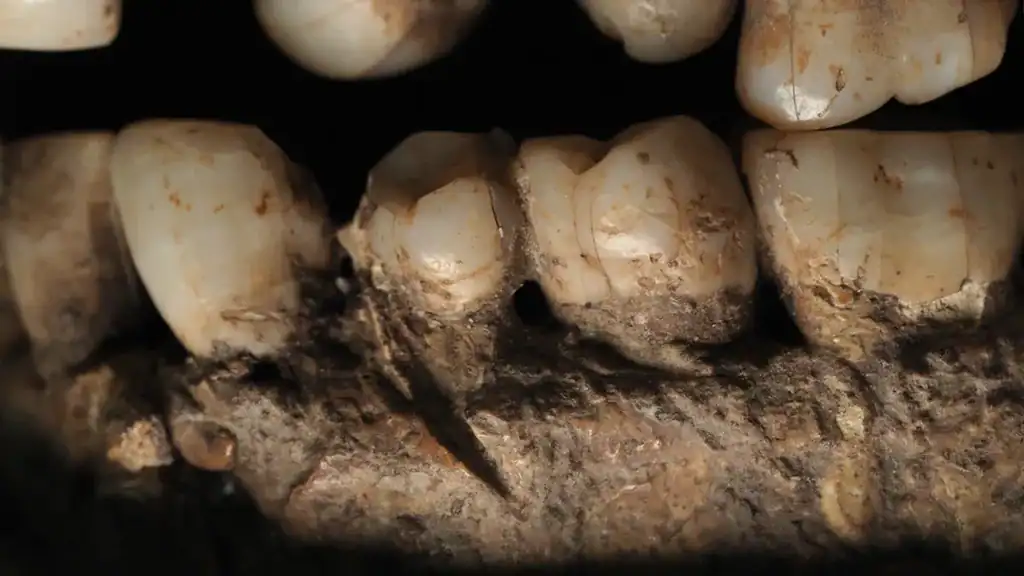
However, high-resolution micro-CT scans revealed a different story. On the left side of his lower jaw, researchers found a deep, linear mark cutting through the mandible and affecting a premolar. The groove had a V-shaped profile, typically associated with a sharp edge like a blade. Additionally, they observed signs of bone remodeling around the wound, indicating that the bone had begun to repair itself. The injury did not reach the tooth’s pulp chamber, which contains nerves and blood vessels, potentially reducing the risk of infection and aiding the victim’s survival.
Violence, Survival, and Care
While the exact circumstances of the injury remain unclear, the position of the wound supports the possibility of interpersonal violence. Modern forensic studies show that facial injuries often occur on the left side, linked to right-handed attackers during face-to-face confrontations. The injury to Qafzeh 25 aligns with this pattern.
Stone tools from Qafzeh, such as flint scrapers and points, could have caused such an injury. If the researchers’ interpretation is correct, this injury preserves evidence of a confrontation between early humans during the Middle Paleolithic era, long before the advent of farming or written history.
Whatever caused the cut, Qafzeh 25 lived long enough for the bone to begin healing. This survival may suggest assistance from others, especially if the injury made eating or drinking difficult or increased the risk of infection.
The scans also revealed another surprise: a hidden cavity in a rotated premolar, the first such case reported from the Qafzeh group. Other individuals from the site also had dental issues, and researchers have noted that Qafzeh shows an unusually high rate of cavities compared to other Paleolithic populations. Factors such as diet, environment, and genetics may have contributed to the group’s oral health.
Buried With Care
The group likely buried Qafzeh 25 soon after his death. The bones show no signs of scavenging by carnivores, prolonged exposure to weather, or trampling, suggesting the body was protected shortly after death. This supports the idea that Qafzeh Cave served as a deliberate burial site for these early Homo sapiens.
The man’s jaw adds a personal touch to this setting. While the origin of the wound remains a mystery, its shape and position make interpersonal violence a plausible explanation. Qafzeh 25 now joins a small group of ancient humans whose remains preserve traces of social life as well as death. His remains indicate that early Homo sapiens at the cave faced injury and disease, sometimes surviving them, and buried their dead with care.
The evidence is fragmentary, but it highlights behaviors that extend deep into the human past.
- Author: Tyo Murty




















At the moment there is no comment