
US Expands Airstrikes on Iran After Deadly Attack, Raising Fears of Wider Middle East War

info Adjust the font size of this article to get the best reading experience.
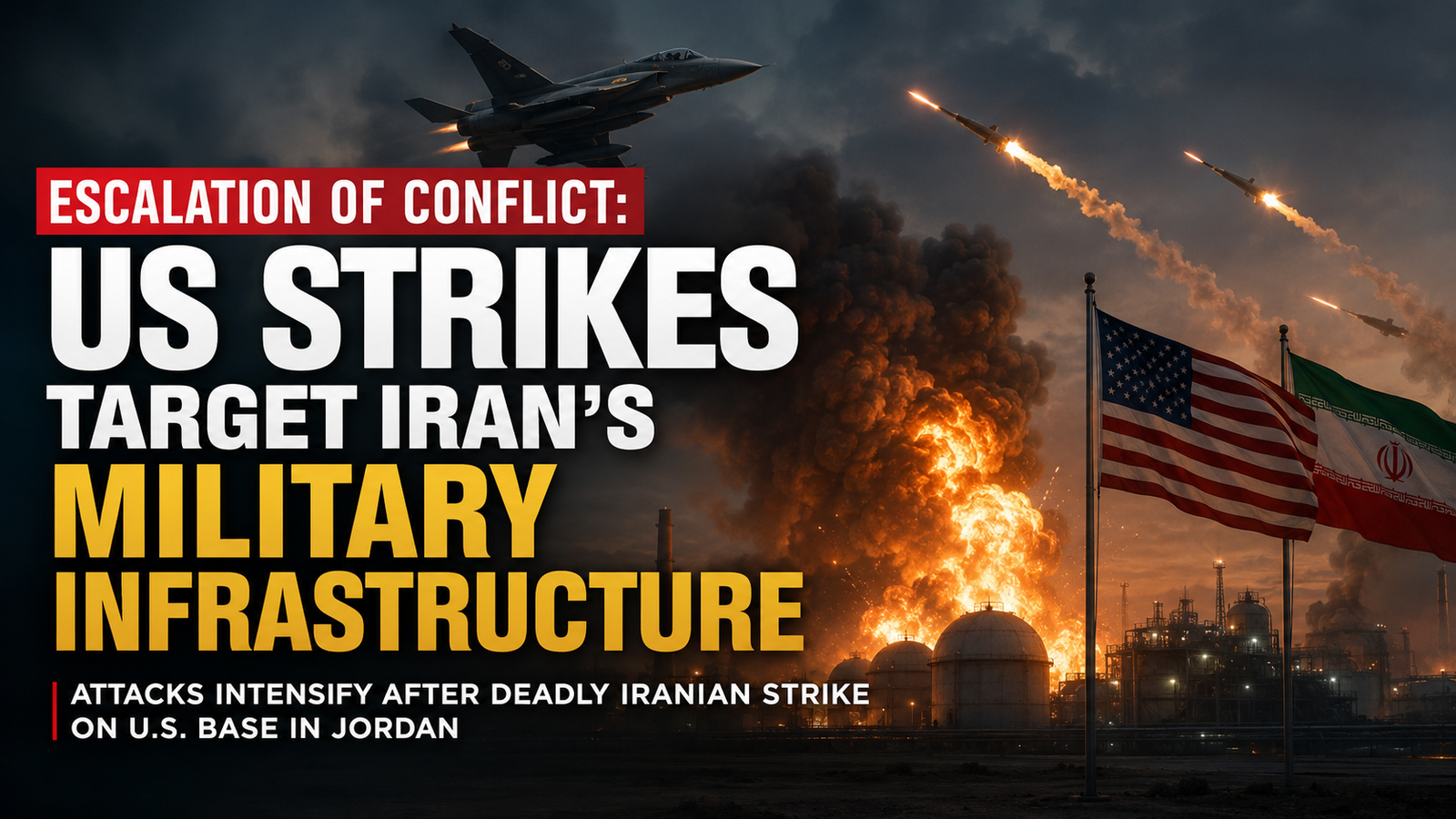
Escalation of Conflict: US Strikes Target Iran’s Military Infrastructure
The United States military has intensified its strikes on Iran, targeting the Islamic Revolutionary Guard Corps (IRGC) in response to an attack that resulted in the deaths of two American service members and left one missing. Four others were hospitalized due to injuries sustained during the incident. These attacks are part of a broader strategy aimed at “swiftly punishing” Iran for its actions.
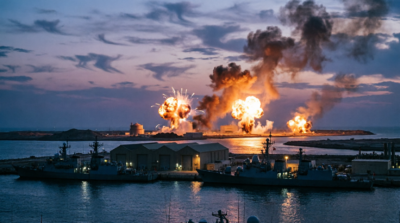
On the eighth consecutive night of air strikes, areas near Sirik in Hormozgan province and Qeshm Island were hit, according to reports from Iranian news agencies Mehr and Tasnim. The strikes occurred early on Sunday, with specific timings reported as 1:30 am local time in Sirik and 3:38 am and 6:10 am in Qeshm Island. Additionally, a location near Shadegan in Khuzestan province was targeted at 5:55 am.
Despite the intensity of the attacks, Iranian reports indicated no casualties and no damage to residential or commercial infrastructure. However, the U.S. Central Command (CENTCOM) stated on X that the strikes were designed to “further degrade Iran’s ability to threaten commercial shipping in the Strait of Hormuz.” This move also serves as retaliation for Iranian ballistic missile and drone attacks on a U.S. base in Jordan, which claimed the lives of two U.S. service members.
Since the conflict began in February, the toll has been significant, with 16 U.S. service members killed and over 430 wounded. Meanwhile, Tasnim news agency reported explosions in Qom, Arak, and Behbahan, although local authorities later denied these claims. The governor of Arak emphasized that “the situation is completely normal” and no reports of attacks or explosions have been received.
Iranian Retaliatory Measures
In response to what it perceives as aggression, Iran’s military targeted U.S. assets in two bases in Kuwait. A statement from Iran’s military highlighted the targeting of an ammunition depot at Al-Adiri camp and Patriot radar systems at the Ali Al Salem base. This marks a clear escalation in the ongoing conflict between the two nations.
Before the latest U.S. strikes, Iran’s supreme leader issued a warning about “unforgettable lessons” if the U.S. continued its attacks. Initially, the conflict centered around control of the Strait of Hormuz, but recent U.S. strikes have expanded to include civilian infrastructure such as bridges and desalination plants.
State-run news agency IRNA reported that the Bonji desalination plant was destroyed, affecting water supplies for approximately 10,000 people. A desalination plant on strategic Qeshm Island within the strait was also damaged. Iranian Deputy Foreign Minister Kazem Gharibabadi accused the U.S. of violating the terms of an interim deal and failing to implement its provisions.
Iranian authorities claim that at least 50 people have been killed and over 500 wounded in U.S. strikes over the past three weeks. Late Saturday, the Iranian embassy in India identified two girls—Sogand Dardmand and Fatemeh Zahra Akbari—as among seven killed in a U.S. strike on Bandar Khamir in southern Iran.
Public Reaction and Concerns
Al Jazeera’s Tohid Asadi, reporting from Tehran, noted that the last eight nights of U.S. strikes on Iran have caused widespread anger and frustration among the populace. Many citizens are uncertain about the continuation of this confrontation and the potential for a diplomatic resolution to address the complexities of the conflict.
As tensions continue to rise, the situation remains volatile, with both sides showing no signs of backing down. The impact on civilians and the broader geopolitical landscape underscores the urgency for a lasting solution to prevent further escalation.
- Author: Tyo Murty

















At the moment there is no comment