
California tackles impact fees in affordable housing bill
- account_circle Tyo Murty
- calendar_month Wednesday, 15 Jul 2026
- visibility 16
- comment 0 comment
- print Print

info Adjust the font size of this article to get the best reading experience.
California Takes Action to Address Housing Crisis
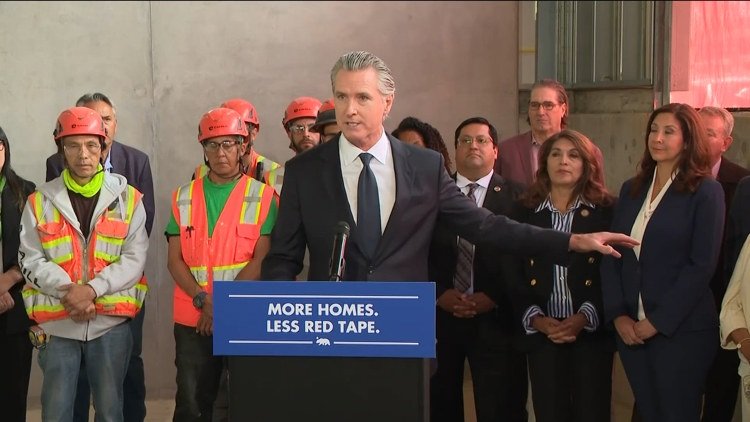
Governor Gavin Newsom recently signed legislation aimed at addressing the ongoing housing crisis in California. The new law, Assembly Bill 179, is designed to reduce costs and streamline the construction process for affordable housing projects. This move comes as the state continues to grapple with a severe shortage of housing, particularly for low-income residents.
The bill was signed at an active construction site in Oakland’s Chinatown, where a 97-unit affordable housing development is set to be completed in the fall. Newsom emphasized the importance of increasing the supply of housing, stating, “Cost of housing. And it’s not complicated — supply and demand, it’s Econ 101. We need to build more damn housing. And we need to lower the cost of construction.”
Reducing Impact Fees
One of the key components of AB179 is its focus on reducing or eliminating impact fees that local governments impose on new residential developments. These fees are meant to cover the costs associated with infrastructure and services such as parks, public safety, and transportation. However, experts have pointed out that these fees can add between $20,000 and $30,000 per unit, making affordable housing projects financially unfeasible.
Newsom criticized the current system, calling the fees “usurious” and stating that they make it “quite literally impossible to develop an affordable unit.” The legislation will require local governments to justify the need for these fees, ensuring that they are applied fairly and transparently.
Streamlining Housing Agencies
In addition to addressing impact fees, the bill also formalizes Governor Newsom’s restructuring of several state housing departments under the California Housing and Homelessness Agency. This move is intended to reduce bureaucracy and improve transparency, ultimately driving down costs for housing projects.
Gustavo Velasquez of the California Department of Housing and Community Development highlighted the challenges developers face when trying to navigate the complex web of regulations and funding sources. He noted that developers often encounter significant financial and bureaucratic hurdles before a project can even begin.
Janelle Chan, who is helping lead the Oakland Chinatown senior housing project, shared her own experiences with the difficulties of securing state funding. She explained that the project required applications through about 20 different programs and relies on 12 funding sources, including eight from the state.
Funding for Homelessness Efforts
The legislation also includes $900 million for cities and counties through the Homeless Housing and Assistance Program. This funding aims to support the construction of housing for homeless individuals while maintaining accountability requirements for those who receive the money. Cities and counties must demonstrate how the funds are being used to ensure that the resources are effectively utilized.
Future Housing Initiatives
AB179 comes on the heels of the Legislature and Governor’s efforts to place the $11.25 billion Veterans and Affordable Housing Bond Act of 2026 on the November 2026 ballot. Under this proposal, $10 billion would be used to finance the construction of more than 40,000 shovel-ready affordable housing developments across California. Another $1.25 billion would support the CalVet Home Loan Program, which helps veterans and military families purchase homes.
During a press conference, Newsom expressed his support for the bond, stating that it is something “Absolutely the voters should support.” He praised the work done to get the bond on the ballot and emphasized the importance of investing in affordable housing for the future.
- Author: Tyo Murty



















At the moment there is no comment