
Breakthrough Discovery: Rare Dinosaur Bone Reveals New Long-Necked Species

info Adjust the font size of this article to get the best reading experience.
A New Dinosaur Discovery in Thailand
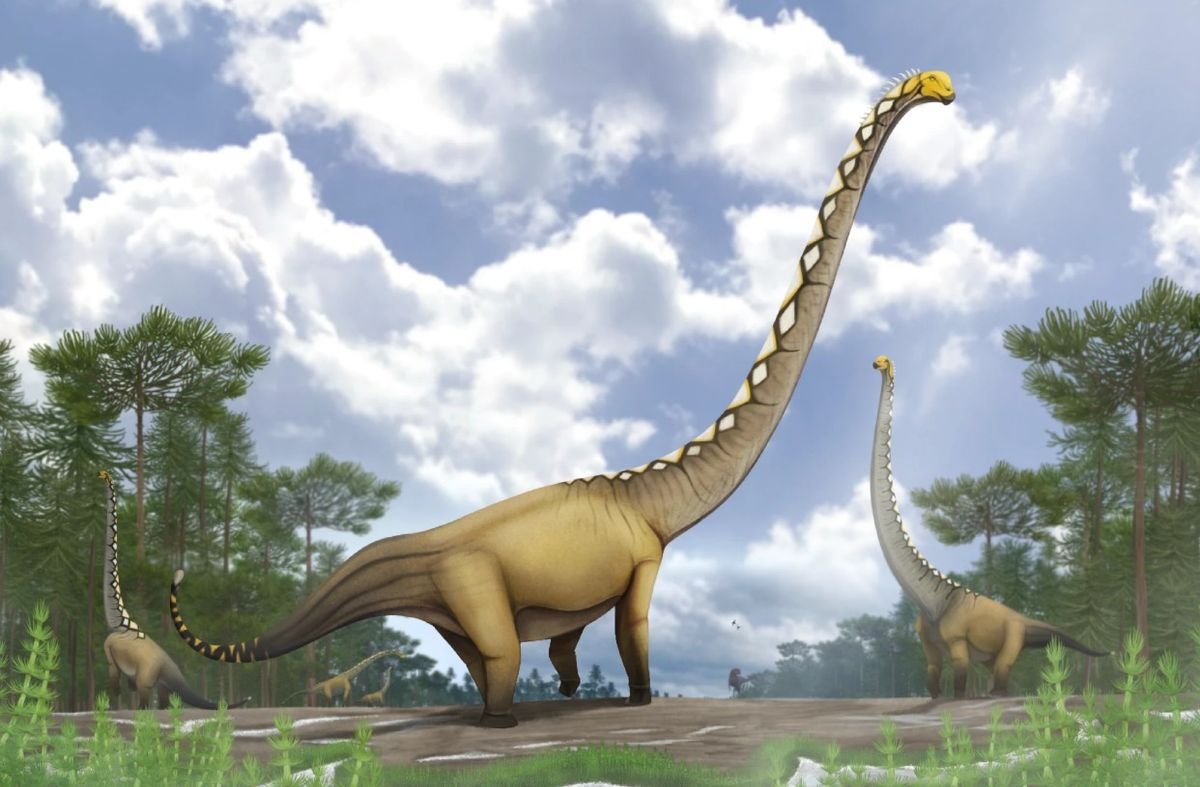
A new species of dinosaur has been discovered in Thailand, marking a significant addition to the region’s prehistoric history. This newly identified sauropod, named Uragasaurus kalasinensis, stands out not only for its size but also for its unique characteristics. It is the 15th dinosaur species found in Thailand, offering valuable insights into the environment of the area 143 million years ago.
“This discovery represents the first formally named mamenchisaurid from Thailand and expands the known geographic distribution of the clade in Southeast Asia,” the researchers noted. Despite being described from a single vertebra found in the Phu Kradung Formation, the fossil was distinctive enough to be classified as a new species.
At the time this dinosaur lived, the region was a lake-dominated floodplain with numerous rivers. The single vertebra provided enough evidence for the research team, led by Apirut Nilpanapan of Mahasarakham University, to confidently identify it as a sauropod and name it as a new species.
“The new [species] is based on a well-preserved anterior dorsal vertebra exhibiting a distinctive combination of characters, including a unique Y-shaped configuration,” the researchers wrote. This unique feature helped in distinguishing Uragasaurus kalasinensis from other known species.
Naming the New Species
The name Uragasaurus kalasinensis has a meaningful origin. “Uraga” comes from the Sanskrit word meaning “snake” or “serpent,” referring to the long neck of the dinosaur. The species name, “kalasinensis,” is derived from Kalasin Province, where the specimen was found.
Sauropods are famous for their massive size, with four pillar-like legs, long necks, and counterbalancing tails. However, Uragasaurus kalasinensis belongs to a special group of sauropods called mamenchisaurs, known for their exceptionally long necks. For example, Mamenchisaurus sinocanadorum had a neck that could reach up to 15 meters (49 feet), making up nearly half of the dinosaur’s total length.
The Mystery of Long Necks
The reason behind the evolution of such long necks in mamenchisaurs remains a topic of debate among scientists. Professor Paul Barrett, an expert in sauropod evolution at the Natural History Museum, London, suggested in 2023 that these long necks might have played a role in feeding, similar to other sauropods. However, there could be other functions as well.
“It could have also been to do with sexual display or used for neck-butting contests between males fighting over mates and territory, similar to how giraffes behave today. But we can’t say for sure. At this point, it’s pure speculation as to why they evolved necks of this length.”
Expanding the Geographic Range
Mamenchisaurs were previously thought to be primarily an East Asian group, with many species described from China. It was even believed that during the Jurassic period, China was an isolated island, leading to different evolutionary paths for sauropods. However, recent discoveries have challenged this view.
Fossils of Wamweracaudia from Tanzania indicate that mamenchisaurs were present in east Africa, while findings in Russia suggest they reached as far as Siberia. The confirmation of Uragasaurus kalasinensis in Thailand now extends their known range further south into Southeast Asia.
The Significance of the Study
This discovery contributes to our understanding of dinosaur evolution and the ancient ecosystems of Southeast Asia. The study, published in Scientific Reports, highlights the importance of continued research in uncovering the mysteries of prehistoric life.
As more fossils are uncovered, scientists can piece together a clearer picture of how these ancient giants lived and thrived. The identification of Uragasaurus kalasinensis is a testament to the ongoing efforts in paleontology and the ever-expanding knowledge of Earth’s history.
- Author: Tyo Murty



















At the moment there is no comment