
Oklahoma Ranks Highest in U.S. for Heart Disease Deaths, Study Finds


info Adjust the font size of this article to get the best reading experience.
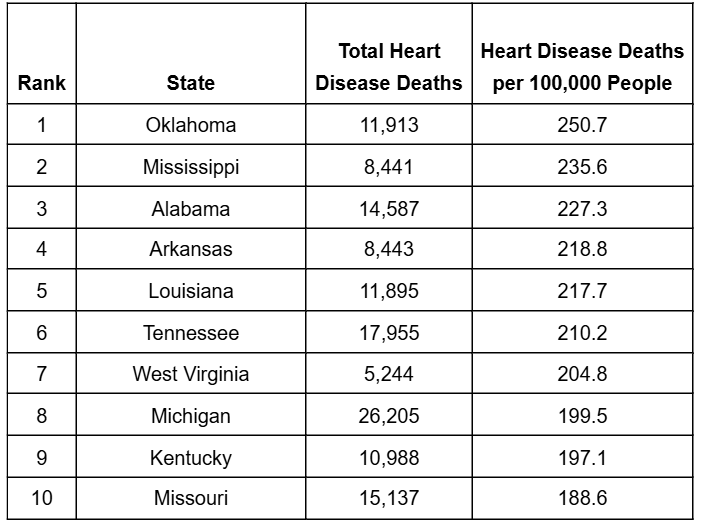
OKLAHOMA CITY (KFOR) – Heart disease remains the leading cause of death in the United States, according to the Centers for Disease Control and Prevention. A recent study has revealed that Oklahoma is now ranked first in the country for heart disease-related deaths. This finding has sparked concern among health professionals and residents alike.
Dr. Usman Baber, chief of cardiology at OU Health, expressed his reaction to the study: “I think the data from the study are an unfortunate sobering reminder of the burden of heart disease in our state.” The ranking was compiled by NiceRX, a company that sells weight loss drugs like compounded semaglutide or compounded tirzepatide. According to their analysis, more than 27% of deaths in Oklahoma—over one in four—are attributed to heart disease.
The study also highlighted that Oklahoma is followed by Mississippi, Alabama, and several other Southern and Midwestern states in terms of heart disease mortality rates. However, Dr. Baber emphasized that the numbers alone do not tell the full story. “It is all the complications that come before death, such as stroke, amputation, heart failure, debility, and being dependent on loved ones to take care of you,” he said.
NiceRX noted that states with the highest heart disease death rates often have high obesity rates. Yet, Dr. Baber pointed out that this correlation does not fully explain Oklahoma’s situation. “While we are the top for heart disease deaths, we are not at the top for obesity,” he stated. Only about 35% of Oklahomans are considered obese, which suggests that other factors may be contributing to the problem.
Dr. Baber identified several potential causes, including age, genetics, smoking, and access to healthcare. He stressed the importance of increasing awareness, especially in rural communities and communities of color. “How do we increase awareness, particularly in our rural communities and communities of color?” he asked.
In addition to these challenges, there is hope in the form of new GLP-1 weight loss drugs. These medications have shown promise in helping patients reduce weight and improve cardiovascular health. “Patients are on these drugs, we do see reductions in weight. We see additional cardiovascular benefits and to be frank, even go above and beyond the weight loss, improvements in blood pressure, less heart failure, even less heart attacks,” Dr. Baber explained.
However, access to these drugs remains a significant barrier. “There are access price issues, so not everyone gets them,” he acknowledged. Despite these challenges, Dr. Baber believes that improving heart health doesn’t require major lifestyle changes. “It is amazing that if people can walk 30 minutes a day, eat a little bit healthier, you will have a dramatic impact on your heart health,” he said.
The findings from this study serve as a call to action for individuals and communities across Oklahoma. While the statistics are alarming, they also highlight the need for greater awareness, improved access to healthcare, and proactive steps toward better heart health. By addressing the root causes of heart disease and promoting healthier lifestyles, there is hope for a future where Oklahoma no longer holds the top spot for heart disease deaths.
- Author: Tyo Murty


















At the moment there is no comment