
More Gears Mean Better Performance?

info Adjust the font size of this article to get the best reading experience.
The evolution of car transmissions has been a fascinating journey, marked by the increasing number of gears found in modern vehicles. In the past, early automatic transmissions like the GM Hydra-Matic featured just four speeds, and for many years, three-speed transmissions were standard. If you’ve ever heard the term “three on the tree,” you’re likely familiar with the era when such transmissions were common. By the 1990s, five-speed automatics began to appear more frequently, but today, three, four, or even five gears would be considered outdated.
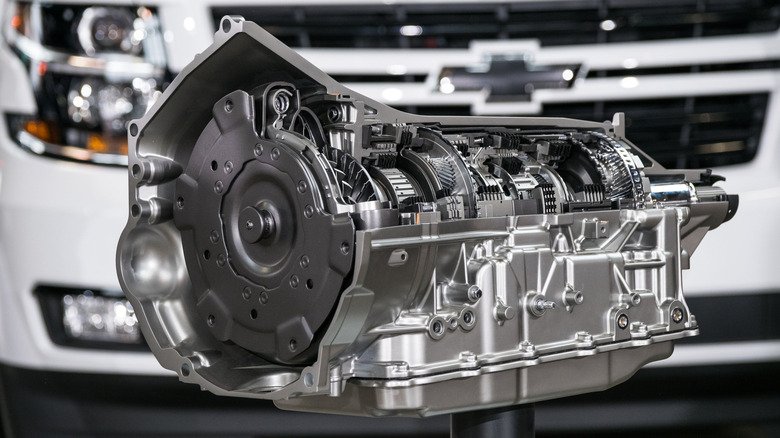
In 2025, manual transmissions typically still feature six or, in some cases, seven forward gears. However, automatic transmissions have continued to evolve, with gear counts rising steadily. While six-speed automatics are still common in sports cars like the Toyota GR86, vehicles such as the new 2025 Chevrolet Corvette come equipped with eight-speed transmissions. Even larger vehicles, like the Ford F-150 or the 2025 GMC Sierra 1500, often have 10-speed automatic transmissions. The reason for this shift is primarily fuel economy. More gears allow an engine to operate at lower RPMs during cruising, which reduces fuel consumption and improves overall efficiency.
The benefits and drawbacks of more gears
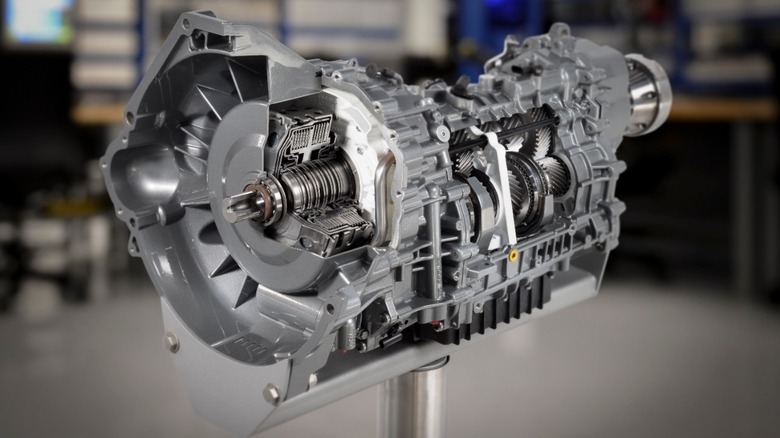
Improved fuel economy is one of the most significant advantages of having more gears in a transmission. For large trucks like the F-150 or Sierra 1500, where fuel efficiency is crucial, this benefit is especially valuable. However, there are also potential downsides to increasing the number of gears. Adding more gears means more mechanical components, which can lead to challenges in packaging and weight management. Additionally, the cost of manufacturing these complex transmissions increases, and there’s a risk that frequent shifting could disrupt the driving experience, making acceleration less smooth.
Despite these concerns, many drivers and automotive experts argue that the benefits outweigh the drawbacks. Modern high-gear-count transmissions, such as the ZF 8-speed automatic, have earned a reputation for their smooth shifting and performance. These transmissions are not only reliable but also designed with hybridization in mind, allowing for future upgrades that can further enhance fuel economy without the need for additional gears.
Dual-clutch automatics, like the seven-speed unit found in the Ford Mustang GT500, demonstrate that high-gear-count transmissions can be both fast and efficient. These systems deliver lightning-fast shifts, making them ideal for performance-oriented vehicles. This shows that not all automatic transmissions are inherently flawed—some are engineered to provide an optimal balance between power, efficiency, and driver satisfaction.
The future of transmission technology
As automotive technology continues to advance, the trend toward more gears is likely to persist. Manufacturers are constantly seeking ways to improve fuel efficiency while maintaining or enhancing performance. With the rise of electric and hybrid vehicles, the role of traditional transmissions may evolve, but for now, they remain a critical component of internal combustion engines.
For those interested in staying updated on the latest developments in automotive technology, there are numerous resources available. Subscribing to newsletters and following trusted sources can provide insights into emerging trends, expert opinions, and practical guides. Whether you’re a car enthusiast or a casual driver, understanding the evolution of transmissions can help you make more informed decisions about your vehicle choices.
- Author: Tyo Murty




















At the moment there is no comment