
People Are Making Millions Betting on the Weather and Politics—But There’s a Massive Catch
- account_circle Tyo Murty
- calendar_month Saturday, 20 Jun 2026
- visibility 14
- comment 0 comment
- print Print


info Adjust the font size of this article to get the best reading experience.
The Rise of Prediction Markets and Their Growing Popularity in Hong Kong
In the second part of a two-part series exploring new trends in illegal betting in Hong Kong amid the excitement surrounding the football World Cup, Connor Mycroft delves into the rise of prediction markets and the associated risks. In this article, we examine how platforms like Polymarket and Kalshi have gained popularity among Hong Kong residents, despite regulatory concerns.
A New Way to Bet
When 25-year-old Jean Pierre started betting on Polymarket last year, his reasoning was simple: “I was just looking to see if I could make some money easily.” The French freelance video creator, who has lived in Hong Kong for five years, said he was drawn to the prediction market platform because of the various betting options it provided. Rather than betting on sports or stocks—areas he had no background in—he could instead wager money on political outcomes, such as whether Sanae Takaichi would become Japan’s prime minister or whether Ukrainian President Volodymyr Zelensky would be seen wearing a suit before a certain date.
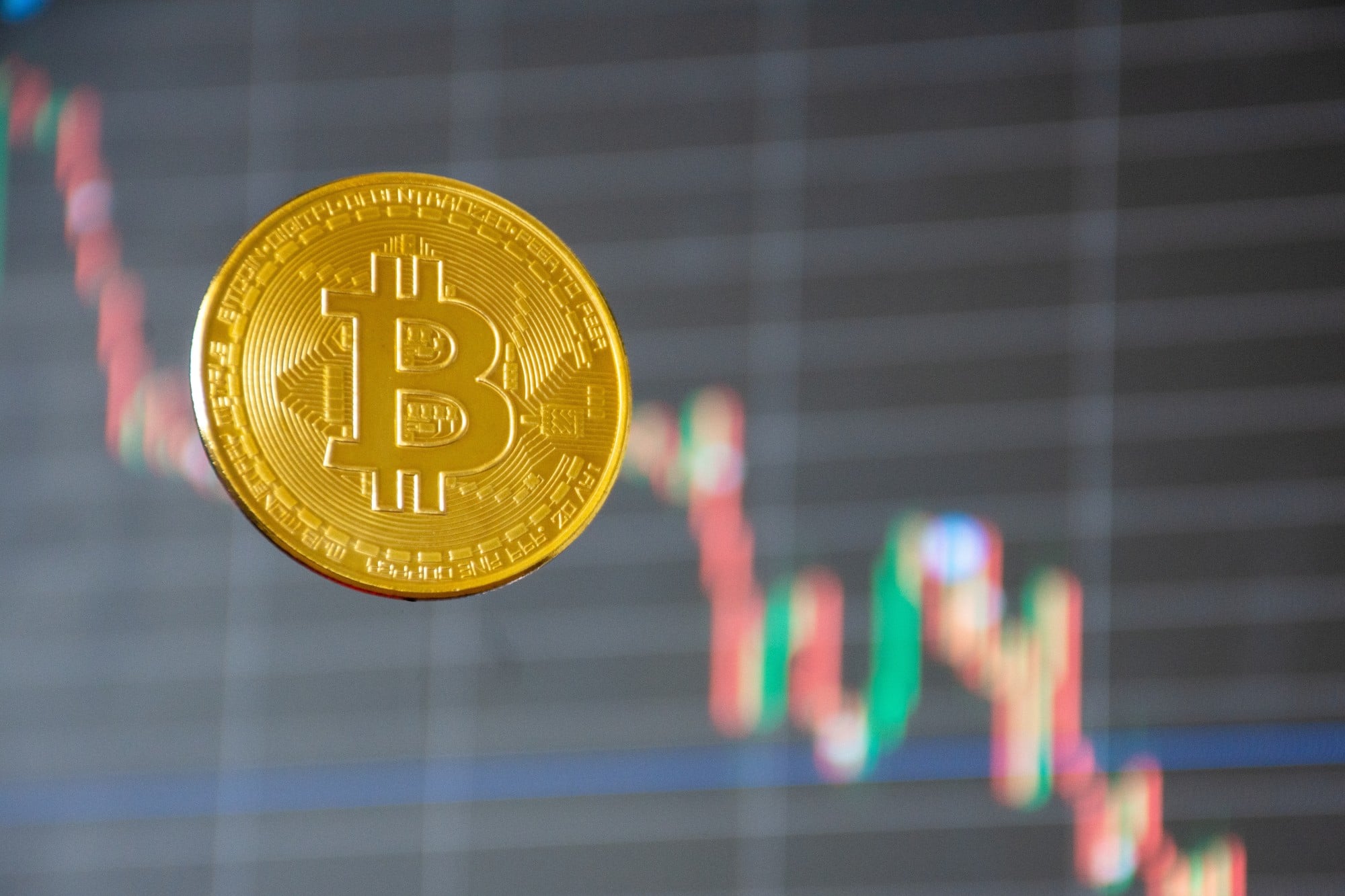
Eventually, he started putting money into popular cryptocurrency-related wagers, such as whether the value of Bitcoin would go up or down over the next five minutes. He said he had wagered about HK$1,500 (US$190) of his own money over the past year and, at one point, had almost tripled his winnings to as high as HK$4,000. But shortly thereafter, he lost everything.
Asked whether he felt betting on prediction markets amounted to gambling, he said: “I mean, of course, it is gambling. You have no way of knowing what will happen. Maybe some predictions have better odds of happening, but in the end it’s never 100 per cent, right? But you know, even if you invest in stocks, it’s betting. To me there is no fundamental difference.”
The Growth of Prediction Markets
While the fundamental concept of prediction markets stretches back centuries to early political betting, their modern incarnation can be traced to the Covid-19 pandemic with the emergence of Polymarket and Kalshi—the two biggest players in the sector. The platforms allow users to place wagers on just about anything—from who will win the NBA championships to whether the United States and Iran will secure a permanent peace deal by the end of the year.
The platforms let users buy and sell “shares” on the outcomes of future events, usually framed as a yes-or-no question. The contracts are priced between $0 and $1, with the price or the “yes” outcome meant to reflect the market’s belief in the probability of that outcome. Users who correctly predict the event’s outcome receive a payout value based on the number of “shares” they bought, paid out at $1 each, while incorrect bets receive nothing.
The amount of money sloshing around the platforms has exploded over the past year. Trading volume on Kalshi and Polymarket surged to a combined US$25.66 billion in May, up more than 1,200 per cent from US$1.94 billion a year earlier, according to data from The Block, a digital asset information services company. A separate report from international brokerage firm Bernstein forecast annual trading volume reaching as high as US$1 trillion by 2030.
Sports betting is particularly lucrative for the platforms. According to the US-based think tank Pew Research Centre, sports made up around 80 per cent of trading on Kalshi and 39 per cent on Polymarket in July 2024. As of mid-June, more than US$2.4 billion had already been wagered on who would win the World Cup on Polymarket alone.
Regulatory Scrutiny and Concerns
Critics have said that by letting people wager on anything, prediction markets essentially turn the world into a casino and “financialise everything”—an assertion the founders of these platforms have embraced themselves. “The long-term vision is to financialise everything and create a tradeable asset out of any difference in opinion,” Tarek Mansour, co-founder and CEO of Kalshi, said during a panel at the Citadel Securities Future of Global Markets Conference last year.
Prediction markets have proven to be particularly popular among young Americans. A recent survey by Northwestern Mutual found that 32 per cent of Gen Z and 24 per cent of millennials in the country were currently or considering using prediction markets and sports betting in 2026. Across all US adults, it was just 17 per cent.
Jia Yanwei, an assistant professor at the Chinese University of Hong Kong (CUHK) who specialises in financial engineering, said the surging popularity of prediction markets was due to the ease with which people could access and trade on the platforms. “Clearly, the modern infrastructure and mechanism of this type of market facilitate easier access to participation and lower costs to trade,” he said.
How Big Are Prediction Markets in Hong Kong?
It is not entirely clear how popular Polymarket, Kalshi and other prediction markets are among Hongkongers, as the platforms do not publicly disclose such information. According to data analytics firm Similarweb, Hong Kong was the fourth-highest source of traffic to Polymarket’s website in May, representing about 4.5 per cent of its 40.5 million total visits that month. The US was by far the largest source of traffic, at nearly 23.1 per cent, followed by Canada and Brazil at around 6 per cent and 5 per cent, respectively.
Experts suggest that some of Hong Kong’s traffic can be attributed to users in other jurisdictions circumventing local bans by using virtual private networks (VPNs) to mask their IP addresses as originating from the city. Kalshi, by comparison, is overwhelmingly US-centric, with the country making up around 80 per cent of its monthly traffic, followed by Norway, Canada and the United Kingdom all below 2 per cent.
On Polymarket, Hong Kong is one of 20 global cities with daily weather markets. Using data from the Hong Kong Observatory, the platform lets users wager on the city’s highest or lowest temperature each day, or how much precipitation there will be in a given month. A check of the platform showed Polymarket users wagered more than US$887,000 on what the highest temperature would be in Hong Kong on April 24.
The SCMP also found one user who had won more than US$15,000 on a US$37 wager by betting that the temperature in Hong Kong would be 15 degrees Celsius (59 Fahrenheit) or below on March 13, an uncharacteristically low figure for that time of year. Meanwhile, more than US$323,000 has been wagered so far on whether former media boss Jimmy Lai Chee-ying—recently sentenced to 20 years’ imprisonment for national security-related offences—will be released by June 30.
Regulatory Responses Around the World
As these platforms have grown in popularity, so too has regulatory scrutiny. Polymarket is currently banned in more than 30 countries, due to both local regulatory restrictions and sanctions compliance, while Kalshi is listed as “restricted” in over 50, according to information available on each platform’s websites. Spain became one of the latest jurisdictions to block access to both Polymarket and Kalshi in May, when its consumer rights ministry launched a probe into whether the two platforms were violating the country’s laws by providing unlicensed gambling services.
Singapore was one of the earliest countries to ban Polymarket in December 2024. Users trying to access the site from the city state will instead be greeted with a warning that they are trying to access an “illegal gambling site” and could face legal repercussions.
Despite this, Jia said one of the main concerns was the potential for insider trading that could occur without regulation. In April, US authorities arrested an active duty special forces soldier for allegedly misusing classified information to successfully win US$400,000 on Polymarket by betting on the ousting of Venezuelan president Nicolas Maduro. Two Israelis, one of whom was an air force reservist, were also indicted earlier this year for allegedly using classified information to place bets on Polymarket about the timing of military strikes against Iran in the 12-day war last year.
What Should Hong Kong Do?
In a position paper released earlier this month, the World Lottery Association called for gaming and financial market regulators to close regulatory gaps to ensure prediction markets were subject to the same licensing and consumer protection standards as betting. While prediction markets described their products using financial terminology, which could influence how they were perceived and regulated, such “rebranding does not change the underlying product,” the association argued.
“Licensed operators bear the full cost of compliance, taxation, and public good contributions. Unregulated prediction market operators bear none of these costs while competing for the same customers,” it said.

For Jean Pierre, he remains undecided as to whether he will return to betting on prediction markets in the near future, adding that he has grown disillusioned with wagering on political outcomes in particular. Those wagers have drawn intense scrutiny over how they are determined. Most recently, it was reported that traders on Polymarket had been at loggerheads over whether the recently announced peace deal between the US and Iran really satisfied the conditions written into the contract. More than US$478 million had been wagered on the outcome.
Jean Pierre had earlier lost money when Polymarket’s dispute resolution mechanism determined that Ukraine’s Zelensky had not worn a suit to the NATO summit last June, despite the leader appearing in formal attire, on which about US$160 million had been wagered. “I’m not sure if I will go back, you know?” he said. “I will definitely avoid any markets like the Zelensky one, because the rules are not defined enough.”
- Author: Tyo Murty

















At the moment there is no comment