
The Maryland 400’s Heroic Stand Saved Washington—Their Stories Revealed
- account_circle Tyo Murty
- calendar_month Saturday, 4 Jul 2026
- visibility 15
- comment 0 comment
- print Print

info Adjust the font size of this article to get the best reading experience.
The Maryland 400: A Heroic Stand That Shaped a Nation
Nearly 250 years ago, several hundred soldiers of the Maryland Battalion — a newly formed unit in George Washington’s Continental Army — waited on the hills above the small village of Brooklyn, New York, bayonets sharpened for an expected British attack. They were not prepared for what happened next.
More than 23,000 Redcoats fell upon Washington’s troops, who numbered fewer than 11,000, at the Battle of Brooklyn on Aug. 27, 1776. American soldiers fled the field in droves. Only a heroic effort by the smallish Maryland contingent and some compatriots from Pennsylvania and Delaware held the British at bay long enough to allow Washington’s forces to escape, regroup and live to fight another day.
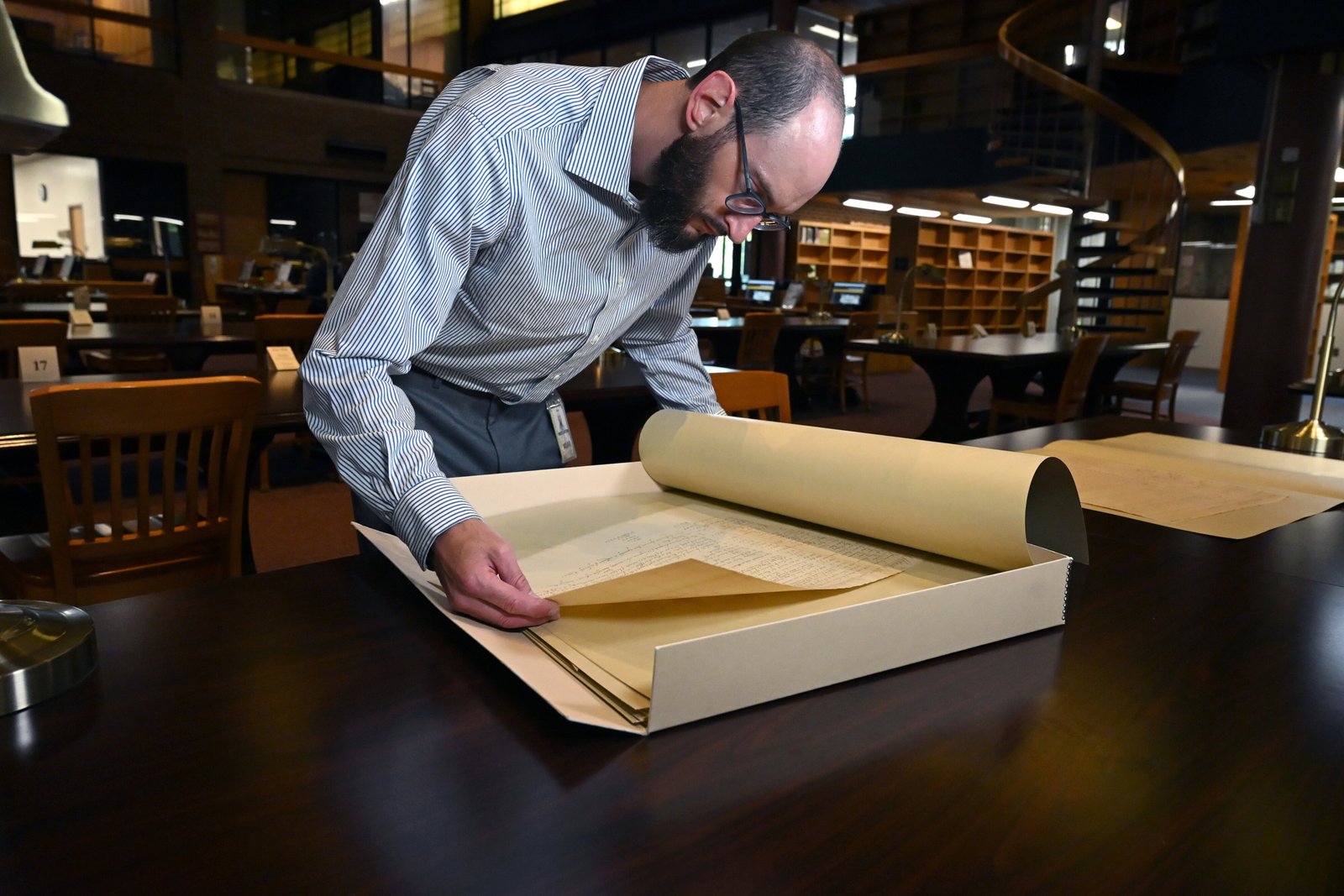
The stories of those men who carried out the critical rearguard action were largely forgotten for more than two centuries. But Owen Lourie, a historian and research archivist at the Maryland State Archives, has brought many of those soldiers to life in his new book, “Finding the Maryland 400,” set for release next month.
About 500 pages long, packed with hundreds of biographical sketches, and 13 years in the making, “Finding the Maryland 400” creates a newly vivid portrait of the individuals whose willingness to place their lives at risk for a cause greater than themselves helped lay the groundwork for a new nation.
“Would I say they saved America?” Lourie said of the Maryland 400, as historians would name the cohort of Maryland forces who took the desperate stand. “That’s further than I’d go. But they kept the Continental Army intact at a crucial time, and the survivors went on to help build the Maryland Line into one of the most respected elements of that army through the end of the war. We wanted to bear witness to their lives.”
Brave Fellows
After the British evacuated Boston following a siege in March 1776, Washington, the commander in chief of the Continental Army, feared they would target New York next, and he was right: he looked on that summer as about 400 enemy ships gathered in the harbor at the southern tip of Manhattan, preparing to overwhelm his fledgling troops.
The force of Brits and Hessians who disembarked to fight the Battle of Brooklyn on Aug. 27 didn’t just outnumber the Americans two to one. Their commander, General William Howe, surprised Washington with a flanking maneuver that left the Continentals cut off from their own fortified lines at a ridge called Brooklyn Heights, sparking a retreat through enemy resistance.
About half the 1,000 members of the Maryland Battalion escaped to the refuge that day, but the rest were ordered to hold their position at a structure called the Old Stone House and slow the British pursuit, giving more Continentals a chance to escape.
Commanded by a Baltimorean officer, Major Mordecai Gist, the detachment moved forward repeatedly in organized formations, bayonets raised and muskets firing, forcing the Brits and German mercenaries to halt and respond. The time they bought allowed the core of Washington’s army — about 8,000 men — to get away. Many went on to fight some of the most important battles of the war.
As Washington would eventually learn, 256 Marylanders were killed or captured in the action, about 25% of the colony’s battalion.
“Good God! What brave fellows I must this day lose,” he is reported to have said as the sacrifice unfolded.
Training, Honor and Glory
The handful of researchers who have studied the Maryland 400 in recent decades are prone to wrestling with a simple question: how did a few hundred troops from a single colony hold their own for roughly an hour against a historically powerful military force many times their size?
One bestselling historian and author said it’s helpful to recall the mood in Baltimore in the months before the war began.
Patrick K. O’Donnell, whose 2016 book “Washington’s Immortals” delivered a narrative account of the Battle of Brooklyn and more, describes how Gist, scion of a prominent Baltimore County family, and a group of rabidly patriotic, well-connected Baltimore friends, “gathered in a tavern on Light Street in the winter of 1774” to pledge their lives and fortunes to the goal of breaking free from the British and establishing a new country.
The company they formed and financed, the Baltimore Independent Cadets, met regularly to conduct drills, practice marching and maneuvering, and develop unit discipline. When they became the 8th Company of the Maryland Battalion, a force later renamed the 1st Maryland Regiment, in the spring of 1776, they brought their expertise with them.
The cadets were distant precursors to the 175th Infantry Regiment of the Maryland National Guard, which fought with the 29th Infantry Division in Normandy in World War II, served in Iraq and Afghanistan, and remains one of the oldest continuously operating units in the U.S. military.
“They had superior training. They were one of the only ones in Brooklyn that had bayonets. By Revolutionary War standards, they were an incredibly exceptional unit,” O’Donnell said in an interview with The Sun.
Another historian said that many Marylanders knew each other and had trained together, likely giving them a level of trust and commitment that would be unusual even among the best of soldiers today.
“They had a passionate belief in honor and glory,” said Edward Lengel, the author of five books on Washington. “If you got them together in a group, you’d realize they had a collective view almost like, ‘we’re fighting at Thermopylae, we’re the last of the chosen, we’re willing to go down fighting’ — it was that ‘band of brothers’ ethos writ large.”
Lourie traces these and other developments in “Finding the Maryland 400,” following the growth of the outfits that made up the colony’s fighting forces before, during, and after the Battle of Brooklyn.
But as he began his research, he and others at the archives decided they wanted to transcend the information historians had assembled about colonial forces and share their stories. After more than two centuries, it would be a difficult task.
Part of a Growing Nation
It was 1775 when Congress authorized the formation of Continental troops from the colonies. Maryland drew enlistees ranging from farmers and indentured servants to merchants and politicians.
The officers were the simplest to flesh out. Lourie and interns at the archives built portraits of men like Gist, the Maryland 400’s battlefield commander, and Col. William Smallwood, the Charles County planter who served as the battalion’s first commander, through the many letters, tax records, newspaper accounts and more the wealthy typically left behind.
The less well-heeled vast majority left little paper trail, and the scarcity of surviving military records only compounded the problem. That left Lourie scouring probate records, rare muster rolls, newspaper databases, pension applications and other hard-to-find sources.
At times, it yielded just a unit name or enlistment date. In many cases, there was a jackpot.
Lourie’s search of old pension applications, for example, turned up an 1830s-era letter by William McMillan, a Harford County resident and corporal during the battle who took part in the Old Stone Fort stand.
“My Captain was killed, first lieutenant was killed, second lieutenant shot through the hand, two sergeants were killed, one in front of me,” it read. “[At the] same time, my bayonet was shot off my gun. Two corporals killed, all belonged to our company … My brother and about 50 or 60 of us was taken.”
It was one of the first detailed eyewitness accounts of the battle, and the details squared with what historians knew. McMillen went on to tell of being put on a prison ship to Nova Scotia, escaping to make his way on foot across to Maine, and rejoining the Maryland Line at White Plains, New York, in 1778.
He fought with the Marylanders through the war’s end, settling into a prosperous life as a farmer near the Pennsylvania-Ohio border.
“He was one of those [veterans] whose lives exemplify some of the traditions you see in American history, making the move west to get land and start again,” Lourie said. “You can tell the story of American history without those lives and details. But it’s important that those stories are preserved.”
McMillan’s is one of 868 biographies the book offers, connecting the heroics of once-obscure 18th-century Marylanders to the broader story of a nation coming into being.
O’Donnell, the author of 14 books, has been following the “Finding the Maryland 400” project closely. He’s impressed at the achievement, which becomes available through the state archives Aug. 27, and thankful for the depth of its portraits.
“At a time when there are more things making us dependent in the United States, it’s critical to remember what men like these fought for, to understand and respect it,” he said. “Those founding ideals are more important than ever.”
- Author: Tyo Murty
















At the moment there is no comment