
Trump’s Racial Rhetoric Now a Legal Issue

info Adjust the font size of this article to get the best reading experience.
The Significance of the Court Ruling
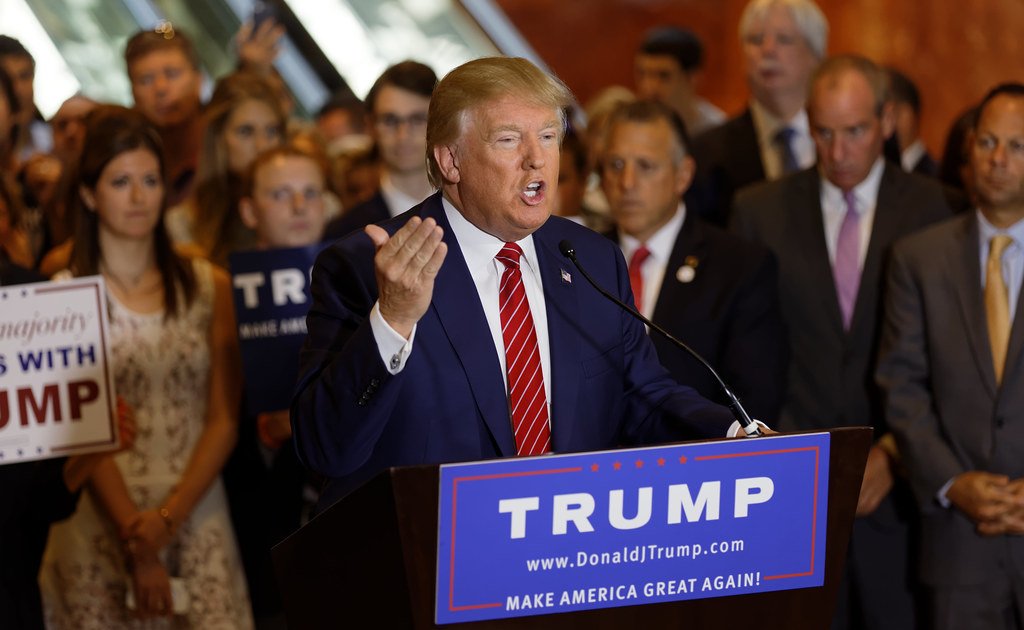
The reported court ruling has brought attention back to one of Donald Trump’s most contentious political liabilities: race. This decision is significant because it treats race-related language not as mere campaign noise, but as a factor that can influence legal outcomes. It highlights a broader legal challenge for Trump, where courts are increasingly willing to consider public statements when evaluating government actions.
According to reports, the ruling criticized Trump for an alleged preference for white people. While this phrase is politically charged, its real importance lies in its legal implications. Judges are not required to determine whether a politician’s language is offensive in the abstract. Instead, they assess whether words, actions, and timing reveal an unlawful purpose.
The Phrase That Raised the Stakes
The ruling described by Raw Story was labeled a “blistering court ruling” that faulted Trump over his alleged preference for white people. Although the full details of the case, including the judge and the exact remedy, are not available, the language used in the ruling is significant. Courts typically avoid sweeping descriptions of motive, but this decision suggests that evidence of intent played a role in the outcome.
For Trump’s supporters, this may be seen as another example of courts and critics treating his politics as prejudice. For opponents, it reinforces the argument that his public statements are not separate from how he governs.
Why Intent Can Decide Cases
In many lawsuits involving government action, the text of a policy is just the starting point. A policy written in neutral language can still face legal challenges if a court finds that it was adopted for an unlawful reason. This is especially true in cases involving race, equal protection, immigration, voting rights, public benefits, employment, and civil rights enforcement.
Judges may look at public statements, internal records, historical context, abrupt policy reversals, irregular procedures, and who is harmed by the decision. Political rhetoric does not automatically prove discrimination, but repeated statements paired with official action can become part of the evidentiary record.
This is particularly dangerous for Trump, whose brand has always relied on blunt language, grievance politics, and highly personalized attacks. In court, that same style can provide challengers with material to argue that a policy was driven by improper motives.
Trump’s Words Keep Following Him
This dynamic is not new in Trump-era litigation. During his first presidency, courts repeatedly examined his public comments when reviewing controversial policies, including immigration restrictions and decisions affecting minority communities.
The broader pattern is simple: Trump often treats public messaging and governing as the same performance. However, courts treat them differently. What wins attention at a rally, on television, or on social media can become evidence once a lawsuit begins.

This does not mean every judge will accept those arguments. Some courts give presidents and executive agencies broad deference, especially on national security, immigration enforcement, and personnel decisions. Others are more willing to scrutinize whether the stated justification matches the record.
The reported ruling appears to fall into the second category. It suggests the court was not satisfied with a surface-level explanation and instead looked at the motive behind the action.
A Mixed Week in Court
The ruling also comes against a wider backdrop of major court fights over Trump’s power and legal exposure. According to reports, the Supreme Court recently issued a series of decisions that went in different directions for Trump and his administration.
The justices sided with Trump in a major dispute over his ability to fire leaders of independent agencies, a ruling that he celebrated as a major expansion of presidential power. However, the same coverage noted several losses or setbacks. The Supreme Court declined to review a New York jury’s verdict finding Trump liable for sexually abusing writer E. Jean Carroll and defaming her. It also upheld the counting of certain late-arriving mail ballots in states that allow them, siding against national Republicans and the Trump administration.
The court also refused Trump’s effort to immediately remove Federal Reserve governor Lisa Cook while litigation continued. Together, these decisions show a judiciary that is not simply pro-Trump or anti-Trump. The outcomes turn on the legal issue, the record, and the institution involved.
Why This Ruling Cuts Differently
Most Trump court fights are framed around power: Can he fire this official? Can he reshape this agency? Can he change election rules? Can he avoid or delay a judgment?
A ruling centered on alleged racial preference cuts differently because it challenges not just the scope of his authority, but the legitimacy of the motive behind its use. That is why the language is so damaging.
Courts can tolerate hardball politics. They can tolerate sharp changes in policy after an election. They can even tolerate decisions that hurt some groups more than others if the government can show a lawful reason.
What courts cannot bless is official action rooted in racial discrimination. If a judge finds enough evidence of that, the government’s usual defenses become much weaker.
The Unanswered Questions Matter
Because the publicly extracted source material is limited, several key questions remain open. The full opinion would be needed to know exactly what evidence the court relied on, what legal standard it applied, and whether the ruling was final or temporary.
Those distinctions matter. A preliminary order can block a policy while litigation continues, but it is not the same as a final judgment. A district court ruling can be appealed. A sharply worded opinion can be narrowed, stayed, or reversed by a higher court.
Trump’s legal team would also likely argue that the court gave too much weight to political statements, misread the record, or failed to defer to executive authority. Those arguments have succeeded in some cases and failed in others.
The Bigger Risk for Trump
The political upside of Trump’s style is obvious. It keeps him dominant in the news cycle, gives supporters a sense that he is saying what others will not, and turns criticism into proof of combat.
The legal downside is just as clear. When a politician speaks constantly and aggressively about targeted groups, judges and challengers have more material to examine when official action is challenged.
That does not guarantee defeat. But it raises the cost of governing by provocation. Every statement can be clipped, quoted, contextualized, and attached to a legal brief.
The ruling reported by Raw Story may become a flashpoint because of its stark language. Its longer-term importance is broader: it is another reminder that in Trump’s legal battles, the line between politics and evidence keeps getting thinner.
- Author: Tyo Murty
















At the moment there is no comment