
New Electrochemical Method Enables 99% Pure Lithium Extraction
- account_circle Tyo Murty
- calendar_month Saturday, 4 Jul 2026
- visibility 15
- comment 0 comment
- print Print

info Adjust the font size of this article to get the best reading experience.
A Breakthrough in Lithium Extraction
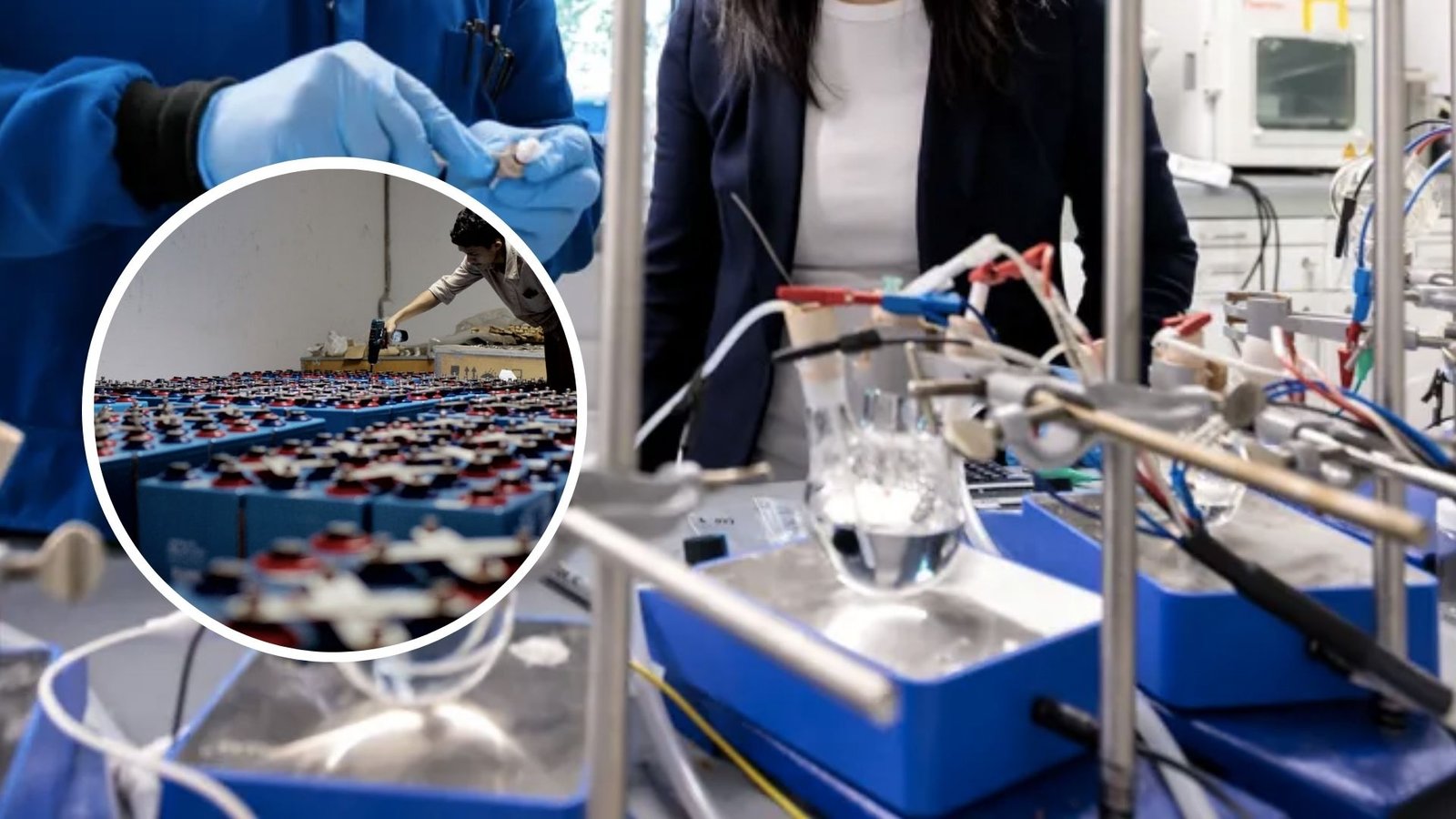
Researchers in the United States have made a significant breakthrough in extracting lithium, a critical material for batteries and energy storage. A team from the University of Chicago Pritzker School of Molecular Engineering has developed a new method that can extract 99% pure lithium from a solution where the ratio of sodium to lithium is as high as 1,000 to 1.
This innovative approach uses electrochemical intercalation, a technique commonly used in batteries and supercapacitors. Intercalation involves applying electricity to insert ions between the layers of a different material. The process has now been adapted to extract lithium from complex solutions, offering a more efficient and environmentally friendly alternative to traditional methods.
Real-World Applications
In real-world applications, this technique creates force-fed filters that use electrical currents to pull charged lithium ions through microscopic pathways. However, these pathways are not selective, allowing other ions like sodium to pass through as well. Sodium is much more abundant than lithium, making it a major challenge in the extraction process.
The research highlights how ion pathways in layered materials, such as cobalt oxide, are influenced by two competing forces. This discovery represents both a scientific advancement and a potential pathway for developing more effective extraction techniques.
Selective Separation of Lithium
“Our goal is to develop materials that can selectively separate lithium from other salts,” said Grant Hill, the paper’s first author and a former graduate student at UChicago PME. “For this class of materials, the main competitor is sodium because they’re chemically similar in charge and size.”
Batteries play a crucial role in the global shift away from fossil fuels, but current methods for harvesting lithium are far from sustainable. Traditional techniques require large amounts of acid to process ore or extensive brine pits to extract salt water and let it evaporate. These methods are not only resource-intensive but also environmentally damaging.
Understanding the Process
According to Chong Liu, an associate professor at UChicago PME and the corresponding author of the study, there are two parallel reactions that occur simultaneously during the extraction process. One reaction is driven by the charge when current is applied, while the other is the natural equilibrium of the materials.
Hill described the ion pathways as a highway surrounded by parking lots. “Every lithium ion starts with many open sites next to it, and when sodium is introduced, it ends up squeezing the lithium sites together,” he explained. “For the lithium-friendly areas of the material, that parking lot becomes full.”
Balancing Competing Reactions
Overcoming this challenge required optimizing the particle size of lithium ions and finding a balance between two competing reactions. The first reaction involves intercalation, where researchers use current to add ions between the layers. This is akin to traffic moving down the highway. The second reaction is the ion exchange between sodium and lithium, which occurs as the ions find equilibrium.
Equilibrium happens at its own pace, but researchers can control the speed of the first reaction. This allows them to set the “speed” of the intercalation process to one of three options: faster, slower, or the same as the second reaction.
“We discovered that the three regimes behave very differently, and it’s only when we allow enough time for the ion exchange to catch up with the intercalation that we achieve this reversible material response,” Liu said.
Achieving Reversibility
The researchers found that slowly inserting ions and identifying the ideal particle size enabled this reversibility. This breakthrough could lead to more efficient and sustainable methods for lithium extraction, supporting the growing demand for clean energy technologies.
By refining their approach, the team has taken a significant step toward creating materials that can effectively separate lithium from other elements, paving the way for a more sustainable future.
- Author: Tyo Murty



















At the moment there is no comment