
The 4-Year College Degree is Dying: Why Students Are Opting for the 3-Year Track
- account_circle Tyo Murty
- calendar_month Thursday, 2 Jul 2026
- visibility 17
- comment 0 comment
- print Print

info Adjust the font size of this article to get the best reading experience.
The Rise of the Three-Year Bachelor’s Degree
The traditional four-year college degree has long been the standard for higher education in the United States. However, with rising tuition costs and increasing student debt, many students and educators are beginning to question whether this model is still the best option for everyone.
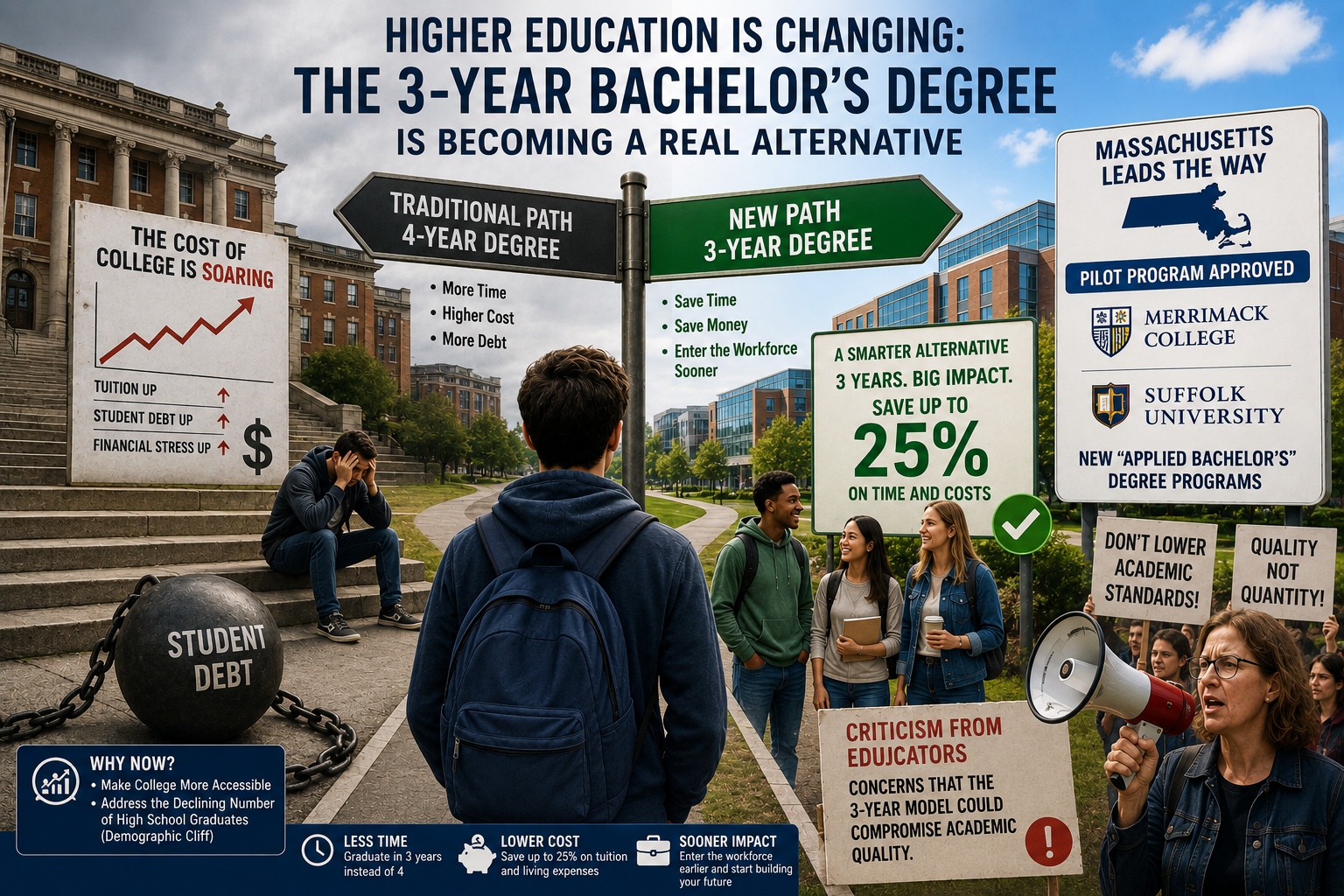
One alternative gaining traction is the three-year bachelor’s degree. This concept has sparked interest among universities and policymakers as a way to reduce both the time and financial burden of obtaining a college degree. By shortening the typical 120-credit requirement by about 25%, these programs offer a more streamlined path to a bachelor’s degree.
In April of last year, Chris Gabrieli, chairman of the state’s Board of Higher Education, acknowledged the growing interest in this approach. He noted that there was enough support among board members to explore draft regulations that would allow institutions to offer three-year degrees. This move reflects a broader shift in how higher education is being reimagined to meet the needs of today’s students.
A New Regulation for Pilot Programs
In February, the higher-ed board took a significant step forward by approving a regulation that allows higher education institutions to submit pilot proposals for degree programs that deviate from current standards. The regulation requires that any pilot program must be “responsive to significant changes in society, demographics, technology, educational research, or expectations regarding post-secondary education.”
This development highlights the changing landscape of higher education, where flexibility and innovation are becoming increasingly important. Universities are under pressure to adapt to shifting demographics and economic realities.
Addressing the Demographic Cliff
A key factor driving the push for shorter degree programs is the so-called demographic cliff. Since the Great Recession hit in late 2007, couples have had fewer children, leading to a decline in the number of 18-year-olds who are eligible for college. This trend is expected to result in a 13% decrease in the number of prospective college students nationwide by 2041, with 500,000 fewer students than in 2025.
As a result, universities are facing a fierce competition for a shrinking pool of students. To remain competitive, institutions are exploring new ways to attract and retain students, including offering more affordable and efficient degree options.
Massachusetts Takes the Lead
In response to these challenges, the higher-ed board recently approved applications from Merrimack College and Suffolk University to pilot three-year applied bachelor’s degree programs starting in the fall 2027 semester. This decision adds to a growing list of more affordable college options in Massachusetts, including free community college and expanded Early College programs.
Merrimack will offer 96-credit versions of its bachelor’s degrees in business administration, communications, criminal justice, and psychology. Suffolk will pilot a 94-credit applied bachelor’s degree in healthcare administration and innovation. Both programs were approved earlier this year by their accreditor, the New England Commission of Higher Education (NECHE), on the condition that they also receive approval from the Board of Higher Education.
Requirements and Challenges
Under the new regulations, the pilot programs must adhere to specific guidelines. The diplomas awarded through these programs must be called “applied bachelor’s” degrees, distinguishing them from traditional bachelor’s degrees. Students applying to these programs must sign disclosure forms acknowledging the pilot nature of the program and potential impacts on future federal financial aid eligibility, graduate school, and employer perceptions.
Institutions are also required to submit annual reports detailing data on enrollment, finances, and student learning outcomes. Initial pilot approvals are limited to a maximum of five years and may be extended or shortened based on evaluations by the higher-ed board.
Diverse Perspectives
While many see the three-year degree as an innovative solution, not everyone supports the concept. Some educators and unions, such as the Massachusetts Teachers Association, argue that these programs may compromise academic quality and limit opportunities for students. They have criticized the decision to approve the pilot programs, calling them “watered-down” versions of traditional degrees.
However, institutions like Merrimack College and Suffolk University have embraced the opportunity to innovate. Merrimack’s statement emphasized its commitment to accessibility and student success, while Suffolk highlighted the program’s rigorous academic standards and alignment with market demands.
Conclusion
The three-year bachelor’s degree is not a one-size-fits-all solution, but it offers a viable alternative for students seeking to reduce both time and cost. As universities continue to adapt to changing demographics and economic pressures, this model could play an important role in shaping the future of higher education.
- Author: Tyo Murty




















At the moment there is no comment