
South Korea’s Auto Exports Drop Due to Tariffs and Rising Costs
- account_circle Editorial Daily News Lite
- calendar_month Saturday, 20 Jun 2026
- visibility 3
- comment 0 comment
- print Print

info Adjust the font size of this article to get the best reading experience.
South Korean Auto Exports Face Decline Amid Multiple Challenges
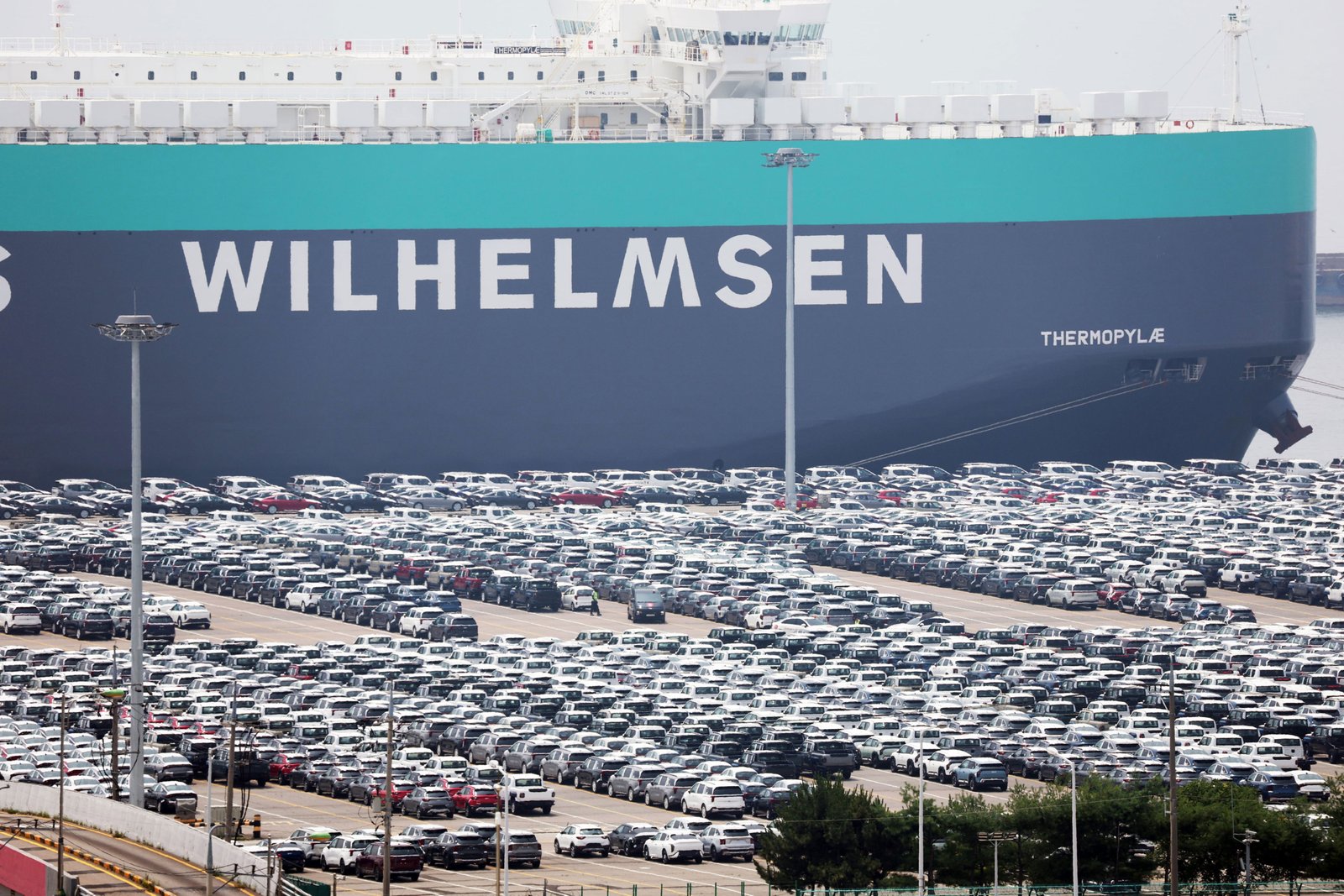
South Korea’s automobile exports are experiencing a significant downturn, with a noticeable decline in shipments to key markets such as the United States and Europe. This has led to an overall drop in export volumes, alongside a decrease in domestic sales. The situation is attributed to several factors, including rising maritime freight costs due to the ongoing conflict in the Middle East and automakers shifting production to the U.S. to avoid tariffs, which has reduced the number of vehicles produced domestically for export.
According to the “May 2026 Automotive Industry Trends” report released by the Ministry of Trade, Industry and Resources, last month’s automobile export value reached $5.83 billion, marking a 5.9% decrease compared to the same period in the previous year. Domestic sales also dropped by 10.3%, reaching 127,315 units, while production fell by 8.2% to 329,559 units. All three metrics—exports, domestic sales, and production—declined simultaneously.
Cumulative data up to May also reveals a negative trend. The total export value for the first five months of the year was $29.241 billion, a 2.6% decrease from the same period last year. While domestic sales saw a slight increase of 1.0% to 687,912 units, production declined by 2.3% to 1,716,599 units. Although the domestic market remained relatively stable, the sluggish export performance is leading to lower production levels.
Regional Export Performance
Exports to key regions have shown notable declines. Last month, exports to North America decreased by 1.0% to $3.049 billion, with U.S. exports alone dropping by 2.9% to $2.443 billion. Exports to the European Union (EU) also fell by 6.5% to $783 million. In contrast, exports to Asia plummeted by 37.3% to $428 million, and Middle Eastern exports decreased by 4.2% to $373 million. However, exports to Oceania and Africa saw increases of 20.1% and 16.9%, respectively.
Factors Contributing to the Decline
Two primary factors are cited for the decline in automobile exports. First, logistics costs have surged significantly following the conflict in the Middle East. The Shanghai Container Freight Index (SCFI), a key indicator of maritime freight rates, reached 2,985.22 as of the 12th, more than double the level recorded on February 27th before the war. This index reflects freight rates for container ships departing from Shanghai, China, and serves as a benchmark for overall increases in maritime freight costs.
For automakers shipping vehicles overseas, higher freight rates translate into increased costs. Even if the same number of vehicles are sold, the additional transportation expenses reduce profit margins. The industry attributes the overall decline in export volumes to these rising costs, compounded by logistical disruptions in the Middle East and a slowdown in used car exports.
Another contributing factor is the burden of U.S. tariffs. As the U.S. imposes tariffs on imported vehicles, the profitability of producing domestically and exporting to the U.S. has decreased. Automakers are now increasing local production in the U.S. to mitigate the impact of these tariffs. This shift means that even if U.S. sales remain steady, the volume of vehicles exported from Korean factories to the U.S. is inevitably reduced.
From January to May this year, automobile exports to the U.S. totaled $12.539 billion, a 4.8% decrease from the previous year. Given the U.S. market’s significant share in South Korea’s automobile exports, this decline directly affects overall export performance.
Market Outlook and Broader Impacts
Forecasts suggest that the U.S. automobile market may also slow down this year. Reduced profitability of imported vehicles due to tariffs, combined with concerns over high oil prices from the prolonged Middle East conflict, could dampen consumer sentiment. Additionally, weakened demand for electric vehicles following the expiration of tax credits adds to the uncertainty.
The slowdown in automobile exports does not affect only the automakers. The automobile industry is interconnected with numerous sectors, including steel, petrochemicals, rubber, glass, automotive components, logistics, and finance. Reduced automobile production leads to fewer parts orders and lower operational rates for component manufacturers.
This can further result in reduced sales and employment contraction for local partner companies. The automobile industry supports jobs not only in finished vehicle factories but also in thousands of partner companies. If production declines persist, they could lead to reduced hiring, delayed investments, and worsening business conditions for these companies. Regions heavily reliant on specific automakers or parts suppliers may face greater impacts.
An industry source noted, “The automobile industry moves parts, steel, petrochemicals, and logistics together when a single vehicle is exported,” adding, “If the trend of declining domestic export volumes solidifies, the entire domestic industry will inevitably be affected.”
- Author: Editorial Daily News Lite



















At the moment there is no comment