
Court upholds TongilTV registration despite North Korean content overuse
- account_circle Editorial Daily News Lite
- calendar_month Saturday, 20 Jun 2026
- visibility 4
- comment 0 comment
- print Print

info Adjust the font size of this article to get the best reading experience.
Legal Victory for TongilTV in Broadcast Registration Dispute
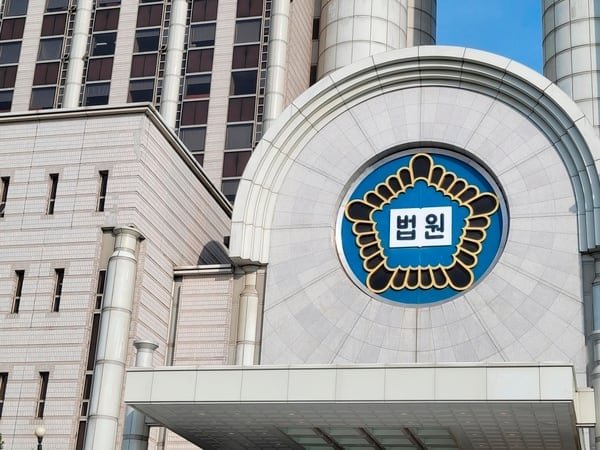
A recent court ruling has confirmed that the revocation of TongilTV’s broadcast channel usage business operator (PP) registration was unlawful. This decision came after an appeal trial, where the Seoul High Court’s Administrative Division 6-1, presided over by Judge Kim Mingi, ruled in favor of TongilTV on June 10. The case involved a lawsuit filed by the broadcaster against the Korea Media and Communications Commission (KMCC) over the cancellation of its PP registration.
TongilTV had initially received approval from the Ministry of Science and ICT (MSIT) in August 2021 to handle special materials. In July 2022, it requested permission to publicly use edited segments of North Korea’s Korean Central Television (KCTV) broadcasts as part of programs aimed at promoting unification awareness. The MSIT conditionally approved the request, but with strict conditions. It explicitly stated that content “praising, encouraging, or propagating anti-state organizations or inciting national upheaval” could not be disclosed.
However, in January 2024, the MSIT revoked the conditional approval, citing multiple instances where TongilTV exceeded the 50% limit on using KCTV content in some programs. The commission later canceled the broadcaster’s PP registration, claiming that the registration was obtained through “false or fraudulent means” under the Broadcasting Act. In response, TongilTV filed a lawsuit challenging the revocation.
The first trial, which took place in June 2025, ruled in favor of TongilTV. The court stated, “The evidence submitted by the MSIT alone is insufficient to prove that TongilTV obtained its registration through false or fraudulent means.” It further noted, “While Korean Central Television content was used beyond 50% in some cases, this does not constitute grounds for revoking registration.”
The appellate court also supported TongilTV’s position. It emphasized, “The mere fact that TongilTV did not explicitly disclose its plans to edit and broadcast North Korean-produced content does not prove it acted fraudulently to influence the registration decision.” The court added, “The MSIT likely reviewed the registration application with the possibility of broadcasting North Korean content in mind,” concluding, “There is no evidence the registration was obtained through false or fraudulent means.”
This legal victory marks a significant moment for TongilTV and raises important questions about the interpretation of regulations related to media content and broadcast licenses. The court’s decision highlights the need for clear and consistent enforcement of rules, ensuring that broadcasters are not unfairly penalized without sufficient evidence.
Key Points from the Case
- The Seoul High Court upheld the initial ruling that the revocation of TongilTV’s PP registration was unlawful.
- The MSIT had revoked the registration due to alleged violations of content usage limits and claims of fraudulent activity.
- The court found that the evidence provided by the MSIT was insufficient to support the revocation.
- The decision emphasizes the importance of transparency and fairness in regulatory actions involving media organizations.
Implications for Media Regulation
The case underscores the complexities involved in regulating media content, particularly when dealing with cross-border broadcasting and sensitive material. It also brings attention to the need for clear guidelines and fair application of laws to prevent arbitrary decisions that could impact the operations of media outlets.
As the debate around media freedom and regulation continues, this ruling serves as a reminder of the importance of due process and the protection of legitimate broadcasting activities. It sets a precedent for future cases involving similar issues, potentially influencing how regulatory bodies approach similar disputes.
For now, TongilTV can continue its operations without the threat of losing its PP registration, and the broader media landscape may see increased scrutiny of how such regulations are enforced. This case is a critical step toward ensuring that media organizations are treated fairly and that their rights are protected under the law.
- Author: Editorial Daily News Lite

















At the moment there is no comment